


When it comes to German recipes, there’s a special kind of magic that fills the kitchen with warmth and tradition. Picture the tangy goodness of Sauerbraten or the comforting texture of Spätzle. Every dish tells its own story, rich in history and flavor. If you’re curious about what everyone’s pinning on Pinterest right now, these ten recipes are sure to spark your culinary imagination. Let’s explore these beloved creations that have captured so many hearts.
Sauerbraten: The Ultimate German Pot Roast
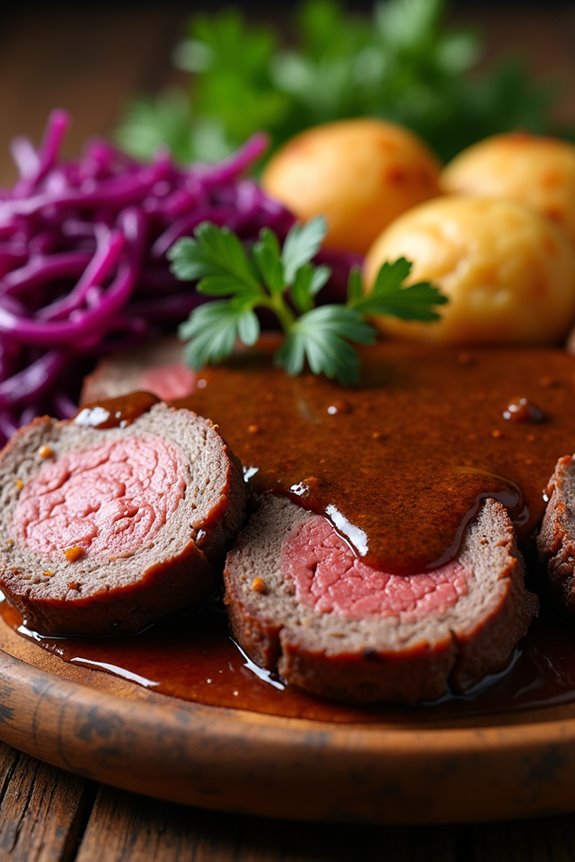
Sauerbraten, often referred to as Germany’s national dish, is a pot roast that’s marinated in a mixture of vinegar, water, and various spices for several days, resulting in a rich and tangy flavor. Traditionally made with beef, this dish is slow-cooked until it becomes incredibly tender, allowing the flavors to meld beautifully. Sauerbraten is typically served with red cabbage and potato dumplings or boiled potatoes, making it a hearty and satisfying meal that showcases German culinary traditions.
The key to a perfect Sauerbraten lies in the marination process, which not only tenderizes the meat but also infuses it with a complex, savory taste. The vinegar and spices work together to create a unique flavor profile that balances sweetness, acidity, and warmth. While the preparation may take time, the end result is a dish that’s well worth the wait, perfect for family gatherings or special occasions.
Ingredients (Serves 4-6)
- 3 to 4 pounds of beef roast (preferably chuck or rump)
- 2 cups of red wine vinegar
- 2 cups of water
- 1 large onion, sliced
- 2 cloves of garlic, minced
- 2 tablespoons of brown sugar
- 1 tablespoon of salt
- 1 teaspoon of black pepper
- 1 teaspoon of allspice berries
- 2 bay leaves
- 1 tablespoon of vegetable oil
- 1 cup of beef broth
- 2 tablespoons of mustard (preferably Dijon)
- 1 tablespoon of cornstarch (optional, for thickening)
- 2 tablespoons of water (for cornstarch slurry, optional)
Cooking Instructions
- Prepare the Marinade: In a large bowl, combine the red wine vinegar, water, sliced onion, minced garlic, brown sugar, salt, black pepper, allspice berries, and bay leaves. Stir well to dissolve the sugar and salt.
- Marinate the Beef: Place the beef roast in a large resealable plastic bag or a non-metallic dish. Pour the marinade over the meat, making sure it’s fully submerged. Seal the bag or cover the dish, and refrigerate for at least 3 days, turning the meat occasionally to guarantee even marination.
- Sear the Meat: After marination, remove the beef roast from the marinade and pat it dry with paper towels. In a large Dutch oven, heat the vegetable oil over medium-high heat. Sear the roast on all sides until it’s browned (about 4-5 minutes per side). This step adds depth to the flavor.
- Deglaze the Pan: Once the meat is browned, remove it from the pot and set it aside. Pour the marinade into the pot, scraping up the browned bits from the bottom. This will add extra flavor to the sauce.
- Cook the Roast: Return the roast to the pot and add the beef broth. Bring the mixture to a simmer, then cover the pot and reduce the heat to low. Allow it to cook for 2.5 to 3 hours, or until the meat is fork-tender.
- Make the Sauce: Once the roast is done, remove it from the pot and let it rest for about 10 minutes. Meanwhile, strain the cooking liquid into a saucepan, discarding the solids. Bring the liquid to a gentle boil. If you prefer a thicker sauce, mix the cornstarch with 2 tablespoons of water to create a slurry and stir it into the boiling liquid until thickened.
- Serve: Slice the roast against the grain and serve it with the thickened sauce poured over the top. Pair with traditional sides like red cabbage and potato dumplings or boiled potatoes.
Extra Tips
When preparing Sauerbraten, patience is key due to the marinating time, but it greatly enhances the flavor. If you’re short on time, consider marinating the meat for just 24 hours, although the longer marination is recommended for the best flavor.
Additionally, feel free to experiment with the spices in the marinade to suit your taste preferences. Leftovers can be stored in the refrigerator and are often even more flavorful the next day, making Sauerbraten a great option for meal prep!
Spätzle: Traditional German Egg Noodles

Spätzle, a beloved staple of German cuisine, are soft egg noodles that have a delightful texture and a subtle, rich flavor. Traditionally made from a simple mixture of flour, eggs, and water, these noodles can be served as a side dish or as a base for a hearty meal. Often paired with savory gravies, meats, or sautéed vegetables, they can elevate any dish with their comforting presence.
Making Spätzle at home isn’t only an enjoyable culinary adventure, but it also allows you to appreciate the authenticity and warmth of traditional German cooking.
The process of creating Spätzle is straightforward, yet it requires some technique to achieve the perfect consistency. The dough should be thick enough to hold its shape but soft enough to allow for easy passage through a Spätzle maker or colander. Once cooked, Spätzle can be tossed with butter, herbs, cheese, or served with rich gravies for a delicious and satisfying meal.
Whether you’re preparing a family dinner or entertaining guests, Spätzle is sure to impress with its delightful flavor and texture.
Ingredients (Serves 4-6):
- 2 cups all-purpose flour
- 4 large eggs
- 1/2 cup water
- 1 teaspoon salt
- 1 tablespoon olive oil or melted butter (optional, for serving)
- Freshly ground black pepper (to taste)
- Fresh herbs (such as parsley or chives, for garnish, optional)
Cooking Instructions:
- Prepare the Dough: In a large mixing bowl, combine the flour and salt. Create a well in the center and crack the eggs into this well. Gradually add the water while mixing with a wooden spoon or a spatula until the dough is well combined. It should be thick but still slightly sticky. If necessary, you can adjust the consistency by adding a little more water or flour.
- Boil Water: In a large pot, bring a generous amount of salted water to a rolling boil over high heat. The salt will enhance the flavor of the Spätzle as they cook.
- Shape the Spätzle: Using a Spätzle maker or a colander with large holes, press the dough through the holes into the boiling water. If using a colander, you can use a spatula to push the dough through. Work in batches to avoid overcrowding the pot.
- Cook the Spätzle: Allow the Spätzle to cook for about 2-4 minutes or until they float to the surface. Once they float, they’re cooked through. Use a slotted spoon to remove them from the pot and transfer them to a plate.
- Serve: If desired, toss the cooked Spätzle with olive oil or melted butter to prevent sticking and to add flavor. Season with freshly ground black pepper and garnish with fresh herbs if using. Serve warm alongside your favorite dishes.
Extra Tips:
When making Spätzle, make sure the dough isn’t too runny; a thicker dough will yield better results. If you don’t have a Spätzle maker, you can use a large-holed colander, but this might take a bit more effort.
Additionally, feel free to experiment with seasoning in the dough, such as adding nutmeg for a traditional touch. Leftover Spätzle can be stored in the refrigerator and reheated with a bit of butter, making them a perfect option for meal prep or leftovers.
Bratwurst: Grilled Sausage Perfection

Bratwurst is a quintessential German dish that perfectly embodies the country’s love for hearty and flavorful sausages. Originating from the region of Bavaria, bratwurst is traditionally made from pork, beef, or veal, seasoned with a variety of spices, and grilled to perfection.
Whether served in a bun with mustard or on a plate with sauerkraut, bratwurst is a crowd-pleaser that’s especially popular during Oktoberfest and summer barbecues. The smoky, savory aroma that wafts through the air when grilling these sausages is enough to make anyone’s mouth water.
Making bratwurst at home is an easy and enjoyable experience. With just a few ingredients and simple cooking techniques, you can create a delicious meal that brings the taste of Germany right to your backyard. This recipe focuses on grilling the sausages to achieve that perfect char and juicy texture.
Pair them with traditional sides like potato salad or grilled vegetables, and you’ll have a delightful feast that will impress your family and friends.
Ingredients (Serves 4-6)
- 6 bratwurst sausages (fresh)
- 1 tablespoon vegetable oil
- Salt and pepper to taste
- 1 large onion, sliced (optional)
- 1-2 cups sauerkraut (optional)
- Mustard (for serving)
- Fresh bread rolls or buns (for serving)
Cooking Instructions
- Preheat the Grill: Start by preheating your grill to medium-high heat. This guarantees that the bratwurst will cook evenly and develop a nice char on the outside.
- Prepare the Sausages: While the grill is heating, take the bratwurst sausages out of the packaging. Pat them dry with paper towels to remove excess moisture, which helps achieve that crispy exterior. Lightly brush each sausage with vegetable oil and season with salt and pepper.
- Grill the Bratwurst: Once the grill is preheated, place the bratwurst on the grill grates. Cook them for about 15-20 minutes, turning occasionally, until they’re browned and cooked through. The internal temperature should reach 160°F (70°C) for pork sausages.
- Optional – Grill the Onions: If you’re adding onions, slice them and toss them with a bit of oil, salt, and pepper. Place them in a grill basket or directly on the grill. Grill for about 10 minutes, stirring occasionally, until they’re soft and caramelized.
- Serve: Once the bratwurst are fully cooked, remove them from the grill and let them rest for a couple of minutes. Serve them in fresh bread rolls with mustard and top with grilled onions and sauerkraut if desired.
Extra Tips
For an authentic touch, consider simmering the bratwurst in a mixture of beer and onions before grilling. This not only adds flavor but also helps keep the sausages moist during cooking.
Additionally, avoid piercing the sausages with a fork while grilling, as this can cause the juices to escape, resulting in dry bratwurst. Finally, feel free to experiment with different types of mustard or toppings to customize your bratwurst experience!
Kartoffelsalat: German Potato Salad
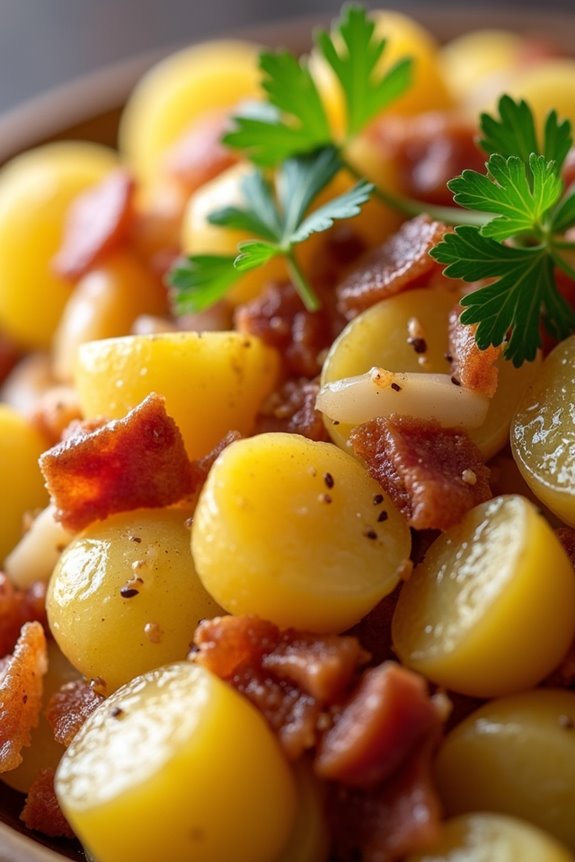
Kartoffelsalat, or German Potato Salad, is a beloved dish that showcases the rich culinary traditions of Germany. This hearty salad is a warm or cold dish, typically made with boiled potatoes, bacon, and a tangy dressing that often includes vinegar and mustard. Unlike the creamy versions found in other cultures, German potato salad leans toward a flavorful and zesty profile, making it a perfect side dish for barbecues, picnics, or family gatherings.
The dish varies by region, with some areas adding pickles or onions to enhance the flavors, but the essence remains the same. The beauty of Kartoffelsalat lies in its simplicity and robust flavors that come together harmoniously. The combination of tender potatoes and a savory dressing creates a delightful taste experience that pairs wonderfully with grilled meats or sausages.
Whether you’re enjoying it as a side or as a light meal on its own, this dish is sure to impress and satisfy, making it a staple in many German households.
Ingredients (serving size: 4-6 people)
- 2 pounds of waxy potatoes (such as Yukon Gold or Red potatoes)
- 6 slices of bacon, chopped
- 1 medium onion, finely chopped
- 1/2 cup chicken or vegetable broth
- 1/4 cup apple cider vinegar
- 2 tablespoons Dijon mustard
- 1 tablespoon sugar
- Salt and pepper to taste
- Fresh parsley, chopped (for garnish)
Cooking Instructions
1. Prepare the Potatoes: Begin by washing the potatoes thoroughly. Place them in a large pot of salted water and bring to a boil. Cook for about 15-20 minutes or until the potatoes are fork-tender. Be careful not to overcook them, as they should hold their shape when mixed with the dressing.
Once cooked, drain and let them cool slightly before peeling and slicing them into thick rounds.
2. Cook the Bacon and Onion: In a large skillet over medium heat, add the chopped bacon. Cook until the bacon is crispy, about 5-7 minutes. Remove the bacon from the skillet and set it aside, leaving the rendered fat in the pan.
In the same skillet, add the finely chopped onion and sauté until translucent, approximately 3-4 minutes, making sure not to burn them.
3. Prepare the Dressing: To the skillet with the onions, add the chicken or vegetable broth, apple cider vinegar, Dijon mustard, and sugar. Stir to combine, and bring the mixture to a gentle simmer. Allow it to cook for about 2-3 minutes to meld the flavors.
Season with salt and pepper to taste.
4. Combine Potatoes and Dressing: In a large mixing bowl, gently combine the sliced potatoes with the warm dressing. Use a spatula to carefully fold the ingredients together, ensuring the potatoes are well coated without breaking them apart.
Add the crispy bacon back into the bowl and mix gently.
5. Garnish and Serve: Once everything is combined, taste and adjust seasoning if necessary. Transfer the Kartoffelsalat to a serving dish and garnish with freshly chopped parsley.
It can be served warm, at room temperature, or chilled, depending on your preference.
Extra Tips
For an authentic touch, consider using a combination of white wine vinegar and apple cider vinegar for the dressing, as it can add depth to the flavor.
If you prefer a vegetarian version, simply omit the bacon and use smoked tofu or tempeh for a similar smoky flavor. Additionally, feel free to customize your Kartoffelsalat by adding diced pickles or fresh chives for added texture and taste.
This salad is best enjoyed the day it’s made but can also be stored in the fridge for a couple of days, allowing the flavors to develop even further.
Schwarzwälder Kirschtorte: Black Forest Cake
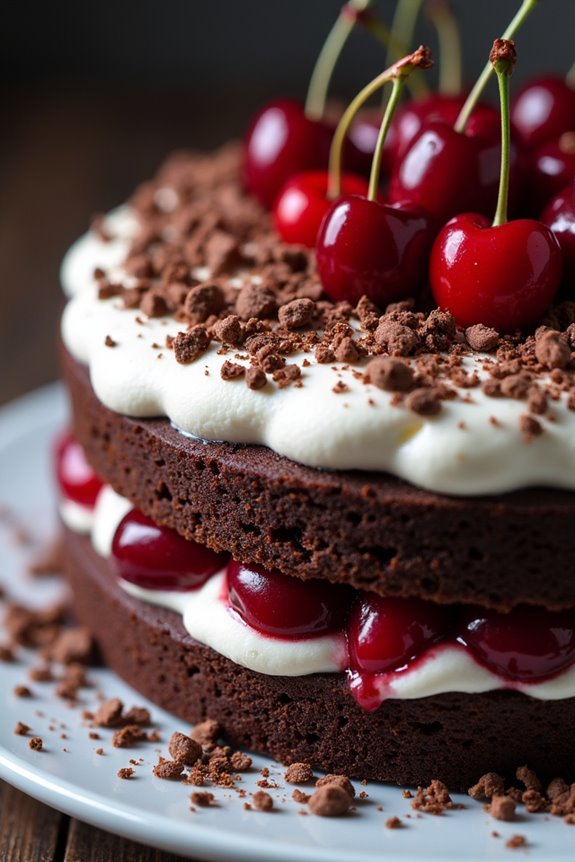
Schwarzwälder Kirschtorte, or Black Forest Cake, is a classic German dessert that has won the hearts of many dessert lovers around the world. This indulgent cake is made up of layers of rich chocolate sponge cake, whipped cream, and tart cherries, all infused with a hint of Kirsch, a cherry schnapps that adds a delightful depth of flavor.
The combination of sweet and sour, along with the creamy texture, makes it a perfect treat for special occasions such as birthdays or anniversaries.
Making Schwarzwälder Kirschtorte may seem intimidating at first, but with a bit of patience and practice, you can create this stunning dessert that will impress your family and friends. The key to a perfect Black Forest Cake lies in the quality of the ingredients and the careful assembly of the layers.
Follow this recipe to master the art of making this iconic German cake.
Ingredients (Serves 4-6):
- 200 grams all-purpose flour
- 50 grams cocoa powder
- 200 grams granulated sugar
- 1 teaspoon baking powder
- 1 teaspoon baking soda
- ½ teaspoon salt
- 3 large eggs
- 240 ml milk
- 120 ml vegetable oil
- 1 teaspoon vanilla extract
- 240 ml boiling water
- 400 grams pitted cherries (fresh or jarred)
- 120 ml Kirsch (cherry schnapps)
- 500 ml heavy whipping cream
- 3 tablespoons powdered sugar
- Chocolate shavings (for garnish)
Cooking Instructions:
1. Preheat the Oven: Preheat your oven to 175°C (350°F). Grease and flour two 9-inch round cake pans to guarantee the cakes don’t stick after baking.
2. Prepare the Cake Batter: In a large mixing bowl, combine the flour, cocoa powder, granulated sugar, baking powder, baking soda, and salt. Mix well. In another bowl, whisk together the eggs, milk, vegetable oil, and vanilla extract. Gradually add the wet ingredients to the dry ingredients, mixing until just combined.
Carefully stir in the boiling water until the batter is smooth.
3. Bake the Cakes: Pour the batter evenly into the prepared cake pans. Bake in the preheated oven for 30-35 minutes or until a toothpick inserted in the center comes out clean. Allow the cakes to cool in the pans for 10 minutes before transferring them to a wire rack to cool completely.
4. Prepare the Cherries: If using fresh cherries, pit and slice them. If using jarred cherries, drain them well. In a small bowl, mix the cherries with the Kirsch and set aside to marinate while you prepare the whipped cream.
5. Whip the Cream: In a chilled mixing bowl, whip the heavy cream with powdered sugar until stiff peaks form. This will be used for layering and frosting the cake.
6. Assemble the Cake: Once the cakes are completely cooled, slice each cake in half horizontally to create four layers. Place one layer on a serving platter. Spread a layer of whipped cream over the cake and top with a portion of the marinated cherries.
Repeat this process with the second layer, third layer, and finally place the last layer on top.
7. Frost the Cake: Use the remaining whipped cream to frost the top and sides of the cake. Decorate with chocolate shavings and any remaining cherries on top.
8. Chill and Serve: Refrigerate the assembled cake for at least 2 hours before serving, allowing the flavors to meld together. Slice and enjoy your homemade Schwarzwälder Kirschtorte.
Extra Tips:
To achieve the best flavor and texture, use high-quality unsweetened cocoa powder and fresh cherries when possible. If using jarred cherries, verify they’re well-drained to avoid excess moisture in the cake.
For a more intense cherry flavor, consider increasing the amount of Kirsch used. Additionally, be gentle when layering the cakes to avoid breaking them, and use a serrated knife for slicing to guarantee clean cuts.
Enjoy your delicious Schwarzwälder Kirschtorte!
Pretzels: Soft and Savory German Snacks

Pretzels, known as “Brezn” in Germany, are a beloved snack that has captured the hearts and taste buds of people around the world. These soft, chewy treats are distinguished by their unique knot shape and golden-brown crust, resulting from a baking soda bath before baking. The origins of pretzels date back centuries, and they’re often enjoyed warm, sprinkled with coarse salt, and paired with mustard or cheese dips.
Making pretzels at home can be a fun and rewarding experience that brings a taste of Germany right to your kitchen. The process of making pretzels may seem intimidating at first, but with a few simple ingredients and some patience, you can create these delectable snacks from scratch. The dough is easy to work with and requires just a short rise time, making it perfect for a weekend treat or a fun family activity.
Once you’ve mastered the technique, you’ll be able to impress your friends and family with your homemade pretzels, served fresh out of the oven and topped with your favorite seasonings.
Ingredients (Serves 4-6):
- 4 cups all-purpose flour
- 1 packet (2 ¼ teaspoons) active dry yeast
- 1 ½ cups warm water (110°F)
- 2 tablespoons granulated sugar
- 2 teaspoons salt
- ⅓ cup baking soda
- 1 large egg (for egg wash)
- Coarse sea salt (for topping)
Cooking Instructions:
- Prepare the Dough: In a large mixing bowl, combine the warm water, sugar, and yeast. Stir gently and let it sit for about 5-10 minutes until it becomes frothy. This step activates the yeast, ensuring your pretzels will rise properly.
- Mix the Ingredients: Once the yeast mixture is frothy, add the salt and gradually incorporate the flour. Mix until a dough begins to form. You can use a wooden spoon or a stand mixer fitted with a dough hook. Knead the dough for about 5-7 minutes until it becomes smooth and elastic.
- Let the Dough Rise: Place the kneaded dough in a greased bowl, cover it with a clean kitchen towel, and let it rise in a warm area for about 1 hour, or until it has doubled in size. This step is essential for achieving that soft, chewy texture.
- Shape the Pretzels: Preheat your oven to 450°F (230°C). After the dough has risen, punch it down to release any air bubbles. Divide the dough into 8 equal pieces. Roll each piece into a long rope (about 24 inches long) and shape it into a pretzel by twisting and folding the ends over the center.
- Prepare the Baking Soda Bath: In a large pot, bring 8 cups of water to a rolling boil and add the baking soda. Carefully drop each shaped pretzel into the boiling water for about 30 seconds. This will give them their characteristic flavor and color. Remove with a slotted spoon and place on a baking sheet lined with parchment paper.
- Egg Wash and Bake: In a small bowl, whisk the egg and brush it over each pretzel. Sprinkle with coarse sea salt. Bake in the preheated oven for 12-15 minutes or until they’re golden brown. Keep an eye on them to prevent over-baking.
- Serve Warm: Once baked, remove the pretzels from the oven and let them cool slightly. Serve them warm with mustard, cheese dip, or your favorite toppings.
Extra Tips: When making pretzels, don’t be afraid to experiment with flavors! You can add garlic powder, onion powder, or even cheese to the dough for a twist on the classic recipe. For a sweeter version, try brushing the pretzels with melted butter and sprinkling them with cinnamon sugar after baking.
Always serve them fresh for the best taste, and if you have leftovers, they can be reheated in the oven for a quick snack!
Rinderroulade: Beef Roll Stuffed With Flavor

Rinderroulade, a traditional German dish, is a delightful beef roll that’s packed with flavor and perfect for any occasion. This dish typically features thinly sliced beef that’s filled with a savory mixture of bacon, onions, pickles, and mustard, then rolled up and braised to perfection. The result is a tender and juicy beef roll that’s bursting with taste, often served with a rich gravy and complemented by classic sides such as potatoes or red cabbage.
Preparing Rinderroulade may seem intimidating, but with the right ingredients and a bit of patience, you’ll discover how rewarding it’s to create this beloved German comfort food at home. It’s a dish that not only warms the heart but also brings people together, making it ideal for family dinners or festive gatherings. So, roll up your sleeves and get ready to impress your guests with this authentic German recipe!
Ingredients (serving size: 4-6 people)
- 4-6 slices of beef (such as flank or round steak, about 1/4 inch thick)
- 4-6 slices of bacon
- 1 medium onion, finely chopped
- 2 medium pickles, sliced into strips
- 2 tablespoons of mustard (preferably German mustard)
- Salt and pepper, to taste
- 2 tablespoons of vegetable oil
- 1 cup of beef broth
- 1 tablespoon of flour (optional, for thickening gravy)
- Fresh parsley, for garnish (optional)
Cooking Instructions
- Prepare the Beef Slices: Start by laying the beef slices flat on a clean surface. Use a meat mallet to gently pound the beef to an even thickness of about 1/4 inch. This step helps tenderize the meat and makes it easier to roll.
- Season and Spread Mustard: Sprinkle the beef slices with salt and pepper to taste. Next, spread a thin layer of mustard over each slice, ensuring that it covers the surface evenly. The mustard adds a tangy flavor that complements the meat.
- Add Fillings: Place a slice of bacon on each beef slice, then add a line of chopped onions and a few strips of pickle. The combination of bacon, onion, and pickle provides a delicious contrast to the beef.
- Roll the Beef: Starting from one end, carefully roll up each beef slice tightly, ensuring the filling stays inside. Secure the rolls with toothpicks or kitchen twine to prevent them from unraveling during cooking.
- Sear the Rolls: In a large skillet, heat the vegetable oil over medium-high heat. Add the beef rolls and sear them on all sides until they’re browned, about 3-4 minutes per side. This step enhances the flavor and creates a nice crust on the beef.
- Braise the Rolls: Once browned, remove the beef rolls from the skillet and set them aside. In the same skillet, add the beef broth and bring to a simmer. Return the beef rolls to the skillet, cover, and reduce the heat to low. Let them braise for about 1.5 to 2 hours, or until the beef is tender.
- Make the Gravy: If you prefer a thicker gravy, remove the cooked beef rolls from the skillet once done. In a small bowl, mix the flour with a bit of cold water to create a slurry, then stir it into the broth. Cook for a few minutes until the gravy thickens, stirring constantly.
- Serve: Slice the Rinderroulade into rounds and arrange them on a serving platter. Pour the gravy over the rolls and garnish with fresh parsley, if desired. Serve with traditional sides for a complete meal.
Extra Tips
When making Rinderroulade, it’s essential to use good quality beef that’s tender and easy to roll. Make sure to slice the beef against the grain for maximum tenderness.
You can also customize the filling according to your taste; try adding grated carrots or chopped herbs for an extra layer of flavor. If you have time, marinating the beef in a bit of red wine or vinegar for a few hours before cooking can enhance the overall taste.
Enjoy your homemade Rinderroulade with a glass of red wine for a truly authentic experience!
Apfelstrudel: Classic Apple Strudel

Apfelstrudel, or apple strudel, is a beloved dessert that hails from Austria but has become a staple in German cuisine. This delicious pastry features a thin, flaky dough wrapped around a sweet, spiced apple filling, making it a perfect treat for any occasion.
While traditionally served warm with a dusting of powdered sugar, it can also be enjoyed with a scoop of vanilla ice cream or a dollop of whipped cream. The key to a great Apfelstrudel lies in the dough; it should be rolled out as thinly as possible to achieve that signature crispiness.
Making Apfelstrudel from scratch may seem intimidating, but with a little patience and practice, you can create this classic dessert that will impress your family and friends. The filling usually consists of tart apples, sugar, cinnamon, and raisins, which combine beautifully to create a warm, comforting flavor.
Whether you’re hosting a festive gathering or simply craving a taste of German tradition, this recipe will guide you through every step of the process.
Ingredients (Serves 4-6)
- 2 cups all-purpose flour
- 1/2 teaspoon salt
- 1 tablespoon sugar
- 1/2 cup warm water
- 2 tablespoons vegetable oil
- 4 medium tart apples, peeled, cored, and thinly sliced
- 1/2 cup granulated sugar
- 1 teaspoon ground cinnamon
- 1/2 cup raisins
- 1/4 cup breadcrumbs
- 2 tablespoons melted butter
- Powdered sugar for dusting
Cooking Instructions
1. Prepare the Strudel Dough: In a large mixing bowl, combine the flour, salt, and sugar. Create a well in the center, then add the warm water and oil. Mix with a spoon until a dough forms. Knead on a floured surface for about 5-10 minutes until the dough is smooth and elastic.
Cover with a damp cloth and let it rest for at least 30 minutes.
2. Prepare the Apple Filling: In a separate bowl, mix together the sliced apples, granulated sugar, cinnamon, and raisins. Toss the mixture until the apples are well coated and set aside to allow the flavors to meld.
3. Roll Out the Dough: After the dough has rested, place it on a large, floured surface. Using a rolling pin, roll the dough out as thinly as possible into a rectangular shape, ideally about 1/16 inch thick.
You may also use your hands to gently stretch the edges of the dough for an even thinner layer.
4. Assemble the Strudel: Brush the rolled-out dough with melted butter, then sprinkle the breadcrumbs evenly over the surface. This will help absorb excess moisture from the apples.
Spoon the apple filling along one edge of the dough, leaving a border. Using the edge of the dough, carefully roll it up tightly to form a log. Pinch the seams to seal and tuck the ends under.
5. Bake the Strudel: Preheat your oven to 375°F (190°C). Place the rolled strudel seam-side down on a lined baking sheet. Brush the top with more melted butter for a golden finish.
Bake for 30-35 minutes, or until the pastry is golden brown and crispy.
6. Serve: Once baked, remove the Apfelstrudel from the oven and let it cool for a few minutes. Dust with powdered sugar before slicing.
Serve warm, optionally accompanied by whipped cream or vanilla ice cream.
Extra Tips
When making Apfelstrudel, it’s essential to use tart apples such as Granny Smith, as their flavor balances the sweetness of the sugar and spices.
If you find the dough a bit too elastic and difficult to stretch, let it rest for an additional 10-15 minutes. For added flavor, consider mixing in chopped nuts or varying the spices in the apple filling.
Enjoy the baking process, and don’t be afraid to experiment with different apple varieties or additional flavorings like nutmeg or lemon zest!
Gulasch: Hearty German Beef Stew
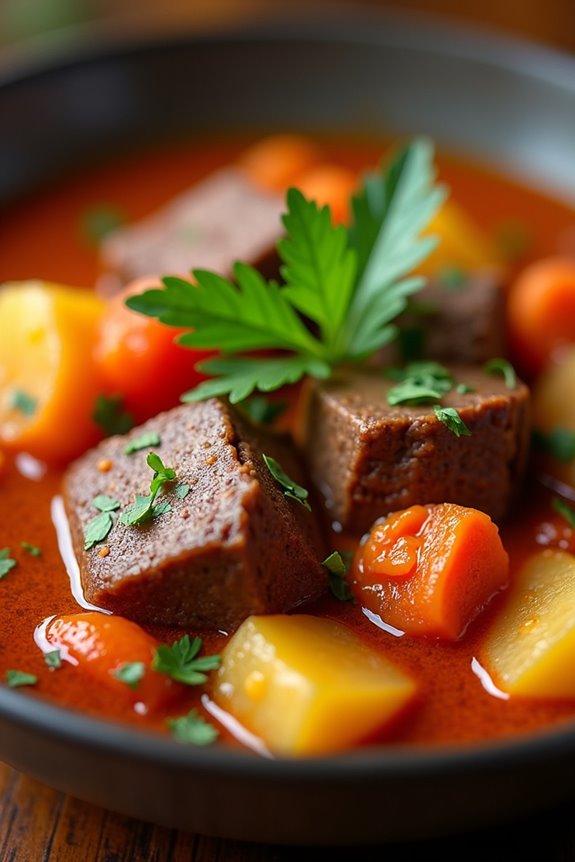
Gulasch, a traditional German dish, is a comforting beef stew that highlights the heartiness of German cuisine. Originating from Hungary, this dish has been embraced and adapted by Germans, who’ve made it their own with regional variations. Rich in flavors and aromas, Gulasch typically features tender chunks of beef, a medley of vegetables, and a blend of spices that simmer together to create a warm and satisfying meal.
It’s perfect for cold nights and is often served with bread or dumplings to soak up the delicious sauce. This stew isn’t only a staple in German households but also a crowd-pleaser that can feed a family or a group of friends. With its robust flavors and simple preparation, Gulasch embodies the essence of comfort food.
The slow-cooked beef becomes tender and infuses the dish with depth, while the paprika and onions add a lovely warmth. Whether served on a Sunday dinner table or at a festive gathering, Gulasch is sure to leave everyone asking for seconds.
Ingredients (Serves 4-6)
- 2 lbs beef chuck, cut into 1-inch cubes
- 2 tablespoons vegetable oil
- 2 medium onions, chopped
- 3 cloves garlic, minced
- 2 tablespoons sweet paprika
- 1 teaspoon caraway seeds
- 1 teaspoon dried thyme
- 1 teaspoon salt (or to taste)
- ½ teaspoon black pepper
- 1 can (14 oz) diced tomatoes, undrained
- 2 cups beef broth
- 2 medium carrots, sliced
- 1 bell pepper, chopped
- 2 medium potatoes, peeled and cubed
- 2 tablespoons tomato paste
- Fresh parsley, chopped (for garnish)
Cooking Instructions
- Brown the Beef: In a large pot or Dutch oven, heat the vegetable oil over medium-high heat. Add the beef cubes in batches, ensuring not to overcrowd the pot. Brown the beef on all sides for about 5-7 minutes. Remove the beef and set it aside on a plate. This step is essential as it develops flavor through the Maillard reaction.
- Sauté the Onions and Garlic: In the same pot, add the chopped onions and sauté until they’re translucent and slightly caramelized, about 5 minutes. Stir in the minced garlic and cook for an additional minute until fragrant. The onions will provide a sweet base for the stew.
- Add the Spices: Sprinkle the sweet paprika, caraway seeds, thyme, salt, and black pepper over the sautéed onions. Stir well to coat the onions with the spices, letting them toast for about 1 minute. This step enhances the flavors by releasing the essential oils from the spices.
- Combine Ingredients: Return the browned beef to the pot, along with the diced tomatoes (with their juice), beef broth, carrots, bell pepper, potatoes, and tomato paste. Stir everything together until well combined. The tomatoes and broth will form the base of the stew.
- Simmer the Stew: Bring the mixture to a boil, then reduce the heat to low. Cover the pot and let it simmer for about 1.5 to 2 hours, or until the beef is tender and the flavors have melded together. Stir occasionally to prevent sticking. The long cooking time will result in a rich and hearty stew.
- Adjust Seasoning and Serve: After the cooking time, taste the Gulasch and adjust the seasoning with more salt and pepper if necessary. Serve hot, garnished with chopped fresh parsley. Pair it with bread or dumplings to soak up the delicious sauce.
Extra Tips
For an even richer flavor, consider adding a splash of red wine to the stew during the simmering process. Additionally, feel free to customize your Gulasch by adding other vegetables like peas or using different cuts of beef, depending on your preference.
Leftovers can be stored in the refrigerator for a few days and often taste even better the next day as the flavors continue to develop. Enjoy your hearty Gulasch with a side of crusty bread or traditional German dumplings for a complete meal!
Käsespätzle: Cheesy Spätzle Casserole
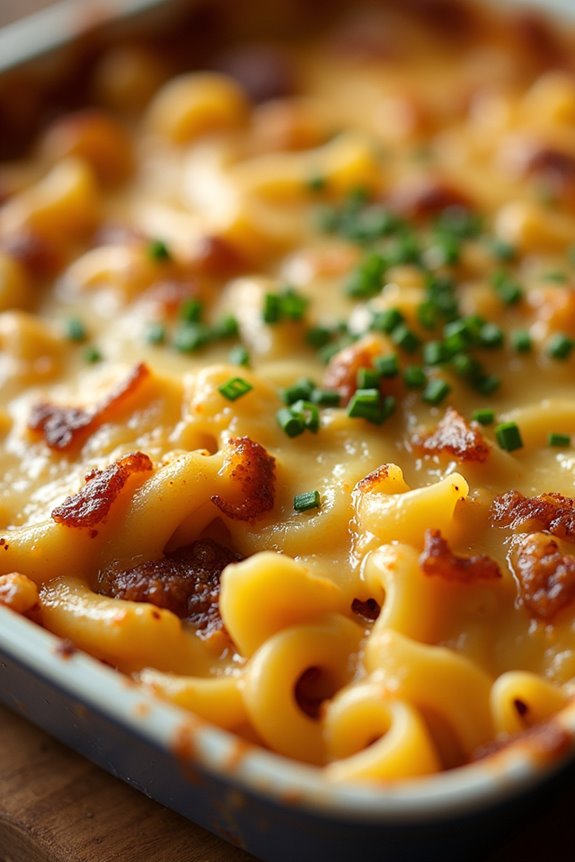
Käsespätzle, often referred to as Germany’s answer to mac and cheese, is a comforting dish that combines soft, egg noodles known as spätzle with rich cheese and caramelized onions.
This traditional recipe hails from the Swabian region of Germany and is a beloved staple in many German households. The dish isn’t only satisfying but also incredibly versatile, allowing for variations based on personal preferences or regional traditions. It’s perfect for family gatherings or a cozy dinner at home.
Making Käsespätzle requires a bit of attention to detail, especially when it comes to preparing the spätzle. The dough should be light and airy, which is achieved by mixing the ingredients thoroughly and allowing them to rest.
Once cooked, the spätzle is layered with cheese and onions, then baked to perfection. This dish showcases the rich flavors of German cuisine and is sure to impress both family and friends.
Ingredients (Serves 4-6):
- 2 cups all-purpose flour
- 1 teaspoon salt
- 1/4 teaspoon ground nutmeg
- 3 large eggs
- 1/2 cup milk
- 1 cup grated cheese (Emmental or Gruyère)
- 1 large onion, thinly sliced
- 2 tablespoons butter
- Freshly ground black pepper (to taste)
- Chopped fresh chives or parsley (for garnish, optional)
Cooking Instructions:
- Prepare the Spätzle Dough: In a large mixing bowl, combine the flour, salt, and nutmeg. Create a well in the center, then crack in the eggs and pour in the milk. Mix with a wooden spoon or a spatula until the dough is smooth and elastic. Let it rest for about 10-15 minutes.
- Cook the Spätzle: Bring a large pot of salted water to a boil. Using a spätzle maker or a colander with large holes, press the dough into the boiling water. Allow the spätzle to cook until they float to the surface, which takes about 2-3 minutes. Remove them with a slotted spoon and place them in a large bowl. Repeat until all the dough is cooked.
- Caramelize the Onions: In a skillet, melt the butter over medium heat. Add the sliced onions and cook, stirring frequently, until they’re golden brown and caramelized, about 15-20 minutes. Season with salt and pepper to taste.
- Layer the Casserole: Preheat your oven to 350°F (175°C). In a large baking dish, layer half of the cooked spätzle, followed by half of the caramelized onions and half of the grated cheese. Repeat the layers with the remaining spätzle, onions, and cheese.
- Bake: Cover the baking dish with aluminum foil and bake in the preheated oven for 20 minutes. After 20 minutes, remove the foil and bake for an additional 10-15 minutes, or until the cheese is bubbly and golden brown.
- Serve: Once baked, remove the Käsespätzle from the oven and allow it to cool for a few minutes. Garnish with chopped chives or parsley if desired, and serve warm.
Extra Tips:
For a richer flavor, consider adding bacon or ham to the layers before baking.
You can also experiment with different types of cheese for varied taste profiles. For a vegetarian option, simply omit any meat and perhaps incorporate sautéed mushrooms for added texture and flavor.
Ascertain that your spätzle dough isn’t too thick; the right consistency will yield light, fluffy noodles. Enjoy your Käsespätzle with a side of salad or sautéed greens for a complete meal!
