

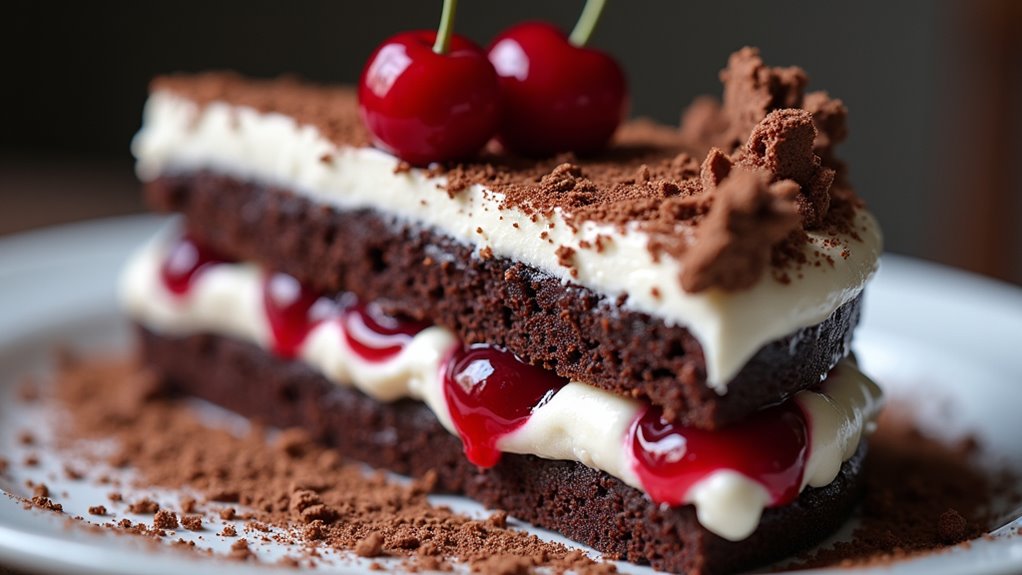
When I think of Sundays, I envision a table adorned with the comforting aromas of traditional German dishes. Gathering with loved ones over Sauerbraten or Rinderroulade creates memories that linger long after the meal is over. Each recipe is a story, offering warmth and inviting us to enjoy not just the food, but the moments shared. Are you ready to explore these delightful dishes and make your Sundays feel truly special?
Sauerbraten (German Pot Roast)
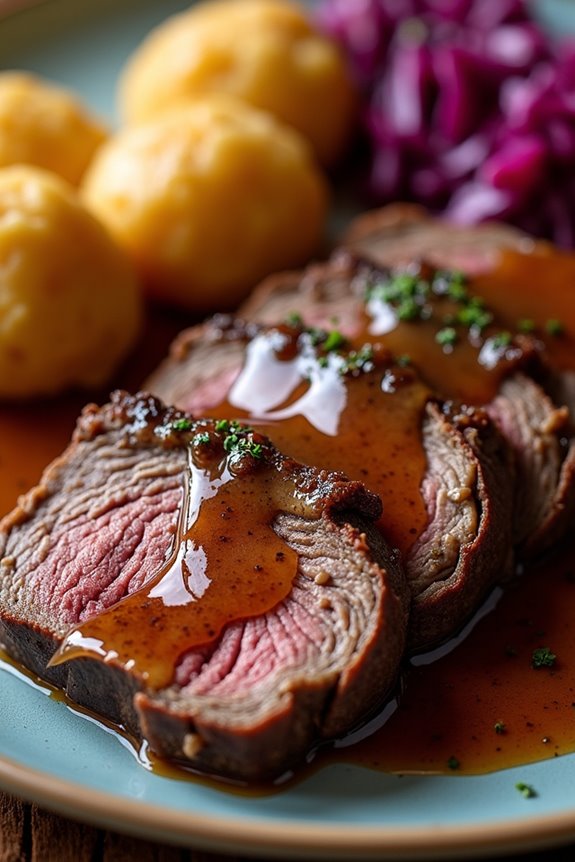
Sauerbraten, often regarded as Germany’s national dish, is a hearty pot roast that showcases the country’s rich culinary heritage. Traditionally made with beef, this dish is marinated for several days in a mixture of vinegar, water, and various spices, which helps to tenderize the meat and imbue it with a distinct flavor.
The slow cooking process allows the flavors to meld beautifully, resulting in a tender roast that practically melts in your mouth. Served with traditional sides such as red cabbage and potato dumplings, Sauerbraten is perfect for family gatherings or special occasions.
The beauty of Sauerbraten lies in its complex combination of sweet and sour flavors, achieved through the careful balance of ingredients. The marinating process not only enhances the taste but also transforms tougher cuts of meat into a succulent dish.
This recipe yields a serving size of 4-6 people, making it ideal for a cozy dinner with friends or family. Let’s explore the ingredients and cooking instructions to create this classic German pot roast.
Ingredients:
- 3-4 pounds beef roast (chuck or round)
- 1 cup red wine vinegar
- 2 cups water
- 1 large onion, sliced
- 2 cloves garlic, minced
- 2 tablespoons brown sugar
- 2 teaspoons salt
- 1 teaspoon black pepper
- 1 teaspoon ground cloves
- 1 teaspoon ground ginger
- 1 teaspoon allspice
- 3 bay leaves
- 1 tablespoon vegetable oil
- 2 cups beef broth
- 2 tablespoons cornstarch (for thickening)
- 2 tablespoons cold water (for cornstarch mixture)
Cooking Instructions:
- Marinate the Meat: In a large bowl, combine the red wine vinegar, water, sliced onion, minced garlic, brown sugar, salt, black pepper, ground cloves, ginger, allspice, and bay leaves. Place the beef roast in the marinade, making sure it’s fully submerged. Cover and refrigerate for at least 3 days, turning the meat occasionally to guarantee even marination.
- Preheat the Oven: After marinating, preheat your oven to 325°F (160°C). This temperature is perfect for slow-roasting the meat, allowing it to become tender without drying out.
- Sear the Meat: Remove the beef roast from the marinade and pat it dry with paper towels. Reserve the marinade for later use. In a large Dutch oven, heat the vegetable oil over medium-high heat. Sear the roast on all sides until it develops a rich, brown crust, which will enhance the flavor of the final dish.
- Add the Marinade and Broth: Once the roast is seared, pour in the reserved marinade and add the beef broth. Bring the liquid to a simmer, scraping the bottom of the pot to release any browned bits, which add depth to the sauce.
- Roast the Meat: Cover the Dutch oven with a lid and transfer it to the preheated oven. Roast the meat for about 2.5 to 3 hours, or until it’s fork-tender. Check occasionally and add more broth or water if necessary to keep the liquid level adequate.
- Thicken the Sauce: Once the roast is tender, remove it from the oven and set aside on a cutting board to rest. Strain the cooking liquid to remove solids, then return it to the pot. In a small bowl, mix the cornstarch with cold water to create a slurry. Gradually stir the slurry into the simmering liquid, cooking until the sauce thickens.
- Serve: Slice the Sauerbraten against the grain and serve it with the thickened sauce drizzled on top. Pair it with traditional sides like red cabbage and potato dumplings for a complete German dining experience.
Extra Tips:
For the best Sauerbraten, it’s crucial to allow the meat to marinate for the full 3 days, as this not only develops the flavor but also tenderizes the meat. If you’re short on time, you can marinate for at least two days, but the longer, the better.
Additionally, feel free to adjust the spices according to your taste preferences; some people enjoy a touch more sweetness or tang. Sauerbraten also tastes even better the next day, making it a great dish for leftovers!
Rinderroulade (Beef Roll)

Rinderroulade, a traditional German dish, is a hearty and flavorful recipe that showcases the rich culinary heritage of Germany. This dish consists of thinly sliced beef rolled around a savory filling of bacon, onions, pickles, and mustard, creating a delightful combination of tastes and textures.
Once rolled and secured, the beef is browned and then simmered in a rich gravy, making it a perfect comfort food for any occasion. This dish is often served with mashed potatoes or red cabbage, which complements the savory flavors of the Rinderroulade beautifully.
Ideal for family gatherings or special occasions, Rinderroulade is a dish that not only fills the stomach but also warms the soul. With its origins rooted in German cuisine, this recipe will surely impress your guests and provide a taste of Germany at your dinner table.
Ingredients (Serves 4-6):
- 1.5 to 2 pounds of beef flank steak or top round, sliced thinly
- 4 slices of bacon, chopped
- 1 medium onion, finely chopped
- 2 dill pickles, cut into thin strips
- 2 tablespoons of Dijon mustard
- 1 cup of beef broth
- 1 tablespoon of vegetable oil
- Salt and pepper, to taste
- 1 tablespoon of fresh parsley, chopped (for garnish)
- Toothpicks or kitchen twine for securing the rolls
Cooking Instructions:
1. Prepare the Beef: Lay the thinly sliced beef on a clean surface or cutting board. Gently pound the slices with a meat mallet to tenderize them further and to guarantee even thickness. Season both sides with salt and pepper.
2. Make the Filling: In a skillet, cook the chopped bacon over medium heat until crispy. Remove the bacon and set aside, leaving the drippings in the skillet. Add the chopped onion to the skillet and sauté until translucent.
Combine the bacon and sautéed onions, then set aside to cool slightly.
3. Assemble the Rinderroulade: Spread a thin layer of Dijon mustard on each beef slice. Place a spoonful of the bacon and onion mixture on one end of each slice, followed by a few strips of dill pickle. Carefully roll the beef slices tightly from the filled end and secure each roll with toothpicks or kitchen twine.
4. Brown the Rolls: In a large pot or Dutch oven, heat the vegetable oil over medium-high heat. Add the beef rolls seam-side down, browning them on all sides until they’re golden brown. This should take about 5-7 minutes.
5. Simmer in Broth: Once browned, remove the beef rolls from the pot and set aside. Pour in the beef broth, scraping the bottom of the pot to release any browned bits. Return the rolls to the pot, cover, and let them simmer on low heat for about 1.5 to 2 hours, or until the beef is tender.
6. Serve: Once the Rinderroulade is cooked, remove the toothpicks or twine. Serve the rolls hot, garnished with fresh parsley, alongside your choice of mashed potatoes or red cabbage.
Extra Tips:
When making Rinderroulade, it’s important to choose the right cut of beef. Flank steak or top round works best because they’re lean yet tender when cooked slowly.
Additionally, making the filling and rolling the beef the night before can save time and allow the flavors to meld. Consider adding herbs like thyme or bay leaves to the broth for an extra layer of flavor, and always taste and adjust the seasoning before serving for the best results.
Schweinshaxe (Pork Knuckle)
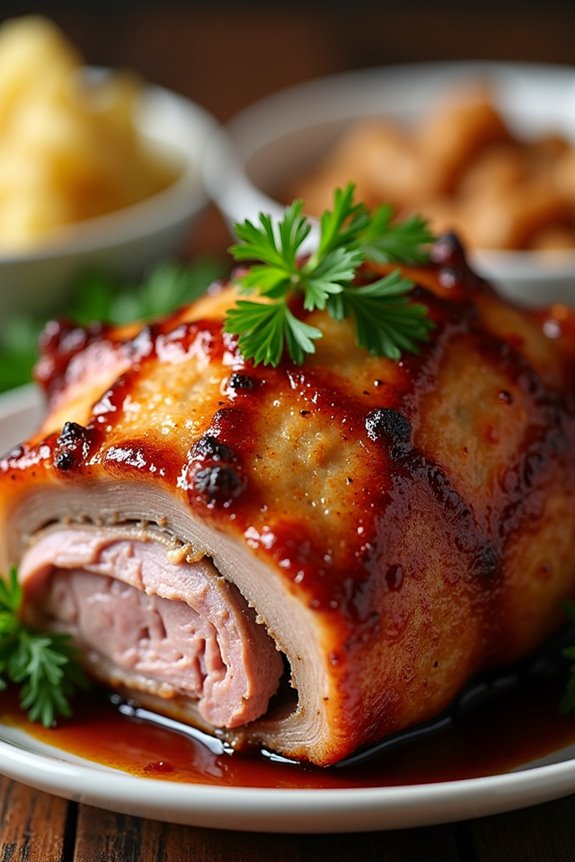
Schweinshaxe, or pork knuckle, is a beloved traditional dish in German cuisine that brings forth the hearty flavors of roasted meat paired with crispy skin. The dish is often enjoyed during festive occasions and beer gardens, embodying the spirit of German comfort food. The succulent meat, infused with aromatic spices, is typically served alongside a rich gravy and traditional sides like sauerkraut or potato dumplings, making it a complete and satisfying meal.
Preparing Schweinshaxe at home may seem intimidating due to the size and complexity of the pork knuckle, but with the right approach, you can create a mouthwatering dish that will impress your family and friends. The slow-roasting method guarantees tender meat and a perfectly crispy exterior, while the accompanying sauce captures the essence of the flavors. With a little patience and attention to detail, you can master this iconic German recipe and bring a taste of Germany to your dinner table.
Ingredients (Serves 4-6)
- 2-3 lbs pork knuckle (Schweinshaxe)
- 2 tablespoons olive oil
- 1 large onion, chopped
- 4 cloves garlic, minced
- 1 tablespoon caraway seeds
- 1 teaspoon black pepper
- 1 tablespoon salt
- 1 cup chicken or beef broth
- 1 cup beer (preferably a lager)
- 1 tablespoon apple cider vinegar
- Fresh parsley for garnish (optional)
Cooking Instructions
- Preheat the Oven: Begin by preheating your oven to 350°F (175°C). A hot oven is vital for achieving that perfect crispy skin on the pork knuckle.
- Prepare the Pork Knuckle: Pat the pork knuckle dry with paper towels to remove excess moisture. This step is fundamental for achieving crispy skin. Score the skin in a criss-cross pattern, being careful not to cut into the meat. This allows the fat to render out during roasting.
- Season the Meat: In a small bowl, mix together the salt, black pepper, and caraway seeds. Rub the olive oil all over the pork knuckle, then generously apply the seasoning mixture, making sure it gets into the scored skin and crevices for maximum flavor.
- Sear the Pork Knuckle: In a large oven-safe skillet or roasting pan, heat a tablespoon of oil over medium-high heat. Once hot, add the pork knuckle skin-side down and sear it for about 5-7 minutes until the skin turns golden brown. This step enhances the flavor and texture.
- Add Aromatics and Liquid: Remove the pork knuckle from the skillet and set it aside. In the same skillet, add the chopped onion and minced garlic; sauté for 2-3 minutes until fragrant and the onions are slightly translucent. Pour in the broth, beer, and apple cider vinegar, scraping up any browned bits from the bottom of the pan.
- Roast the Pork Knuckle: Return the pork knuckle to the skillet, skin-side up. Cover the skillet with aluminum foil or a lid and place it in the preheated oven. Roast for about 2 hours, basting occasionally with the pan juices, until the meat is tender.
- Crisp the Skin: After 2 hours, remove the foil and increase the oven temperature to 425°F (220°C). Continue roasting for an additional 30-40 minutes, or until the skin is crispy and golden brown. Keep an eye on it to prevent burning.
- Rest and Serve: Once the skin is crispy, remove the skillet from the oven and let the pork knuckle rest for about 10-15 minutes before carving. Serve with your choice of sides, such as sauerkraut or potato dumplings, and garnish with fresh parsley if desired.
Extra Tips
To achieve the best results with your Schweinshaxe, it’s important to choose a good quality pork knuckle with a good layer of fat, as this will contribute to the flavor and texture of the dish.
If you want to add more depth to your gravy, consider adding chopped carrots and celery to the aromatics before roasting. Additionally, if you prefer a stronger beer flavor, you can use a darker beer, but be sure to balance it with the right amount of broth to avoid overpowering the dish.
Enjoy your cooking experience and the delicious results!
Bratwurst With Sauerkraut

Bratwurst with sauerkraut is a beloved traditional German dish that combines the savory flavors of grilled bratwurst sausages with the tangy, fermented taste of sauerkraut. This hearty meal not only showcases the rich flavors of German cuisine but also reflects the country’s cultural heritage.
It’s a wonderful dish to serve at gatherings, family dinners, or even during festive occasions such as Oktoberfest. The combination of the juicy bratwurst and the slightly sour, crunchy sauerkraut creates a delightful contrast that’s sure to please any palate.
Preparing bratwurst with sauerkraut is relatively simple and requires just a few key ingredients. This dish relies on quality bratwurst sausages, which can be found at most grocery stores or butcher shops, and authentic sauerkraut for the best flavor.
Whether you’re grilling, pan-frying, or oven-baking, the cooking techniques can vary, but the end result is always a comforting and satisfying meal that can be served with mustard, bread, or potatoes.
Ingredients (Serves 4-6)
- 6 bratwurst sausages
- 2 cups sauerkraut (drained)
- 1 medium onion (sliced)
- 1 apple (cored and sliced, optional)
- 1 cup beer (preferably lager or pilsner)
- 1 tablespoon olive oil or butter
- 1 teaspoon caraway seeds (optional)
- Salt and pepper to taste
- Fresh parsley for garnish (optional)
Cooking Instructions
- Prepare the Ingredients: Start by gathering all your ingredients. Drain the sauerkraut and slice the onion and apple if using. This preparation will make the cooking process smoother.
- Cook the Onions: In a large skillet or sauté pan, heat the olive oil or butter over medium heat. Add the sliced onions and sauté them for about 5 minutes until they become translucent and slightly caramelized. This step enhances the flavors of the dish.
- Add the Sauerkraut: Stir in the drained sauerkraut and bring the mixture to a gentle simmer. If you’re using caraway seeds, add them now. The caraway will provide an authentic flavor that complements the sauerkraut.
- Incorporate the Apples: If you’re using apple, add the sliced apple to the pan. The sweetness of the apple balances the tartness of the sauerkraut, creating a harmonious flavor profile.
- Cook the Bratwurst: In a separate pan or on a grill, cook the bratwurst according to your preference. For stovetop cooking, add a bit of oil to a skillet and cook the sausages over medium heat for about 10-12 minutes, turning them frequently until they’re browned and cooked through. For grilling, cook on medium heat for about 6-8 minutes per side.
- Combine and Simmer: Once the bratwurst are cooked, place them on top of the sauerkraut mixture in the skillet. Pour in the beer, cover the pan, and let everything simmer together for about 10-15 minutes. This allows the flavors to meld beautifully.
- Season and Serve: Before serving, taste the sauerkraut mixture and adjust the seasoning with salt and pepper as needed. Garnish with fresh parsley if desired, and serve hot with mustard on the side.
Extra Tips
For an even richer flavor, consider using a good quality German beer to cook the bratwurst. If you prefer a spicier kick, you can add a pinch of red pepper flakes to the sauerkraut during cooking.
Additionally, serving the dish with crusty bread or traditional German potato salad can enhance the overall experience. Leftover bratwurst and sauerkraut can be stored in the refrigerator and reheated for a quick and delicious meal the next day. Enjoy your cooking adventure with this classic German dish!
Spätzle (German Noodles)
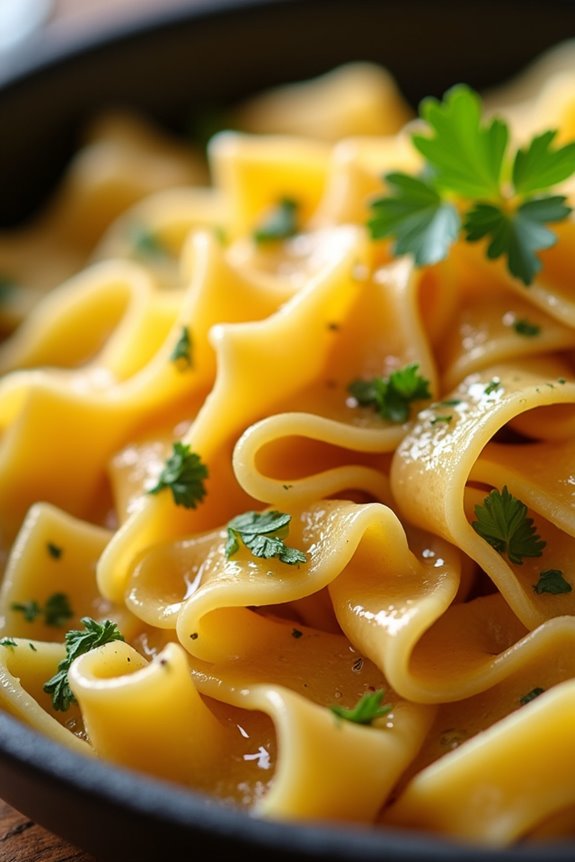
Spätzle is a beloved traditional German dish that consists of soft egg noodles, ideal as a side or main dish. Originating from the southern regions of Germany, particularly Swabia, these noodles are known for their unique texture and shape, often resembling small dumplings or irregularly shaped pasta.
Spätzle is incredibly versatile and can be served with various sauces, gravies, or simply sautéed in butter and served with cheese or herbs. Making homemade Spätzle is a delightful experience that brings a taste of Germany right into your kitchen.
The key to satisfactory Spätzle lies in the dough, which should be smooth and slightly sticky for the best consistency. Traditional methods involve using a Spätzle maker or a colander to form the noodles, but a simple cutting board and knife can also do the trick.
Once cooked, Spätzle can be enjoyed fresh or stored for later use, making it a practical addition to any meal. This recipe serves 4-6 people and is sure to impress your family and friends with its authentic flavor.
Ingredients (for 4-6 servings):
- 2 cups all-purpose flour
- 4 large eggs
- 1 cup milk
- 1 teaspoon salt
- 1/4 teaspoon nutmeg (optional)
- 2 tablespoons butter (for sautéing)
- Fresh parsley (for garnish, optional)
Cooking Instructions:
- Prepare the Dough: In a large mixing bowl, combine the flour and salt. Make a well in the center and crack in the eggs. Add the milk and nutmeg (if using). Using a wooden spoon or spatula, mix until the dough is smooth and slightly sticky. Let the dough rest for about 10-15 minutes to allow the flour to absorb the liquid.
- Boil Water: Fill a large pot with water and add a pinch of salt. Bring the water to a rolling boil over medium-high heat, as this is crucial for cooking the Spätzle properly.
- Form the Spätzle: If you have a Spätzle maker, place it over the boiling water and pour the dough into the hopper. If you don’t have a Spätzle maker, you can use a colander or a cutting board. Spread a small amount of dough on the board, and use a knife to cut small strips directly into the boiling water. The noodles should drop into the water and will sink to the bottom before rising to the surface when cooked.
- Cook the Noodles: Allow the Spätzle to cook for about 2-3 minutes after they rise to the surface. Once they float, they’re done. Use a slotted spoon to remove the noodles and transfer them to a bowl. Repeat the process with the remaining dough.
- Sauté the Spätzle: In a large skillet, melt the butter over medium heat. Once melted, add the cooked Spätzle and sauté for about 5-7 minutes until they’re slightly golden and crispy on the edges. Stir occasionally to promote even cooking.
- Serve: Transfer the sautéed Spätzle to a serving dish. Garnish with fresh parsley if desired, and serve immediately with your choice of sauce, gravy, or cheese.
Extra Tips:
When making Spätzle, it’s important to have the right dough consistency; it should be smooth and elastic but not too runny. If the dough seems too thick, you can add a bit more milk to loosen it.
For added flavor, consider incorporating grated cheese into the dough or sautéing the Spätzle with onions or garlic. Experiment with different sauces such as a rich mushroom sauce or a simple herbed butter to elevate the dish further. Enjoy your homemade Spätzle as a comforting addition to any meal!
Kartoffelsalat (Potato Salad)
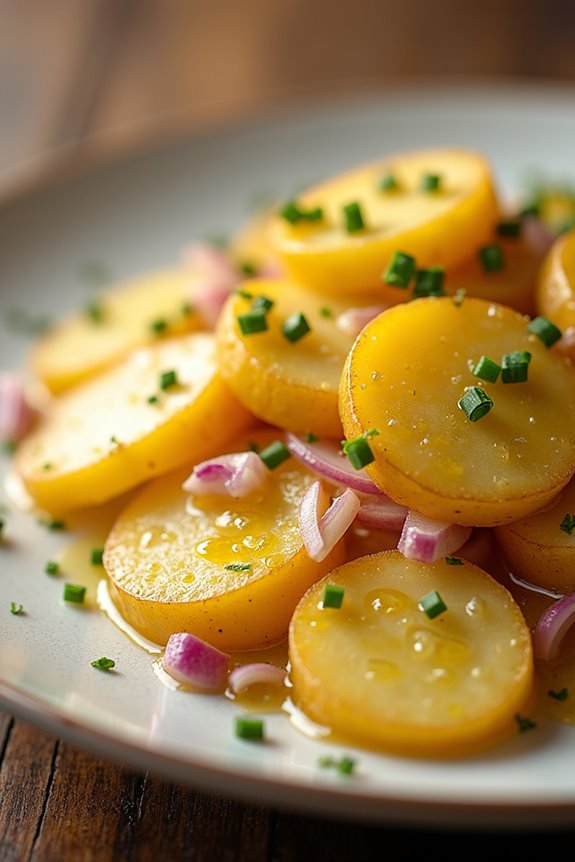
Kartoffelsalat, or German potato salad, is a beloved dish that showcases the simplicity and heartiness of traditional German cuisine. Unlike its American counterpart, which is often mayonnaise-based, this version is typically made with a tangy dressing of vinegar, mustard, and broth, making it lighter and more invigorating. It serves as a perfect side dish for barbecues, picnics, or family gatherings, complementing a variety of meats and other dishes.
The secret to a great Kartoffelsalat lies in the potatoes and their preparation, as well as allowing the flavors to meld together. This salad isn’t only delicious but also versatile, as it can be enjoyed warm or cold. With its unique combination of flavors and textures, Kartoffelsalat is sure to impress your guests and become a staple in your culinary repertoire.
Whether you’re following a family recipe or trying it for the first time, this dish is a wonderful representation of German hospitality and tradition.
Ingredients (Serves 4-6)
- 2 lbs (900g) waxy potatoes
- 1 small onion, finely chopped
- 1 cup (240ml) chicken or vegetable broth
- 3 tablespoons apple cider vinegar
- 2 tablespoons Dijon mustard
- 4 tablespoons vegetable oil
- Salt and black pepper, to taste
- 2 tablespoons fresh chives or parsley, chopped (for garnish)
Cooking Instructions
- Prepare the Potatoes: Start by washing the potatoes thoroughly to remove any dirt. Place them in a large pot and cover with cold water. Add a pinch of salt and bring to a boil over medium-high heat. Cook the potatoes until they’re fork-tender, about 20-25 minutes, depending on their size. Be careful not to overcook them, as they should hold their shape in the salad.
- Cool and Peel: Once the potatoes are cooked, drain them and let them cool for a few minutes until they’re safe to handle. While they’re still warm, peel the potatoes using a knife or your hands, as the skins should come off easily. After peeling, slice the potatoes into thick rounds or cubes, depending on your preference.
- Make the Dressing: In a medium bowl, combine the finely chopped onion, chicken or vegetable broth, apple cider vinegar, Dijon mustard, and vegetable oil. Whisk the ingredients together until well combined and season with salt and black pepper to taste. This dressing will add a flavorful kick to the potatoes.
- Combine Potatoes and Dressing: Place the warm potato slices in a large mixing bowl. Pour the dressing over the potatoes while they’re still warm, allowing them to absorb the flavors. Gently toss the potatoes to coat them evenly with the dressing and onion mixture, being careful not to break them apart.
- Let the Flavors Meld: Cover the bowl with plastic wrap or a lid and let the Kartoffelsalat sit at room temperature for about 30 minutes. This resting period allows the flavors to meld together beautifully. If you prefer the salad served cold, you can refrigerate it for a few hours before serving.
- Garnish and Serve: Before serving, give the salad a gentle toss to redistribute the dressing. Transfer the Kartoffelsalat to a serving dish and garnish with freshly chopped chives or parsley. Enjoy this delightful salad as a side to your favorite main courses.
Extra Tips
For an added depth of flavor, consider incorporating crispy bacon bits or sautéed bell peppers into the salad. If you prefer a creamier texture, you can mix in a dollop of sour cream or Greek yogurt to the dressing.
The key to a great Kartoffelsalat is to use waxy potatoes, as they hold their shape better and absorb the dressing beautifully. Don’t hesitate to adjust the seasoning to your taste, as every palate is different. Enjoy experimenting with this classic dish!
Goulash (German-Style Stew)
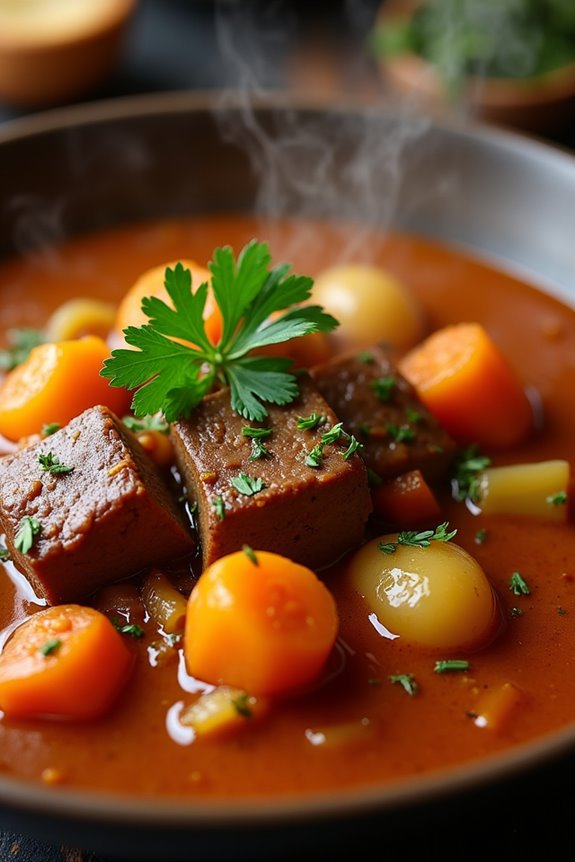
Goulash is a hearty and flavorful dish that has its roots in Hungary but has become a beloved staple in German cuisine. This comforting stew is perfect for chilly nights, filled with tender meat, vegetables, and a rich, paprika-infused broth that warms the soul. The traditional German version often features beef as the primary meat, along with onions, potatoes, and a variety of spices, creating a dish that’s both filling and satisfying.
In German households, goulash is frequently served with crusty bread or dumplings, making it a complete meal. It’s also a dish that benefits from slow cooking, allowing the flavors to meld beautifully and the meat to become incredibly tender. Whether you’re preparing it for a family gathering or a cozy dinner, this German-style goulash will surely be a crowd-pleaser.
Ingredients (Serves 4-6)
- 2 lbs beef chuck, cut into 1-inch cubes
- 2 tablespoons vegetable oil
- 2 large onions, chopped
- 3 cloves garlic, minced
- 2 tablespoons sweet paprika
- 1 teaspoon caraway seeds
- 1 teaspoon salt
- ½ teaspoon black pepper
- 1 can (14.5 oz) diced tomatoes
- 4 cups beef broth
- 2 medium potatoes, peeled and diced
- 2 carrots, sliced
- 1 bell pepper, chopped
- 2 tablespoons tomato paste
- 1 tablespoon Worcestershire sauce
- Fresh parsley, chopped (for garnish)
Cooking Instructions
- Brown the Meat: In a large pot or Dutch oven, heat the vegetable oil over medium-high heat. Add the beef cubes in batches, ensuring not to overcrowd the pan. Brown the meat on all sides, about 5-7 minutes per batch. This step enhances the flavor of the meat and adds depth to the stew.
- Sauté Onions and Garlic: After browning the meat, remove it from the pot and set aside. In the same pot, add the chopped onions and sauté for about 5 minutes until they become translucent. Stir in the minced garlic and cook for an additional minute until fragrant.
- Add Spices: Stir in the sweet paprika, caraway seeds, salt, and black pepper. Cook the spices with the onions and garlic for about 1-2 minutes, allowing them to release their flavors.
- Combine Ingredients: Return the browned beef to the pot. Add the diced tomatoes, beef broth, diced potatoes, sliced carrots, chopped bell pepper, tomato paste, and Worcestershire sauce. Stir everything together, making sure the ingredients are well combined.
- Simmer the Stew: Bring the mixture to a boil, then reduce the heat to low. Cover the pot and let it simmer for about 1.5 to 2 hours, stirring occasionally. This slow cooking process allows the beef to become tender and the flavors to meld together.
- Check Consistency and Season: After the cooking time, check the stew’s consistency. If it’s too thick, you can add a little more beef broth or water. Taste and adjust seasoning if necessary.
- Serve: Once the goulash is ready, ladle it into bowls and garnish with fresh parsley. Serve it hot with crusty bread or dumplings on the side.
Extra Tips
When making German-style goulash, feel free to customize the vegetables according to your taste or what you have on hand; adding peas or mushrooms can be a nice touch. For a spicier version, consider adding a pinch of cayenne pepper or some chopped chili peppers.
Additionally, this stew can be made a day in advance, as the flavors often deepen and improve overnight. Just reheat it gently before serving, and enjoy the enhanced taste of your goulash.
Käsespätzle (Cheese Spätzle)
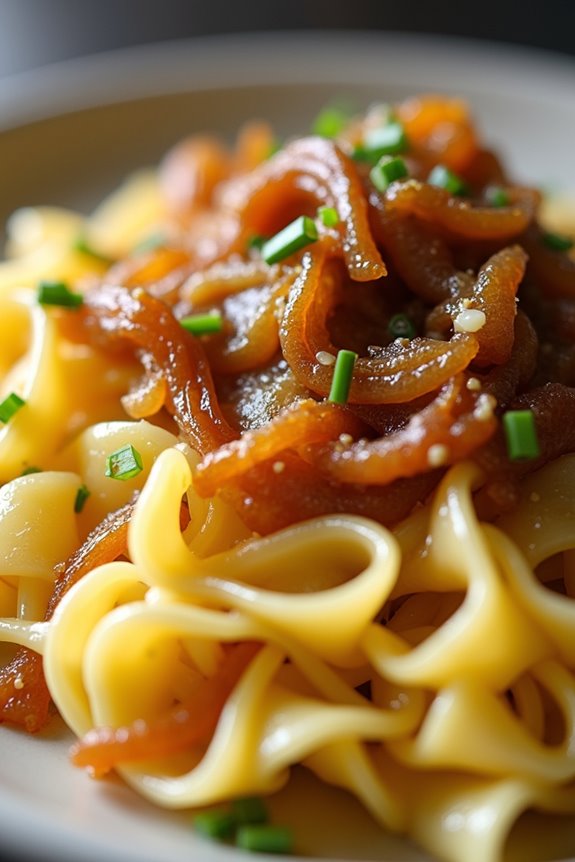
Käsespätzle, a beloved dish in Germany, is often referred to as the country’s answer to mac and cheese. This hearty meal consists of soft egg noodles called Spätzle, which are typically made from a simple batter of flour, eggs, and water. The Spätzle are then layered with a generous amount of cheese and fried onions, creating a delightful combination of flavors and textures.
It’s a comforting dish that highlights the rich culinary traditions of Germany, making it perfect for family dinners or gatherings.
The beauty of Käsespätzle lies in its simplicity and versatility. You can use a variety of cheeses, but traditional recipes often call for Emmental or Gruyère for their creamy melt and nutty flavors. Additionally, the dish can be enhanced with a sprinkle of chives or other herbs for a fresh touch.
Whether you enjoy it as a main course or a side dish, Käsespätzle is sure to warm your heart and satisfy your hunger.
Ingredients (Serves 4-6):
- 2 cups all-purpose flour
- 4 large eggs
- 1/2 cup water
- 1 teaspoon salt
- 1/4 teaspoon nutmeg (optional)
- 1 cup grated Emmental cheese (or Gruyère)
- 1 cup grated cheddar cheese (optional)
- 2 tablespoons butter
- 1 large onion, thinly sliced
- Fresh chives or parsley, chopped (for garnish)
Cooking Instructions:
- Prepare the Spätzle Batter: In a large bowl, combine the flour, eggs, salt, and nutmeg (if using). Gradually add the water while mixing until you achieve a smooth and slightly sticky batter. The consistency should be thicker than pancake batter but not too dry. Let the batter rest for about 15 minutes.
- Cook the Spätzle: Bring a large pot of salted water to a boil. You can use a Spätzle maker or a colander with large holes for this step. Place the batter into the Spätzle maker and press it through the holes into the boiling water. Alternatively, spoon small amounts of batter into the boiling water. Cook the Spätzle for about 2-3 minutes, or until they float to the surface. Remove them with a slotted spoon and transfer them to a colander to drain.
- Sauté the Onions: In a large skillet, melt the butter over medium heat. Add the sliced onions and cook them, stirring occasionally, until they’re golden brown and caramelized, about 10-15 minutes. Remove half of the onions and set them aside for garnish.
- Combine with Cheese: Once the Spätzle are drained, add them to the skillet with the remaining onions. Stir in the grated Emmental and cheddar cheese until they melt and coat the Spätzle evenly. Season with salt and pepper to taste.
- Serve: Transfer the cheesy Spätzle to a serving dish. Top with the reserved caramelized onions and a sprinkle of chopped chives or parsley for garnish. Serve immediately while hot.
Extra Tips:
For a richer flavor, consider adding some crispy bacon or ham to the dish before serving. You can also experiment with different cheese blends to find your favorite combination.
If you prefer a baked version, transfer the cheesy Spätzle into a baking dish, top with additional cheese, and bake at 350°F (175°C) until bubbly and golden brown. Enjoy your homemade Käsespätzle with a side salad or some pickled vegetables for a balanced meal!
Rotkohl (Braised Red Cabbage)
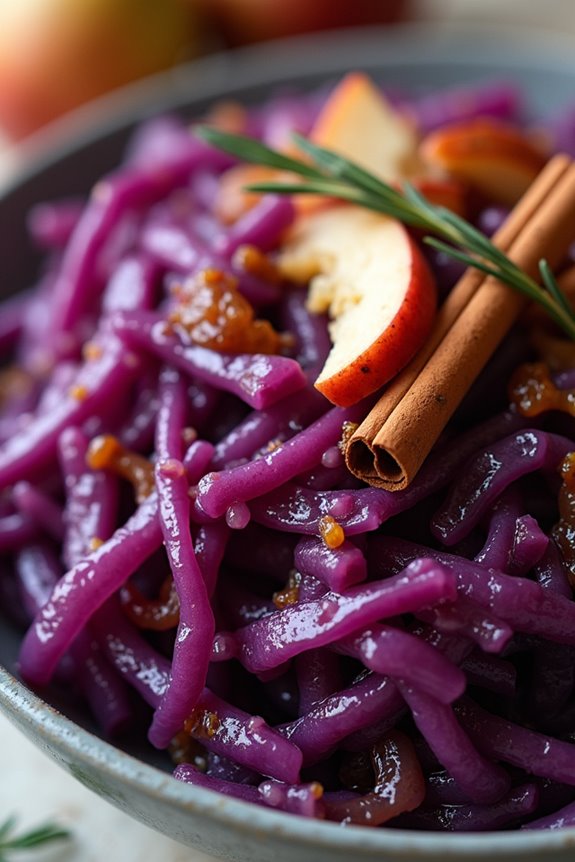
Rotkohl, or braised red cabbage, is a classic side dish in German cuisine known for its vibrant color and tangy-sweet flavor. This hearty dish is traditionally served alongside roasted meats, particularly during festive occasions and family gatherings. The combination of red cabbage, apples, and aromatic spices creates a delightful balance that complements a variety of main courses, making it a staple on many German dinner tables.
Preparing Rotkohl isn’t only simple but also allows the flavors to develop beautifully as it cooks. The slow braising process guarantees that the cabbage becomes tender while absorbing the rich flavors from the other ingredients. This dish can be made ahead of time and reheated, making it a convenient option for busy cooks. With its inviting aroma and appealing presentation, Rotkohl is sure to impress your guests and family alike.
Ingredients (Serves 4-6):
- 1 medium head of red cabbage (about 2 pounds), finely shredded
- 1 large onion, thinly sliced
- 2 apples, peeled, cored, and thinly sliced
- 1/4 cup apple cider vinegar
- 1/2 cup water
- 1/4 cup sugar
- 1/2 teaspoon ground cloves
- 1/2 teaspoon ground cinnamon
- 2 tablespoons butter
- Salt and pepper to taste
Cooking Instructions:
- Prepare the Cabbage: Start by removing the outer leaves of the red cabbage and cutting it in half. Remove the core and finely shred the cabbage with a sharp knife or a mandoline. Set aside in a large mixing bowl.
- Sauté the Onions: In a large, heavy-bottomed pot or Dutch oven, melt the butter over medium heat. Add the sliced onions and sauté for about 5-7 minutes, stirring occasionally, until they become translucent and slightly caramelized. This step adds depth of flavor to the dish.
- Add the Apples: Once the onions are softened, add the sliced apples to the pot. Cook for an additional 3-4 minutes, stirring frequently until the apples begin to soften. The sweetness of the apples will enhance the overall flavor of the dish.
- Combine Ingredients: Stir in the shredded cabbage, apple cider vinegar, water, sugar, ground cloves, and ground cinnamon. Mix everything well until the cabbage is evenly coated with the other ingredients.
- Braised Cooking: Bring the mixture to a gentle simmer, then reduce the heat to low. Cover the pot with a lid and let the cabbage braise for about 45 minutes to 1 hour, stirring occasionally. This slow cooking will allow the flavors to meld and the cabbage to become tender.
- Season and Serve: After the cooking time, taste the Rotkohl and adjust the seasoning with salt and pepper as needed. If desired, you can add a little more vinegar for extra tanginess. Serve hot as a side dish to your favorite German meat dishes.
Extra Tips:
When preparing Rotkohl, using a high-quality apple cider vinegar enhances the dish’s flavor profile. You can also experiment with different apple varieties for a unique taste; tart apples like Granny Smith work particularly well.
Additionally, the dish can be made a day in advance and stored in the refrigerator; the flavors will deepen and improve when reheated. Just remember to stir well and reheat gently to maintain the texture of the cabbage.
Maultaschen (German Dumplings)
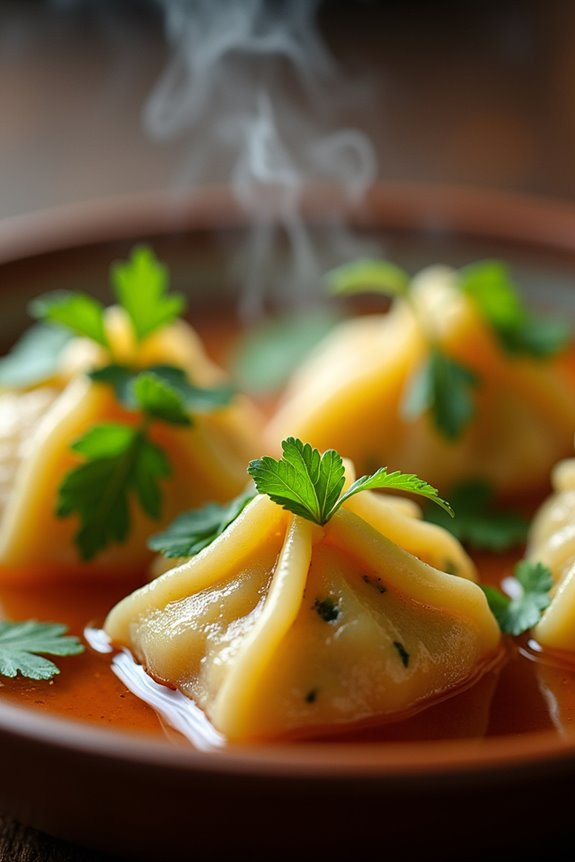
Maultaschen, often referred to as “Swabian ravioli,” are traditional German dumplings that are both hearty and satisfying. Originating from the Swabia region of Germany, these dumplings are typically filled with a mixture of meat, spinach, and various spices, all encased in a thin layer of pasta dough.
Traditionally, Maultaschen are served in broth or sautéed with onions and butter, making them a popular dish for family gatherings and special occasions.
Preparing Maultaschen requires some time and patience, but the end result is well worth the effort. They can be made in large batches and frozen for later use, making them a convenient option for busy weeknights or when you want to impress guests with your culinary skills.
Whether you choose to serve them in a savory broth or pan-fried with onions, this dish is sure to delight your taste buds.
Ingredients (Serves 4-6):
- 2 cups all-purpose flour
- 3 large eggs
- 1/2 teaspoon salt
- 1 tablespoon olive oil
- 1 pound ground meat (beef or pork)
- 1 cup fresh spinach, chopped
- 1 small onion, finely chopped
- 1 clove garlic, minced
- 1 teaspoon nutmeg
- Salt and pepper to taste
- 4 cups beef or vegetable broth (for serving)
- Fresh parsley for garnish (optional)
Cooking Instructions:
1. Make the Dough: In a large mixing bowl, combine the flour and salt. Create a well in the center and add the eggs and olive oil. Mix together until the dough starts to come together, then knead it on a floured surface for about 5-7 minutes until it’s smooth and elastic.
Wrap the dough in plastic wrap and let it rest for 30 minutes.
2. Prepare the Filling: While the dough is resting, heat a skillet over medium heat and add the chopped onion and garlic. Sauté until the onion is translucent, about 3-4 minutes.
In a bowl, combine the sautéed onion and garlic with the ground meat, chopped spinach, nutmeg, salt, and pepper. Mix well until all ingredients are well incorporated.
3. Roll Out the Dough: After the dough has rested, divide it into two equal portions. Using a rolling pin, roll each portion out on a floured surface to a thin layer, approximately 1/8 inch thick.
Make sure the dough is large enough to cut out squares or rectangles for the dumplings.
4. Fill the Dumplings: Cut the rolled-out dough into squares or rectangles (about 3×3 inches). Place a tablespoon of filling in the center of each piece.
Moisten the edges of the dough with water, fold over to create a pocket, and press the edges firmly to seal. Repeat until all the dough and filling are used.
5. Cook the Maultaschen: Bring a large pot of salted water or broth to a gentle boil. Carefully drop the Maultaschen into the boiling liquid and cook for about 10-12 minutes, or until they float to the top and are cooked through.
Remove with a slotted spoon and drain.
6. Serve: Maultaschen can be served in bowls of hot broth, garnished with fresh parsley, or sautéed in a skillet with butter and onions until golden brown.
Enjoy your delicious homemade Maultaschen!
Extra Tips:
When making Maultaschen, feel free to customize the filling to suit your tastes, adding ingredients like herbs or different types of meat.
If you find the dough too sticky, sprinkle a bit more flour while rolling it out. To save time, consider making a larger batch and freezing uncooked Maultaschen; simply boil them straight from the freezer when you’re ready to enjoy them.
Finally, experimenting with different serving styles, such as adding sour cream or cheese as a topping, can elevate the dish even further!
Apfelstrudel (Apple Strudel)

Apfelstrudel, or apple strudel, is a classic dessert that hails from Austria but has become a beloved staple in German cuisine. This delightful pastry features a thin layer of dough wrapping around a sweet and spiced apple filling, often enhanced with raisins and almonds. It’s traditionally served warm with a dusting of powdered sugar, and sometimes accompanied by a scoop of vanilla ice cream or a dollop of whipped cream.
Making Apfelstrudel from scratch may seem intimidating due to the delicate dough, but the process is rewarding and the results are absolutely delicious. The key to a perfect strudel lies in rolling the dough thinly enough to see through it, allowing for a flaky and airy texture when baked. This recipe will guide you through creating a homemade Apfelstrudel that will impress your family and friends with its authenticity and flavor.
Ingredients (serving size: 4-6 people)
- 2 cups all-purpose flour
- 1/2 teaspoon salt
- 1 tablespoon vegetable oil
- 1/2 cup lukewarm water
- 4-5 medium-sized apples (such as Granny Smith or Golden Delicious), peeled, cored, and sliced
- 1/2 cup granulated sugar
- 1 teaspoon ground cinnamon
- 1/4 cup raisins
- 1/4 cup slivered almonds or chopped walnuts
- 1 tablespoon lemon juice
- 1 tablespoon breadcrumbs
- 4 tablespoons melted butter
- Powdered sugar for dusting
Cooking Instructions
- Prepare the Dough: In a mixing bowl, combine the flour and salt. Create a well in the center and add the vegetable oil and lukewarm water. Mix until a rough dough forms. Transfer the dough onto a lightly floured surface and knead it for about 5-7 minutes until smooth and elastic. Wrap the dough in plastic wrap and let it rest for at least 30 minutes at room temperature.
- Prepare the Filling: In a large bowl, combine the sliced apples, granulated sugar, cinnamon, raisins, slivered almonds (or walnuts), and lemon juice. Toss the mixture until the apples are evenly coated. Set aside to allow the flavors to meld.
- Roll Out the Dough: After the dough has rested, place it on a large, floured tablecloth or a clean kitchen towel. With a rolling pin, gently roll the dough into a rectangle as thin as possible, about 1/8 inch thick. Once rolled out, carefully stretch the dough using your hands, letting gravity help to thin it further. Aim for a translucent appearance.
- Assemble the Strudel: Preheat your oven to 375°F (190°C). Brush the rolled-out dough with 2 tablespoons of melted butter. Sprinkle the breadcrumbs evenly across the surface of the dough, leaving a border around the edges. Spoon the apple filling onto the dough, spreading it evenly but not going all the way to the edges.
- Roll the Strudel: Starting from one end, carefully roll the dough over the filling, using the towel to assist you. Roll it tightly but gently to avoid tearing the dough. Once rolled, tuck the ends in to seal the filling inside and place the strudel seam-side down on a baking sheet lined with parchment paper.
- Bake the Strudel: Brush the top of the strudel with the remaining melted butter. Bake in the preheated oven for 30-35 minutes, or until the strudel is golden brown and crisp.
- Serve: Remove from the oven and let it cool for a few minutes. Dust with powdered sugar before slicing and serving warm, optionally with a side of vanilla ice cream or whipped cream.
Extra Tips: To achieve the best texture for your Apfelstrudel, be sure to let the dough rest adequately and roll it as thin as possible without tearing. If you find the dough is too elastic and difficult to stretch, let it rest for a few more minutes.
Additionally, you can customize the filling by adding spices like nutmeg or ginger for extra flavor or using different types of nuts and fruits to suit your taste. Enjoy your homemade Apfelstrudel!
Schwarzwälder Kirschtorte (Black Forest Cake)
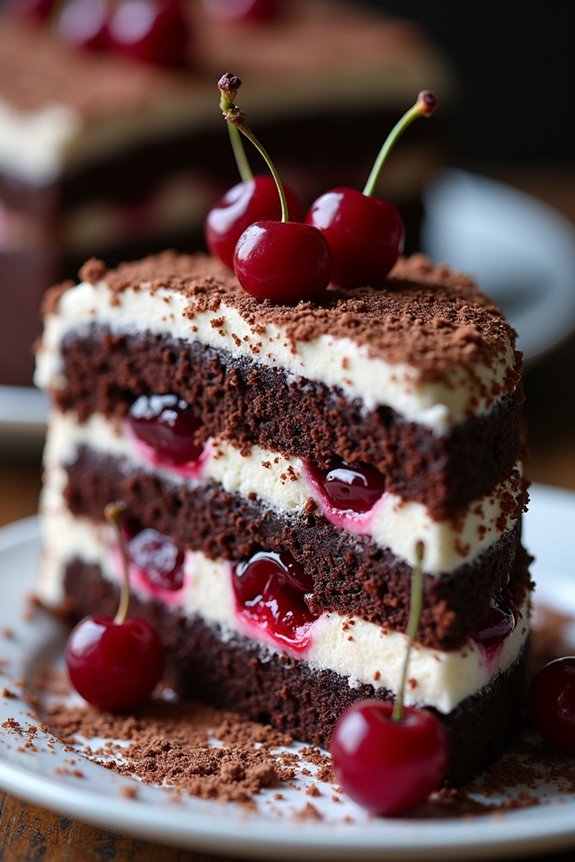
Schwarzwälder Kirschtorte, or Black Forest Cake, is one of Germany’s most iconic desserts, celebrated for its rich chocolate flavor, luscious cream, and the tartness of cherries. This delightful cake is a multi-layered confection that combines chocolate sponge cake, whipped cream, and cherries, all infused with a splash of Kirschwasser, a cherry schnapps that elevates the flavor profile.
Traditionally, it’s adorned with chocolate shavings and fresh cherries, making it not only a treat for the taste buds but also a feast for the eyes.
The origins of this cake can be traced back to the Black Forest region in Germany, where the local cherries and Kirschwasser are produced. Making Schwarzwälder Kirschtorte from scratch might seem intimidating, but with careful attention to detail and a bit of patience, anyone can create this classic dessert.
Perfect for special occasions or simply to impress family and friends, this cake embodies the spirit of German baking and is bound to be a hit at any dinner table.
Ingredients (Serves 4-6)
- 2 cups all-purpose flour
- 2 cups granulated sugar
- 3/4 cup unsweetened cocoa powder
- 1 1/2 teaspoons baking powder
- 1 1/2 teaspoons baking soda
- 1 teaspoon salt
- 2 large eggs
- 1 cup whole milk
- 1/2 cup vegetable oil
- 2 teaspoons vanilla extract
- 1 cup boiling water
- 1 jar (about 24 oz) Morello cherries, drained (reserve juice)
- 1 cup heavy whipping cream
- 1/4 cup powdered sugar
- 1/4 cup Kirschwasser (cherry schnapps)
- Chocolate shavings (for decoration)
Cooking Instructions
1. Prepare the Chocolate Cake Batter: Preheat your oven to 350°F (175°C). In a large mixing bowl, combine the flour, granulated sugar, cocoa powder, baking powder, baking soda, and salt. Mix well to guarantee all dry ingredients are evenly distributed.
Add the eggs, milk, vegetable oil, and vanilla extract to the bowl. Beat on medium speed for about 2 minutes until well combined. Carefully stir in the boiling water, which will thin the batter.
2. Bake the Cake Layers: Grease and flour two 9-inch round cake pans. Divide the batter evenly between the prepared pans. Bake in the preheated oven for 30-35 minutes, or until a toothpick inserted into the center comes out clean.
Allow the cakes to cool in the pans for 10 minutes, then turn them out onto wire racks to cool completely.
3. Prepare the Filling: Once the cakes are completely cooled, slice each cake in half horizontally to create four layers. In a separate bowl, whip the heavy cream with the powdered sugar until stiff peaks form. Set aside.
4. Assemble the Cake: Place one layer of chocolate cake on a serving plate. Drizzle a few tablespoons of the reserved cherry juice over the layer, then spread a layer of whipped cream on top. Scatter some of the Morello cherries over the whipped cream.
Repeat this process with the next two layers, using the same technique of cherry juice, whipped cream, and cherries.
5. Top the Cake: Place the final layer of chocolate cake on top. Cover the entire cake with the remaining whipped cream. Decorate the top with chocolate shavings and a few whole cherries for a classic presentation.
6. Chill and Serve: Refrigerate the assembled cake for at least 2 hours before serving to allow the flavors to meld and the cake to set. Slice and serve the Schwarzwälder Kirschtorte chilled.
Extra Tips
When making Schwarzwälder Kirschtorte, verify that your cakes are completely cooled before slicing to prevent crumbling. Using high-quality cocoa powder and fresh cherries will noticeably enhance the flavor of your cake.
If you prefer a less intense cherry flavor, reduce the amount of Kirschwasser used. Additionally, feel free to add more layers if you wish to make a taller cake, but be sure to adjust the quantities of cream and cherries accordingly.
