

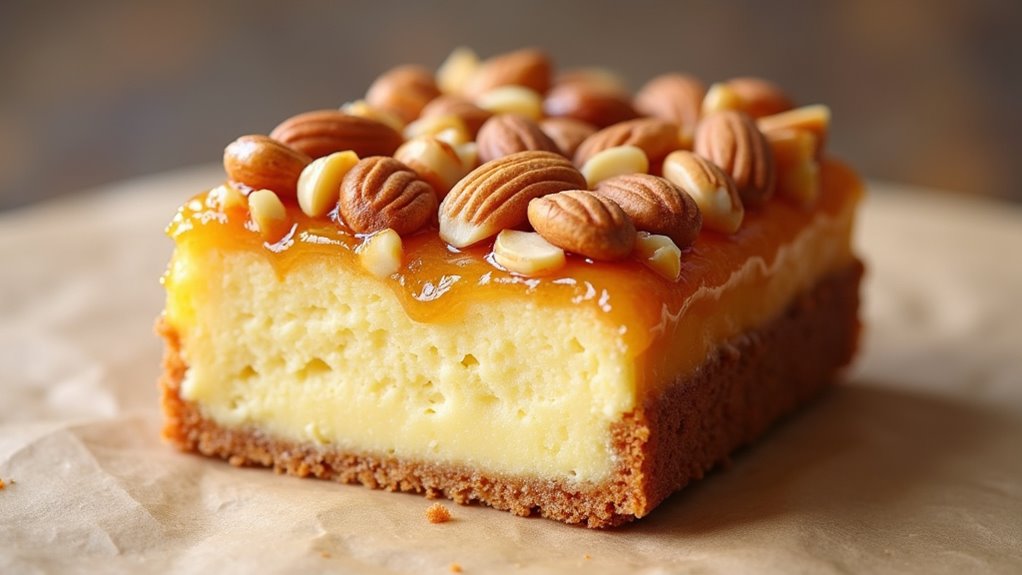
As I explore the world of traditional German cuisine, I’m captivated by the rich flavors and comforting textures each recipe offers. From tender Sauerbraten to crispy Schnitzel, every dish tells its own story. Mastering these 15 exquisite recipes can truly transform any dinner into a celebration of culinary heritage. Curious about which recipes can elevate your cooking skills? Let’s uncover these delightful treasures together.
Sauerbraten: The Traditional German Pot Roast
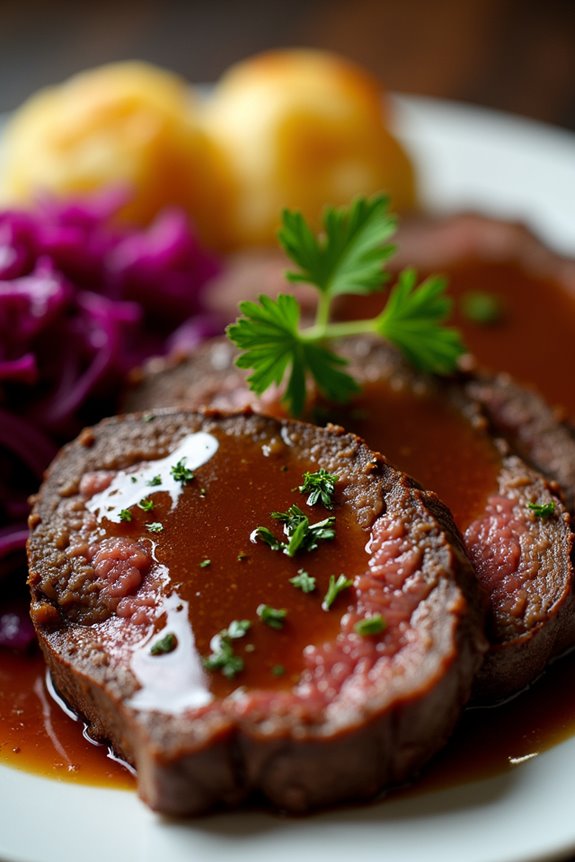
Sauerbraten, often referred to as Germany’s national dish, is a savory pot roast that’s both flavorful and tender. The name “Sauerbraten” translates to “sour roast,” which refers to the traditional marinating process that involves vinegar and various spices. This dish is typically made with beef, but variations can include other meats like pork or lamb. The long marinating time helps to break down the meat fibers, resulting in a succulent roast that’s perfect for special occasions or family gatherings.
To achieve the best flavor, Sauerbraten is traditionally marinated for several days, allowing the spices and vinegar to penetrate the meat. After marinating, the pot roast is slow-cooked until it’s fork-tender and served with a rich gravy that complements its tangy flavor. Sauerbraten is often accompanied by red cabbage and dumplings or potatoes, making it a hearty and satisfying meal that embodies the essence of German cuisine.
Ingredients (Serves 4-6):
- 3-4 lbs beef roast (chuck or round)
- 2 cups red wine vinegar
- 2 cups water
- 1 cup red wine
- 1 large onion, sliced
- 2 cloves garlic, minced
- 2 teaspoons sugar
- 2 teaspoons salt
- 1 teaspoon black pepper
- 1 teaspoon thyme
- 1 teaspoon bay leaves (2-3 leaves)
- 1 teaspoon allspice
- 2 tablespoons vegetable oil
- 2 cups beef broth
- 2 tablespoons cornstarch (optional, for thickening)
- Fresh parsley (for garnish)
Cooking Instructions:
- Marinate the Roast: In a large bowl, combine the red wine vinegar, water, red wine, sliced onion, minced garlic, sugar, salt, pepper, thyme, bay leaves, and allspice. Place the beef roast in the marinade, making sure it’s fully submerged. Cover and refrigerate for at least 3 days, turning the meat occasionally to guarantee even marination.
- Remove the Roast: After the marinating period, remove the roast from the marinade and pat it dry with paper towels. Reserve the marinade, as it will be used later for the gravy.
- Sear the Meat: In a large Dutch oven or heavy pot, heat the vegetable oil over medium-high heat. Once hot, add the roast and sear on all sides until browned, about 4-5 minutes per side. This step adds depth of flavor to the final dish.
- Add the Marinade and Broth: After searing, pour in the reserved marinade and beef broth. Bring the liquid to a simmer. Scrape any browned bits from the bottom of the pot to enhance the gravy’s flavor.
- Slow Cook the Roast: Cover the pot with a lid and reduce the heat to low. Allow the roast to cook for 3-4 hours, or until the meat is tender and easily shredded with a fork. You can also use a slow cooker for this step, cooking on low for 6-8 hours.
- Prepare the Gravy: Once the roast is done, carefully remove it from the pot and set it aside to rest. If desired, you can thicken the gravy by mixing cornstarch with a little cold water to create a slurry, then stirring it into the pot. Simmer until thickened.
- Serve: Slice the roast against the grain and serve it with the gravy poured over the top. Garnish with fresh parsley and serve alongside red cabbage and dumplings or potatoes.
Extra Tips:
When making Sauerbraten, the key to success lies in the marination process. The longer you marinate the meat, the more flavorful and tender it will become. Additionally, feel free to customize the spices in the marinade according to your taste preferences.
If you prefer a less tangy flavor, you can reduce the amount of vinegar used. For added depth, consider adding a few juniper berries or a splash of Worcestershire sauce to the marinade. Enjoy your Sauerbraten with traditional sides for an authentic German experience!
Bratwurst: German Sausages at Their Finest

Bratwurst is a traditional German sausage that has become beloved around the world for its delicious flavor and satisfying texture. Originating from the German word “brät,” which refers to finely minced meat, bratwurst is typically made from pork, beef, or veal, and is seasoned with a variety of spices.
It’s often grilled or pan-fried to achieve a crispy exterior while maintaining a juicy interior. When served with sauerkraut, mustard, and a hearty bread roll, bratwurst creates a delightful meal that embodies the rich culinary traditions of Germany.
Cooking bratwurst is a straightforward process that can be easily mastered, allowing you to enjoy this classic dish in your own kitchen. Whether you’re preparing it for a summer barbecue, a cozy family dinner, or simply craving a taste of Germany, this recipe will guide you through the steps to accomplish perfectly cooked bratwurst.
Pair it with traditional sides like potato salad or sautéed onions for an authentic experience that will transport your taste buds straight to Germany.
Ingredients (Serves 4-6):
- 6 bratwurst sausages
- 2 tablespoons olive oil
- 1 large onion, sliced
- 2 cloves garlic, minced
- 2 cups sauerkraut, drained
- 1 cup beef or chicken broth
- 1 tablespoon Dijon mustard
- Salt and pepper to taste
- Fresh parsley, chopped (for garnish)
- Bread rolls for serving
Cooking Instructions:
- Prepare the Ingredients: Start by gathering all your ingredients. Slice the onion and mince the garlic, making sure they’re ready to go as this will help streamline the cooking process.
- Heat the Oil: In a large skillet or frying pan, heat the olive oil over medium heat. This oil will help to brown the bratwurst and infuse flavor into the dish as it cooks.
- Cook the Bratwurst: Place the bratwurst in the heated skillet. Cook them for about 5-7 minutes, turning occasionally until they’re browned on all sides. This step is essential as it adds depth of flavor through caramelization.
- Add Onions and Garlic: Once the bratwurst are nicely browned, add the sliced onions and minced garlic to the skillet. Sauté for about 3-4 minutes until the onions become translucent and fragrant. This will enhance the overall flavor of the dish.
- Incorporate Sauerkraut and Broth: Add the drained sauerkraut to the skillet along with the beef or chicken broth. Stir everything together and bring the mixture to a simmer. The sauerkraut will soak up the flavors from the bratwurst and broth, creating a deliciously tangy accompaniment.
- Simmer the Dish: Cover the skillet and let the mixture simmer for about 10-15 minutes. This slow cooking will guarantee that the bratwurst are cooked through and flavorful, while the sauerkraut becomes tender.
- Add Mustard and Season: After simmering, stir in the Dijon mustard and season with salt and pepper to taste. The mustard will add a nice tang that complements the rich flavors of the bratwurst.
- Serve: Once everything is cooked, remove the skillet from heat. Serve the bratwurst and sauerkraut hot, garnished with fresh parsley, alongside bread rolls for a complete meal.
Extra Tips:
For a more flavorful bratwurst, consider marinating the sausages in a mixture of beer and spices for a few hours before cooking. This not only enhances the taste but also adds moisture during grilling or frying.
Additionally, while grilling bratwurst, try using indirect heat to prevent them from bursting, making sure they remain juicy inside. Serve with a variety of mustards and toppings for guests to personalize their bratwurst experience!
Spätzle: Soft Egg Noodles From Swabia
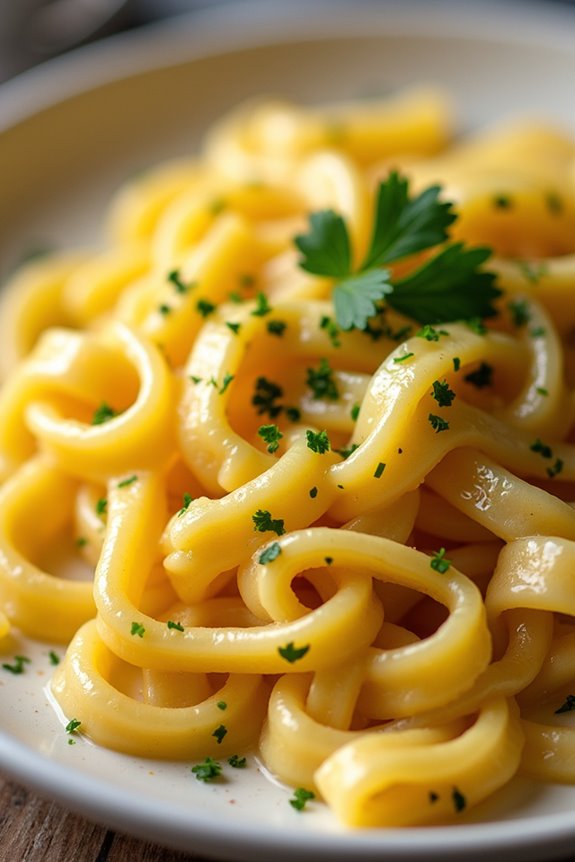
Spätzle is a beloved traditional dish originating from the Swabia region of Germany. These soft, egg noodles are a staple in German cuisine, often served as a side dish or main course. The name “Spätzle” translates to “little sparrows,” which reflects the irregular shapes of the noodles. With a rich, comforting flavor and a slightly chewy texture, Spätzle pairs wonderfully with various sauces, gravies, or simply melted butter and herbs.
Making Spätzle at home may seem challenging at first, but with a few simple ingredients and steps, you can create a delightful dish that embodies the essence of German cooking. The key to achieving the perfect Spätzle lies in the dough’s consistency and the cooking method, which involves boiling the noodles quickly to achieve that signature softness. Once you master this recipe, you can enjoy this versatile dish with a variety of accompaniments, from sautéed onions to hearty meat dishes.
Ingredients (Serves 4-6 people)
- 3 cups all-purpose flour
- 4 large eggs
- 1 cup milk (or water)
- 1 teaspoon salt
- 1/4 teaspoon nutmeg (optional)
- 2 tablespoons unsalted butter (for serving)
- Fresh parsley (for garnish, optional)
Cooking Instructions
- Prepare the Dough: In a large mixing bowl, combine the flour, salt, and nutmeg (if using). Create a well in the center of the flour mixture and add the eggs and milk. Using a wooden spoon or a spatula, mix the ingredients until a thick, smooth batter forms. The dough should be slightly sticky but still hold its shape.
- Rest the Dough: Cover the bowl with a clean kitchen towel and let the dough rest for about 20 minutes. This resting period allows the flour to fully hydrate and improves the texture of the noodles.
- Boil the Water: While the dough is resting, fill a large pot with water and bring it to a boil. Add a generous amount of salt to the water, which will enhance the flavor of the Spätzle.
- Cook the Spätzle: Once the water is boiling, you can use a Spätzle maker or a colander with large holes to push the dough into the water. If using a Spätzle maker, fill it with dough and slide it over the boiling water, allowing the noodles to drop in. If using a colander, press the dough through the holes with a spatula. Cook the noodles in batches, ensuring not to overcrowd the pot.
- Drain and Cool: The Spätzle will float to the surface when they’re cooked, which usually takes about 2-3 minutes. Use a slotted spoon to remove them from the water and place them in a colander to drain. You can also rinse them briefly under cold water to stop the cooking process if desired.
- Sauté (Optional): In a large skillet, melt the butter over medium heat. Add the cooked Spätzle and sauté for a few minutes until they’re lightly browned and heated through. This step adds an extra layer of flavor and texture to the dish.
- Serve: Transfer the Spätzle to a serving platter, garnish with fresh parsley if desired, and serve immediately. Enjoy them with your favorite sauce, gravy, or as a side to your main dish.
Extra Tips
For the best results, make sure your dough isn’t too thick, as this can lead to dense noodles. If you find the dough is too stiff, add a little more milk or water to achieve the right consistency.
Additionally, you can experiment by adding different herbs or spices to the dough for a unique flavor. Spätzle can also be made ahead of time and reheated in a skillet with butter before serving, making them a convenient option for gatherings or meal prep.
Rinderroulade: Beef Rolls With a Flavorful Filling

Rinderroulade is a classic German dish that showcases the hearty and comforting flavors of traditional cuisine. This delightful recipe features thinly sliced beef rolled around a savory filling of bacon, onions, mustard, and pickles, then braised until tender and infused with rich flavors.
Often served with red cabbage and dumplings or potatoes, Rinderroulade makes for a satisfying meal that’s perfect for family gatherings or special occasions.
The preparation of Rinderroulade can be a joyful experience, as it involves a bit of assembly but rewards you with a dish that’s both visually appealing and delicious. The key to a successful Rinderroulade lies in the quality of the beef and the balance of flavors in the filling.
With a few simple ingredients and some patience, you can create a dish that will impress your family and friends with its authenticity and taste.
Ingredients (Serving Size: 4-6 people)
- 1.5 lbs (700g) of beef sirloin or flank steak, thinly sliced
- 4 slices of bacon, diced
- 1 medium onion, finely chopped
- 2 tablespoons of Dijon mustard
- 4-6 dill pickles, cut into strips
- Salt and pepper, to taste
- 2 tablespoons of vegetable oil
- 1 cup of beef broth
- 1 cup of red wine (optional)
- 1-2 bay leaves
- Fresh parsley, for garnish
Cooking Instructions
- Prepare the Beef: Lay the thinly sliced beef on a cutting board. Season both sides generously with salt and pepper. This will enhance the flavor of the meat as it cooks.
- Make the Filling: In a skillet over medium heat, cook the diced bacon until crispy. Add the chopped onions and sauté until they become translucent. Remove from heat and let the mixture cool slightly. Once cooled, spread the Dijon mustard evenly over the beef slices.
- Assemble the Roulades: Place a spoonful of the bacon and onion mixture at one end of each beef slice, followed by a strip of dill pickle. Carefully roll the beef around the filling, starting from the end where the filling is placed, and secure with toothpicks or kitchen twine to hold the shape.
- Brown the Roulades: Heat the vegetable oil in a large skillet or Dutch oven over medium-high heat. Once hot, add the beef rolls and brown on all sides, about 3-4 minutes per side. This step adds flavor and color to the dish.
- Braise the Roulades: Once browned, remove the roulades from the skillet and set them aside. In the same skillet, add the beef broth and red wine (if using), scraping any browned bits from the bottom. Return the roulades to the skillet, add bay leaves, and bring to a simmer. Cover and cook on low heat for 1.5 to 2 hours, or until the beef is tender.
- Serve: Once cooked, remove the beef rolls from the pot and let them rest for a few minutes. Discard the bay leaves and adjust the sauce for seasoning if needed. Slice the roulades into rounds and serve with the sauce poured over the top. Garnish with fresh parsley.
Extra Tips
When making Rinderroulade, consider using a meat mallet to further tenderize the beef before rolling, which can enhance the overall texture.
Additionally, feel free to customize the filling with ingredients like grated carrots or fresh herbs to give it a different twist. If you have leftovers, Rinderroulade tastes even better the next day, as the flavors continue to develop!
Kartoffelsalat: Classic German Potato Salad
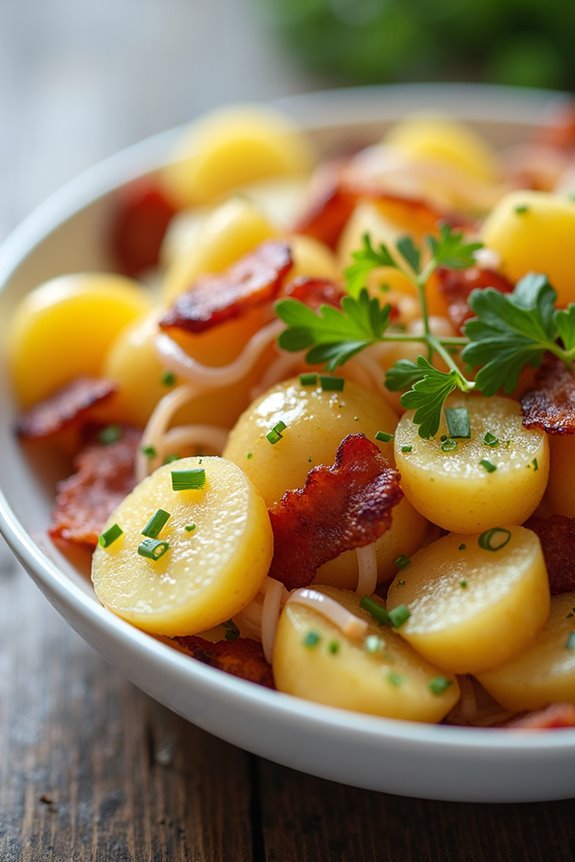
Kartoffelsalat, or German potato salad, is a beloved dish that showcases the versatility of potatoes in traditional German cuisine. Unlike its American counterpart, which is typically mayonnaise-based, this version often features a tangy vinegar dressing that complements the earthy flavor of the potatoes.
It’s often served warm or at room temperature, making it a perfect side dish for barbecues, picnics, or family gatherings. The use of fresh herbs and crispy bacon elevates the dish, making it a true comfort food that captures the essence of German cooking.
This delightful salad isn’t only easy to prepare but also allows for variations based on regional preferences. In southern Germany, for instance, it may be prepared with a broth-based dressing, while in other regions, you might find it enhanced with mustard or onions.
Whatever the variation, the heart of Kartoffelsalat remains the same: tender potatoes dressed in a flavorful vinaigrette. Gather your ingredients and let’s create this classic dish that’s sure to impress your family and friends.
Ingredients (Serves 4-6):
- 2 lbs (about 900g) of waxy potatoes (e.g., Yukon Gold)
- 1 cup (240ml) chicken or vegetable broth
- 1/4 cup (60ml) white wine vinegar
- 1/4 cup (60ml) vegetable oil
- 1 medium onion, finely chopped
- 4-6 slices of bacon, chopped
- 1 tablespoon Dijon mustard
- Salt and pepper, to taste
- Fresh chives or parsley, chopped (for garnish)
Cooking Instructions:
1. Cook the potatoes: Start by washing the potatoes to remove any dirt. Place them in a large pot and cover them with cold water. Add a pinch of salt and bring the water to a boil over medium heat.
Once boiling, reduce the heat to low and simmer for about 20-25 minutes, or until the potatoes are fork-tender. Be careful not to overcook them, as they should hold their shape.
2. Prepare the dressing: In a separate bowl, combine the chicken or vegetable broth, white wine vinegar, vegetable oil, and Dijon mustard. Whisk the ingredients together until well mixed.
This tangy dressing will bring out the flavors of the potatoes and add a delicious depth to the salad.
3. Cook the bacon and onions: In a skillet over medium heat, add the chopped bacon. Cook until crispy, about 5-7 minutes.
Once cooked, remove the bacon from the skillet but keep the drippings. In the same skillet, add the finely chopped onion and sauté in the bacon drippings until translucent and fragrant, about 3-4 minutes.
4. Combine ingredients: Once the potatoes are cooked, drain them and let them cool slightly. While they’re still warm, peel the skins off and slice the potatoes into thick rounds or cubes, depending on your preference.
In a large mixing bowl, combine the warm potatoes, sautéed onions, and crispy bacon.
5. Dress the salad: Pour the prepared dressing over the potato mixture while it’s still warm. Gently toss to combine, ensuring that the potatoes are evenly coated.
This will help the potatoes absorb the dressing’s flavors.
6. Season and garnish: Taste the salad and adjust the seasoning with salt and pepper as needed. Once satisfied, transfer the salad to a serving dish and garnish with freshly chopped chives or parsley for a pop of color.
Extra Tips: To enhance the flavor of your Kartoffelsalat, allow it to sit for about 30 minutes after dressing, as this will give the potatoes time to absorb the flavors of the vinaigrette.
Additionally, you can experiment with adding other ingredients such as diced pickles, hard-boiled eggs, or even a splash of mustard for extra flavor.
Finally, for a vegetarian version, simply omit the bacon and use olive oil for a lighter dressing. Enjoy your authentic German potato salad!
Weisswurst: Bavarian White Sausage
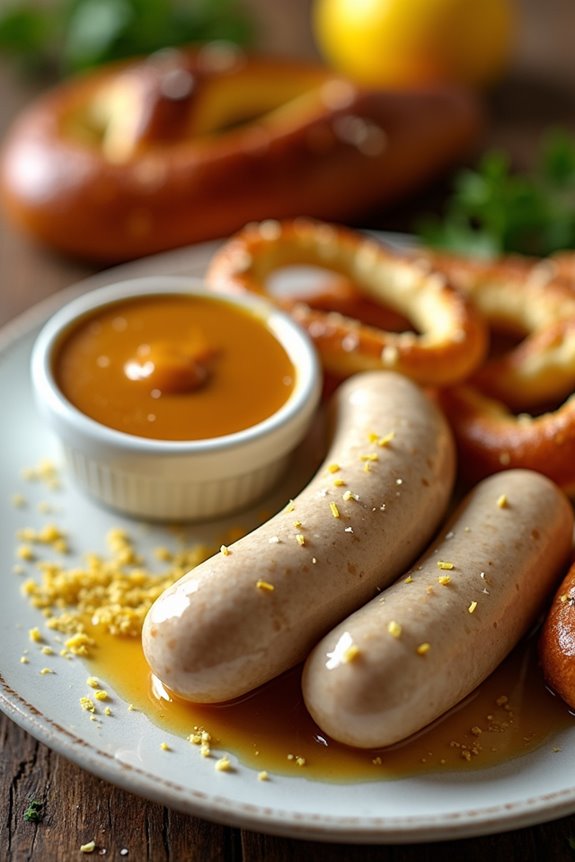
Weisswurst, or Bavarian White Sausage, is a traditional German dish that originates from Bavaria. Made from minced veal, pork back fat, and a blend of aromatic spices, this sausage is known for its mild flavor and smooth texture. It’s typically served with sweet mustard and freshly baked pretzels, making it a delightful addition to any gathering or festive occasion.
The history of Weisswurst dates back to the 19th century and is closely associated with the culinary traditions of Munich.
To prepare Weisswurst, it’s vital to use fresh ingredients and take special care during the preparation process. The sausages are traditionally poached rather than grilled, allowing them to retain their delicate flavor and moisture. Enjoying Weisswurst isn’t just about the taste; it’s also about the experience of sharing this beloved dish with friends and family while celebrating Bavarian culture.
Ingredients (Serves 4-6 people):
- 1 pound veal, finely ground
- 1/2 pound pork back fat, finely ground
- 1/2 cup crushed ice
- 1/4 cup fresh parsley, chopped
- 1 small onion, finely chopped
- 1 teaspoon lemon zest
- 1/2 teaspoon ground ginger
- 1/2 teaspoon ground cardamom
- 1/2 teaspoon white pepper
- 1/2 teaspoon salt
- 1/4 teaspoon nutmeg
- Sausage casings (natural hog casings)
- Sweet mustard, for serving
- Pretzels, for serving
Cooking Instructions:
- Prepare the Casings: Rinse the sausage casings thoroughly under cold running water to remove any salt. Soak them in warm water for at least 30 minutes to make them pliable for stuffing.
- Mix the Meat Mixture: In a large bowl, combine the finely ground veal and pork back fat. Add the crushed ice, chopped parsley, finely chopped onion, lemon zest, ground ginger, ground cardamom, white pepper, salt, and nutmeg. Mix everything together until well combined, ensuring the mixture is smooth and creamy.
- Stuff the Casings: Fit a sausage stuffer with one of the soaked casings. Carefully fill the casing with the meat mixture, being careful not to overstuff. Leave some room for expansion as the sausages cook. Tie off the ends securely with string, and twist the sausages into links of about 6 inches in length.
- Poach the Sausages: In a large pot, bring water to a gentle simmer (not boiling). Carefully add the stuffed sausages to the pot and poach them for about 25-30 minutes, or until they’re cooked through and firm to the touch. Make sure the water temperature remains consistent, as boiling can cause the casings to burst.
- Serve: Once cooked, remove the sausages from the pot and let them rest for a few minutes. Serve the Weisswurst warm with sweet mustard and freshly baked pretzels for an authentic Bavarian experience.
Extra Tips:
When making Weisswurst, using high-quality meat and fresh ingredients is essential for the best flavor. For added authenticity, consider using a meat grinder to achieve the right consistency for the meat mixture.
Additionally, be cautious not to overcook the sausages, as this can lead to a dry texture. Enjoy the process of making Weisswurst, and don’t hesitate to experiment with the spices to find your perfect flavor profile!
Käsekuchen: Traditional German Cheesecake
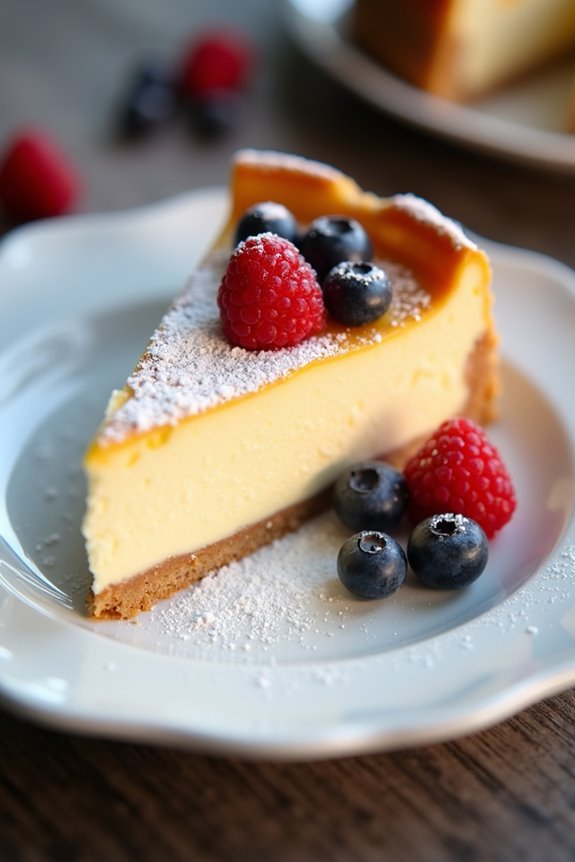
Käsekuchen, or German cheesecake, is a delightful dessert that has been a staple in German households for generations. Unlike the American-style cheesecake, which is often dense and rich, Käsekuchen boasts a lighter texture, primarily due to the use of quark, a fresh dairy product similar to yogurt or cream cheese. This cheesecake can be enjoyed plain or topped with fresh fruits and is perfect for any occasion, from family gatherings to festive celebrations.
The beauty of Käsekuchen lies not only in its taste but also in its simplicity. It combines basic ingredients to create a deliciously creamy filling with a buttery, crumbly crust. This recipe serves 4-6 people, making it an ideal choice for small gatherings or a sweet ending to a family dinner. With just a few steps and a little patience, you’ll be able to savor this traditional German dessert in the comfort of your own home.
Ingredients
- 200g digestive biscuits or graham crackers
- 100g unsalted butter, melted
- 500g quark (or a mix of cream cheese and sour cream)
- 150g granulated sugar
- 3 large eggs
- 1 teaspoon vanilla extract
- Zest of 1 lemon
- 2 tablespoons all-purpose flour
- A pinch of salt
Cooking Instructions
1. Prepare the Crust: Begin by preheating your oven to 175°C (350°F). In a food processor, crush the digestive biscuits or graham crackers into fine crumbs. Combine the crumbs with the melted butter in a mixing bowl and stir until the mixture resembles wet sand.
Press this mixture firmly into the bottom of a 9-inch springform pan to form an even layer, ensuring it’s compact for a sturdy crust. Bake in the preheated oven for about 10 minutes, then remove and let it cool.
2. Make the Filling: In a large mixing bowl, add the quark (or the cream cheese and sour cream mixture) along with the granulated sugar, eggs, vanilla extract, lemon zest, flour, and a pinch of salt. Using an electric mixer, beat the mixture on medium speed until it’s well combined and smooth, ensuring there are no lumps.
This will create a light and airy filling for your cheesecake.
3. Combine and Bake: Once the filling is ready, pour it over the cooled crust in the springform pan. Spread it evenly with a spatula. Place the cheesecake in the oven and bake for 50-60 minutes, or until the edges are lightly golden and the center is set but slightly jiggly.
Turn off the oven and leave the cheesecake inside for an additional 30 minutes to cool gradually, which helps prevent cracking.
4. Cool and Serve: After the cheesecake has cooled in the oven, remove it from the oven and let it cool to room temperature. Once cooled, refrigerate it for at least 4 hours, or preferably overnight.
When ready to serve, carefully remove the sides of the springform pan. You can garnish it with fresh fruits, whipped cream, or a dusting of powdered sugar if desired.
Extra Tips
When making Käsekuchen, using high-quality quark is essential for achieving the best flavor and texture. If quark isn’t available, a combination of cream cheese and sour cream works as a good substitute.
Additionally, be mindful of baking the cheesecake at a lower temperature to prevent it from cracking. Always allow the cheesecake to cool gradually in the oven and chill thoroughly in the refrigerator before serving to enhance its flavor and texture.
Enjoy your homemade Käsekuchen with a cup of coffee or tea for an authentic German experience!
Apfelstrudel: Delicious Apple Strudel
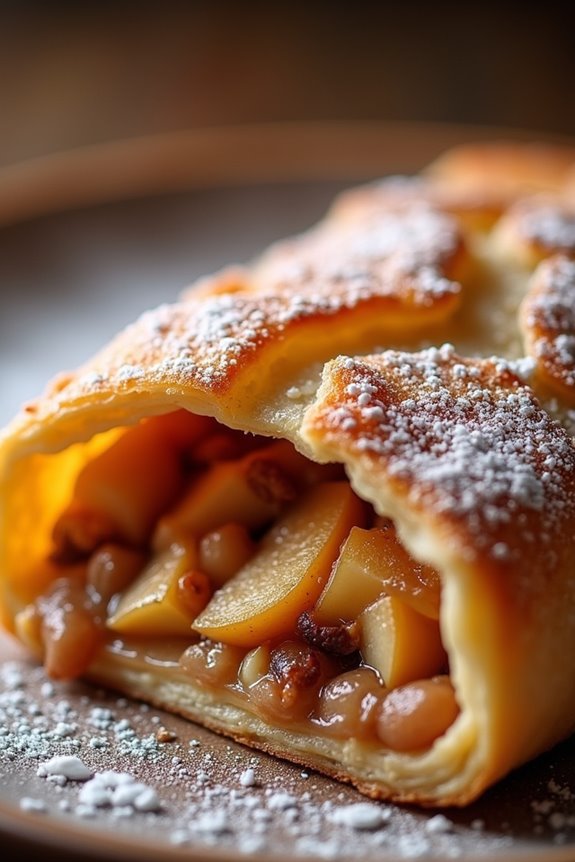
Apfelstrudel, a traditional German pastry, is a delightful dessert that features a thin, flaky dough wrapped around a sweet apple filling. This beloved dish has its roots in Austria but has become a staple in German cuisine, celebrated for its comforting flavors and satisfying textures. The combination of tart apples, cinnamon, and sugar creates a warm filling that contrasts beautifully with the crisp outer shell.
Whether served with a scoop of vanilla ice cream or a dollop of whipped cream, this strudel is guaranteed to impress at any gathering.
Making Apfelstrudel may seem intimidating due to the delicate dough, but with a bit of patience and practice, anyone can create this delicious treat. The key to a great strudel lies in rolling the dough thinly and evenly, allowing it to become wonderfully crisp when baked. This recipe serves 4-6 people, making it perfect for family gatherings or special occasions.
Ingredients:
- 1 ½ cups all-purpose flour
- 1 teaspoon salt
- 1 tablespoon vegetable oil
- ½ cup warm water
- 4-5 medium-sized apples (preferably Granny Smith or Braeburn)
- ½ cup granulated sugar
- 1 teaspoon ground cinnamon
- ½ cup raisins (optional)
- ½ cup chopped walnuts or almonds (optional)
- 3 tablespoons breadcrumbs
- 4 tablespoons unsalted butter, melted
- Powdered sugar for dusting (optional)
Cooking Instructions:
1. Prepare the Dough: In a mixing bowl, combine the flour and salt. Make a well in the center and add the vegetable oil and warm water. Gradually mix the flour into the liquid until a dough forms. Knead the dough on a floured surface for about 5-10 minutes until smooth and elastic.
Wrap the dough in plastic wrap and let it rest for at least 30 minutes at room temperature. This resting time helps to relax the gluten, making it easier to roll out later.
2. Prepare the Filling: While the dough is resting, peel, core, and slice the apples into thin pieces. In a large bowl, combine the sliced apples with granulated sugar, ground cinnamon, raisins, and nuts (if using). Confirm the apples are well-coated with the mixture. The sugar will draw out some moisture from the apples, creating a juicy filling.
3. Roll Out the Dough: After the resting period, place the dough on a large, floured cloth or a clean kitchen towel. Using a rolling pin, roll the dough out as thinly as possible, ideally to the size of the cloth. The dough should be almost transparent. If it tears slightly, that’s okay; you can patch it up with your fingers.
4. Assemble the Strudel: Brush the rolled-out dough with melted butter, leaving a small border around the edges. Sprinkle the breadcrumbs evenly over the dough to absorb moisture from the filling. Spread the apple mixture over the breadcrumbs, making sure to leave the edges clear.
Carefully lift the cloth to help roll the dough over the filling, creating a tight log shape. Tuck in the ends to seal the strudel.
5. Bake the Strudel: Preheat the oven to 375°F (190°C). Place the rolled strudel seam-side down on a baking sheet lined with parchment paper. Brush the top with more melted butter. Bake for approximately 30-40 minutes or until golden brown and crisp. Keep an eye on it to prevent burning.
6. Serve: Once baked, remove the strudel from the oven and let it cool slightly. Dust with powdered sugar before slicing. Serve warm, accompanied by vanilla ice cream or whipped cream if desired.
Extra Tips:
When making Apfelstrudel, don’t rush the dough preparation; allowing it to rest is essential for achieving the right texture. If you’re short on time, you can use store-bought phyllo pastry as a quicker alternative.
For added flavor, experiment with different types of apples or add a splash of lemon juice to the filling. Remember, the strudel is best enjoyed fresh, so try to serve it the same day it’s baked for maximum crispness!
Rotkohl: Sweet and Sour Red Cabbage
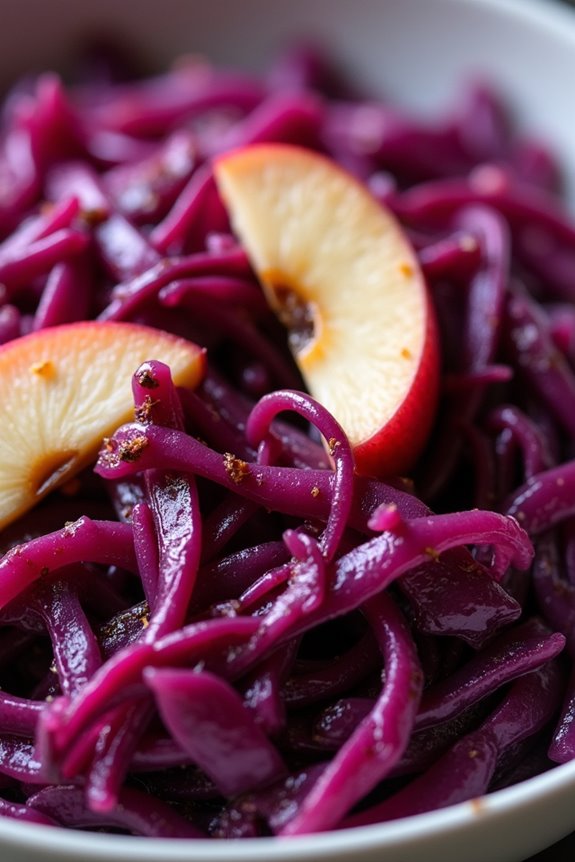
Rotkohl, or sweet and sour red cabbage, is a classic German side dish that brings a delightful balance of flavors to any meal. This vibrant dish isn’t only visually appealing but also bursts with the rich, tangy taste that complements hearty German dishes such as sausages, roast meats, and potato dumplings. The combination of sweet apples, vinegar, and spices creates a unique flavor profile that’s both comforting and invigorating.
Making Rotkohl is a straightforward process that involves simmering red cabbage with a variety of ingredients to enhance its natural sweetness and tartness. This dish is typically served warm, making it an excellent addition to holiday feasts or family dinners. Once you master this traditional recipe, you can easily adjust the flavors to suit your preferences, making it a versatile staple in your culinary repertoire.
Ingredients (Serves 4-6):
- 1 medium head of red cabbage, finely shredded
- 2 tablespoons butter
- 1 medium onion, finely chopped
- 2 apples, peeled, cored, and sliced
- 1/4 cup apple cider vinegar
- 1/4 cup sugar
- 1 teaspoon salt
- 1/2 teaspoon black pepper
- 1/2 teaspoon ground cloves
- 1/2 teaspoon ground cinnamon
- 1/4 cup water
- 1 tablespoon cornstarch (optional, for thickening)
Instructions:
- Prepare the Cabbage: Start by removing the outer leaves of the red cabbage, then cut it into quarters and remove the core. Finely shred the cabbage using a sharp knife or a mandoline slicer, making certain that the pieces are uniform for even cooking.
- Sauté the Onions: In a large pot or Dutch oven, melt the butter over medium heat. Add the chopped onions and sauté them until they become soft and translucent, which usually takes about 5-7 minutes. This step enhances the flavor of the dish by adding a savory base.
- Add the Apples and Cabbage: Stir in the sliced apples and shredded red cabbage. Mix well to combine all the ingredients evenly. The apples will add sweetness that balances the tartness of the cabbage.
- Incorporate the Seasonings: Pour in the apple cider vinegar and sprinkle the sugar, salt, black pepper, ground cloves, and ground cinnamon over the cabbage mixture. Stir everything together so that the seasonings are well distributed.
- Simmer the Mixture: Add the water to the pot, cover it with a lid, and let it simmer on low heat for about 30-40 minutes. Stir occasionally to prevent sticking and to guarantee even cooking. The cabbage should become tender and infused with the flavors of the seasonings.
- Adjust Consistency: If you prefer a thicker sauce, mix the cornstarch with a little cold water to create a slurry, and then stir it into the simmering cabbage. Continue to cook for an additional 5-10 minutes until the mixture thickens to your liking.
- Taste and Serve: Once the cabbage is tender and the flavors have melded together, taste and adjust the seasoning if necessary. Serve the Rotkohl warm as a side dish to your favorite German entrees.
Extra Tips:
When making Rotkohl, feel free to experiment with different types of apples to find the right balance of sweetness and tartness for your taste. Additionally, you can prepare this dish a day in advance, as the flavors deepen and improve over time in the refrigerator. Just reheat gently before serving.
This dish also freezes well, making it a convenient option for meal prep. Enjoy your cooking experience!
Pretzels: Iconic German Soft Pretzels
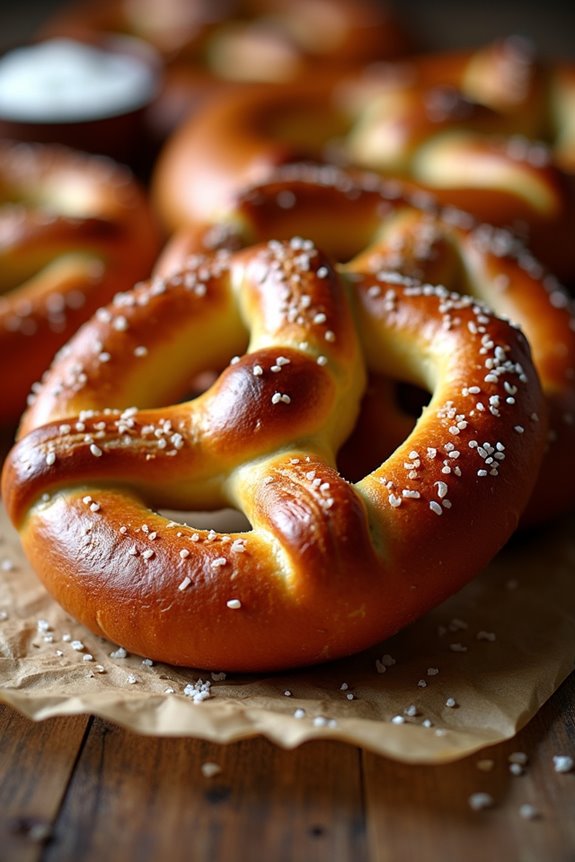
Soft pretzels are a beloved snack that has transcended borders, but their origins lie deep in German tradition. Known for their chewy texture and distinctive knot shape, these pretzels are often enjoyed with mustard or served alongside a revitalizing beer. The golden brown exterior, achieved through a unique baking process, encases a soft, fluffy interior that’s irresistible.
Making your own soft pretzels at home can be a rewarding experience, bringing the taste of Germany right into your kitchen.
Preparing soft pretzels is easier than you might think. This recipe will guide you through the steps to create 4-6 delicious pretzels that are perfect for a cozy family gathering or a festive celebration. With just a few basic ingredients, you can create these iconic treats that are sure to impress your guests and satisfy your cravings.
Let’s explore the world of pretzel-making!
Ingredients (Serves 4-6)
- 4 cups all-purpose flour
- 1 packet (2 1/4 teaspoons) active dry yeast
- 1 1/2 cups warm water (110°F)
- 1 tablespoon granulated sugar
- 1 teaspoon salt
- 1/4 cup baking soda
- 1 large egg (for egg wash)
- Coarse sea salt (for sprinkling)
Cooking Instructions
- Activate the Yeast: In a large mixing bowl, combine the warm water, granulated sugar, and active dry yeast. Stir gently to dissolve the sugar and yeast, then let it sit for about 5-10 minutes until foamy. This step guarantees that the yeast is active and will help the pretzels rise effectively.
- Make the Dough: Once the yeast mixture is foamy, add the salt and gradually incorporate the all-purpose flour, one cup at a time. Mix with a wooden spoon or your hands until a shaggy dough forms. Knead the dough on a lightly floured surface for about 5-7 minutes until it becomes smooth and elastic. This kneading process develops the gluten, giving your pretzels that desired chewy texture.
- Let the Dough Rise: Place the kneaded dough in a lightly greased bowl, cover it with a clean kitchen towel, and let it rise in a warm area for about 1 hour or until it has doubled in size. This rising period is essential for the dough to develop flavor and texture.
- Shape the Pretzels: After the dough has risen, punch it down to release any air bubbles. Divide the dough into 8 equal pieces. Roll each piece into a long rope (about 24 inches), then twist it into a pretzel shape. To do this, form a U shape, cross the ends over each other, and then twist them around once before bringing them down to the bottom of the U. Place the shaped pretzels on a parchment-lined baking sheet.
- Prepare the Baking Soda Bath: Preheat your oven to 450°F (232°C). In a large pot, bring 10 cups of water and the baking soda to a gentle boil. Carefully add the pretzels to the boiling water, cooking them for about 30 seconds on each side. This step gives the pretzels their unique flavor and chewy texture.
- Egg Wash and Bake: After boiling, return the pretzels to the baking sheet. Beat the egg in a small bowl and brush the mixture over each pretzel for a glossy finish. Sprinkle coarse sea salt on top. Bake the pretzels in the preheated oven for 12-15 minutes, or until they’re golden brown.
- Cool and Serve: Once baked, remove the pretzels from the oven and allow them to cool on a wire rack for a few minutes. Serve warm with mustard, cheese dip, or your favorite toppings.
Extra Tips
For the best results, verify your water temperature is just right when activating the yeast; too hot can kill the yeast, while too cold won’t activate it properly.
Feel free to experiment with toppings beyond coarse salt; try adding garlic powder, sesame seeds, or even cheese before baking for a delicious twist.
Additionally, pretzels are best enjoyed fresh, but they can be stored in an airtight container for a couple of days or frozen for longer storage. Reheat them in the oven for a few minutes to restore their original texture.
Gulasch: Hearty German-Style Goulash
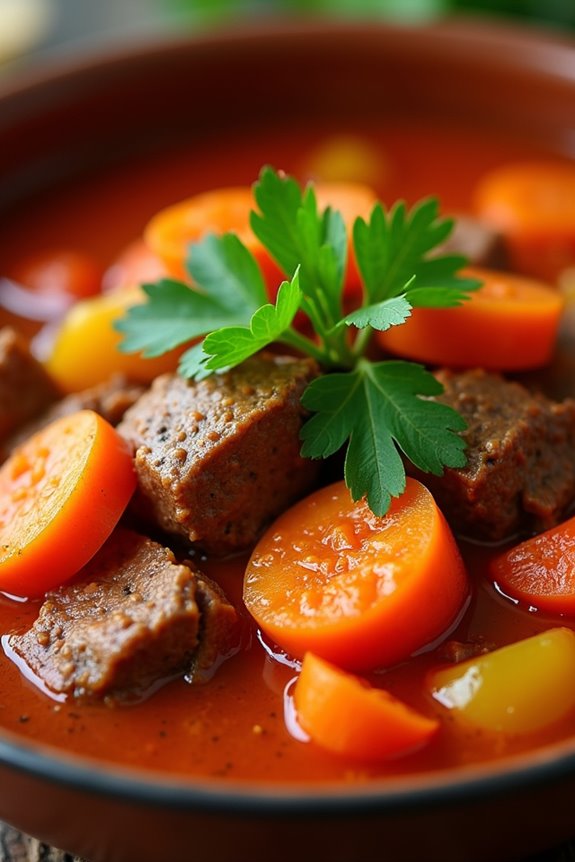
Gulasch, or goulash, is a traditional dish that has its roots in Hungary but has become a beloved staple in German cuisine. This hearty stew is characterized by its rich, flavorful broth, tender chunks of meat, and a variety of vegetables, making it a perfect comfort food for chilly evenings. The dish is often served with bread or noodles, allowing you to soak up the delicious sauce.
While there are many variations, the German version typically emphasizes the use of paprika, which gives the dish its signature deep red color and smoky flavor.
To make a satisfying pot of Gulasch, you’ll want to start with good quality beef, as it’s the star of the dish. Slow cooking is vital to guarantee that the meat becomes perfectly tender and absorbs the flavors of the spices and vegetables. This recipe serves 4-6 people, making it ideal for family dinners or gatherings with friends.
So gather your ingredients, and let’s get started on this delicious German-style goulash!
Ingredients
- 2 lbs beef chuck, cut into 1-inch cubes
- 2 tablespoons vegetable oil
- 2 large onions, chopped
- 3 cloves garlic, minced
- 2 tablespoons sweet paprika
- 1 teaspoon caraway seeds
- 1 teaspoon dried thyme
- 1 can (14 oz) diced tomatoes
- 4 cups beef broth
- 2 large carrots, sliced
- 2 bell peppers (red or green), chopped
- Salt and pepper to taste
- Fresh parsley, chopped (for garnish)
Cooking Instructions
- Sear the Beef: In a large pot or Dutch oven, heat the vegetable oil over medium-high heat. Add the beef cubes in batches, making sure not to overcrowd the pot. Sear the beef on all sides until browned, about 5-7 minutes. This step is essential as it helps to develop a rich flavor base for the goulash.
- Sauté the Onions and Garlic: Once the meat is browned, remove it from the pot and set it aside. In the same pot, add the chopped onions and sauté them for about 5 minutes, or until they’re soft and translucent. Add in the minced garlic and cook for an additional minute, stirring frequently to prevent burning.
- Add the Spices: Stir in the sweet paprika, caraway seeds, and thyme. Cook for about 1-2 minutes until the spices are fragrant. This step enhances the depth of flavor and guarantees that the spices are well incorporated into the dish.
- Combine Ingredients: Return the browned beef to the pot and add the diced tomatoes (with their juices) and beef broth. Stir well to combine all ingredients. Bring the mixture to a gentle boil.
- Simmer: Once boiling, reduce the heat to low, cover the pot, and let it simmer for about 1.5 to 2 hours. Stir occasionally, allowing the flavors to meld together and the meat to become tender. If the sauce becomes too thick, you can add a little more beef broth or water.
- Add Vegetables: After the simmering time, add the sliced carrots and chopped bell peppers to the pot. Continue to simmer for another 30 minutes, until the vegetables are tender and the beef is fork-tender.
- Season and Serve: Taste the goulash and season with salt and pepper as needed. Once finished, ladle the goulash into bowls and garnish with freshly chopped parsley. Serve with crusty bread or noodles for a complete meal.
Extra Tips
For the best results, let your goulash sit for a few hours or even overnight in the refrigerator before serving. This allows the flavors to deepen and intensify.
Additionally, feel free to experiment with other vegetables like potatoes or mushrooms, and adjust the spices to your personal preference. Gulasch can also be frozen for later enjoyment, making it a convenient dish to prepare in advance. Enjoy your hearty German-style goulash!
Schnitzel: Breaded and Fried Meat Cutlets

Schnitzel is a classic German dish that has gained popularity around the world for its crispy exterior and tender meat. Traditionally made with veal, this dish can also be prepared using pork, chicken, or turkey. The secret to a perfect schnitzel lies in the breading process and the frying technique, which together create a delicious golden-brown crust that encapsulates the juicy meat inside.
Often served with a wedge of lemon and sides such as potato salad or spaetzle, schnitzel isn’t only a staple in German cuisine but also a favorite among families for its satisfying flavors and appetizing presentation.
To achieve the perfect schnitzel, it’s crucial to use thinly pounded meat, which allows for even cooking and enhances the tenderness. The meat is coated in flour, dipped in egg, and then covered in breadcrumbs, guaranteeing that every bite is bursting with flavor. Frying in a generous amount of oil or clarified butter gives the schnitzel a delightful crunch that’s hard to resist.
Whether you’re cooking for a special occasion or a casual family dinner, schnitzel is sure to impress your guests and satisfy your taste buds.
Ingredients (serving size: 4-6 people):
- 4-6 boneless pork or veal cutlets (about 1/2 inch thick)
- Salt and pepper, to taste
- 1 cup all-purpose flour
- 2 large eggs
- 2 tablespoons milk
- 1 ½ cups breadcrumbs (preferably fresh)
- Vegetable oil or clarified butter, for frying
- Lemon wedges, for serving
- Fresh parsley, for garnish (optional)
Cooking Instructions:
- Prepare the Meat: Place the cutlets between two sheets of plastic wrap or parchment paper. Using a meat mallet or rolling pin, gently pound the meat until it’s about 1/4 inch thick. This helps to tenderize the meat and guarantees even cooking. Season both sides of the cutlets generously with salt and pepper.
- Set Up Breading Station: In three shallow dishes, prepare the breading station. In the first dish, place the flour; in the second, whisk together the eggs and milk until well combined; and in the third, add the breadcrumbs. This assembly line will help streamline the breading process.
- Bread the Cutlets: Taking one cutlet at a time, first dredge it in the flour, ensuring it’s fully coated and shaking off any excess. Next, dip the cutlet into the egg mixture, allowing any excess to drip off. Finally, press the cutlet into the breadcrumbs, coating it thoroughly. Repeat this process for all the cutlets.
- Heat the Oil: In a large frying pan, heat about 1/4 inch of vegetable oil or clarified butter over medium-high heat. To test if the oil is hot enough, drop a small piece of breadcrumb into the oil; if it sizzles and bubbles, the oil is ready.
- Fry the Schnitzels: Carefully place the breaded cutlets into the hot oil, making sure not to overcrowd the pan. Fry each cutlet for about 3-4 minutes on each side, or until they’re golden brown and cooked through. Use tongs to flip the schnitzels gently.
- Drain and Serve: Once cooked, transfer the schnitzels to a plate lined with paper towels to absorb any excess oil. Serve hot with lemon wedges for squeezing over the top and garnish with fresh parsley if desired.
Extra Tips: For an even better schnitzel experience, let the breaded cutlets rest for about 15 minutes before frying. This helps the coating to adhere better during cooking.
Additionally, feel free to experiment with different types of breadcrumbs, such as panko for an extra crunch, or add herbs and spices to the flour for added flavor. Finally, make certain the oil is at the right temperature before frying to prevent the schnitzels from becoming greasy. Enjoy your homemade schnitzel!
Lebkuchen: Spiced Gingerbread Cookies

Lebkuchen are a beloved traditional German treat, especially popular during the Christmas season. These spiced gingerbread cookies are often decorated with icing or chocolate and are known for their rich flavor and chewy texture. The combination of honey, spices, and nuts creates a delightful flavor profile that’s perfect for the festive season.
Making Lebkuchen at home is a wonderful way to share the joy of baking with family and friends, as the sweet aroma fills your kitchen and creates a warm atmosphere.
While Lebkuchen can be found in many bakeries, homemade versions often have a unique touch that store-bought cookies lack. This recipe will guide you through crafting your very own batch of Lebkuchen, allowing you to customize the spices and decorations to suit your taste. Whether you enjoy them plain or dressed up with icing, these cookies are a delightful addition to holiday celebrations or a perfect gift for loved ones.
Ingredients (Serves 4-6)
- 2 cups all-purpose flour
- 1 teaspoon baking soda
- 1 tablespoon ground cinnamon
- 1 teaspoon ground ginger
- 1/2 teaspoon ground cloves
- 1/2 teaspoon ground nutmeg
- 1/4 teaspoon salt
- 3/4 cup honey
- 1/2 cup brown sugar
- 1/4 cup unsalted butter, softened
- 1 large egg
- 1 cup finely chopped nuts (e.g., walnuts or almonds)
- 1/2 cup candied citrus peel (optional)
- Icing or chocolate for decoration (optional)
Cooking Instructions
- Prepare the Dough: In a large mixing bowl, combine the all-purpose flour, baking soda, cinnamon, ginger, cloves, nutmeg, and salt. Mix these dry ingredients thoroughly to guarantee the spices are evenly distributed.
- Mix Wet Ingredients: In a separate bowl, whisk together the honey, brown sugar, and softened butter until smooth. Add the egg and mix until fully incorporated. This combination will add moisture and sweetness to your cookies.
- Combine Wet and Dry Ingredients: Gradually add the wet mixture to the dry ingredients, stirring until a soft dough forms. If the dough is too sticky, you can add a little more flour until it’s manageable.
- Add Nuts and Citrus: Fold in the finely chopped nuts and candied citrus peel (if using) into the dough. These ingredients will provide additional texture and flavor to the cookies.
- Chill the Dough: Cover the dough with plastic wrap and refrigerate for at least 1 hour. Chilling helps the flavors meld and makes the dough easier to handle.
- Preheat the Oven: Preheat your oven to 350°F (175°C). Line baking sheets with parchment paper to prevent sticking.
- Shape and Bake: On a floured surface, roll out the dough to about 1/4 inch thick. Cut out shapes using cookie cutters and place them on the prepared baking sheets. Bake for 10-12 minutes or until the edges are lightly golden.
- Cool and Decorate: Allow the Lebkuchen to cool on the baking sheets for a few minutes before transferring them to wire racks to cool completely. Once cooled, you can decorate with icing or melted chocolate if desired.
- Store: Store the Lebkuchen in an airtight container at room temperature. They can also be frozen for longer preservation.
Extra Tips
For the best flavor, consider making your Lebkuchen a few days in advance; they often improve in taste and texture as they sit. You can also experiment with different spices or add a tablespoon of cocoa powder for a chocolate variation.
When decorating, a simple icing made from powdered sugar and water can add a lovely touch. For an authentic finish, try wrapping the cookies in cellophane and tying them with a festive ribbon; they make perfect holiday gifts!
Schwarzwälder Kirschtorte: Black Forest Cake
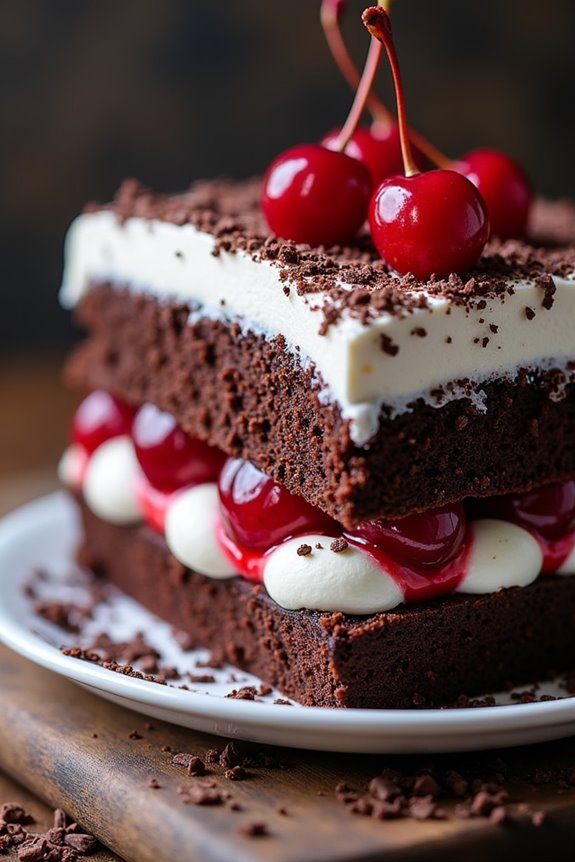
Schwarzwälder Kirschtorte, or Black Forest Cake, is an iconic dessert that hails from the Black Forest region of Germany. This luscious cake is characterized by its rich layers of chocolate sponge, whipped cream, and tart cherries, all soaked in kirsch, a cherry schnapps that adds a delightful depth of flavor. The combination of creamy and fruity elements makes this cake a favorite for special occasions and celebrations.
Making Schwarzwälder Kirschtorte may seem intimidating at first, but with a bit of patience and attention to detail, you can create a stunning dessert that will impress your family and friends. The key is to allow each layer to shine while guaranteeing the cake remains moist and flavorful. This recipe serves 4-6 people, making it the perfect choice for a small gathering or family celebration.
Ingredients:
- 200g dark chocolate sponge cake (store-bought or homemade)
- 500ml heavy cream
- 100g powdered sugar
- 1 teaspoon vanilla extract
- 300g canned or jarred morello cherries, drained and juice reserved
- 50ml kirsch (cherry schnapps)
- Chocolate shavings (for decoration)
- Fresh cherries (for decoration)
Cooking Instructions:
- Prepare the Chocolate Sponge Cake: If you’re using homemade chocolate sponge cake, bake it according to your favorite recipe or package instructions. Allow the cake to cool completely before assembling. If using store-bought, make sure it’s fresh and intact.
- Make the Whipped Cream: In a large mixing bowl, pour in the heavy cream. Using an electric mixer, beat on medium speed until it starts to thicken. Gradually add the powdered sugar and vanilla extract, then continue to beat until stiff peaks form. Be careful not to overbeat, as the cream can turn grainy.
- Prepare the Cherries: Drain the morello cherries, reserving the juice. In a small bowl, mix the reserved juice with kirsch to create a soaking solution for the cake layers.
- Slice the Cake: Carefully slice the cooled chocolate sponge cake into three equal horizontal layers. This will create the three layers necessary for the traditional Schwarzwälder Kirschtorte.
- Assemble the Cake: Place one layer of the chocolate sponge on a serving plate. Brush generously with the kirsch and cherry juice mixture to soak the cake. Spread a layer of whipped cream over the sponge, then add a layer of morello cherries on top. Repeat this process for the second layer.
- Top Layer and Decoration: Place the final layer of the cake on top. Cover the entire cake with the remaining whipped cream, smoothing it out with a spatula. Decorate the top with chocolate shavings and fresh cherries for an elegant finish.
- Chill and Serve: Refrigerate the assembled Schwarzwälder Kirschtorte for at least 2 hours before serving to allow the flavors to meld and the cake to set. Slice and serve chilled.
Extra Tips:
For a more intense cherry flavor, consider adding a bit more kirsch to the soaking solution or using fresh cherries if they’re in season. Additionally, you can enhance the presentation by using a piping bag to create decorative swirls of whipped cream on top of the cake before adding the chocolate shavings.
Finally, remember to let the cake sit at room temperature for a few minutes before serving; this will soften the whipped cream and make for an easier slice. Enjoy your Schwarzwälder Kirschtorte!
Bienenstich: Bee Sting Cake With Cream Filling
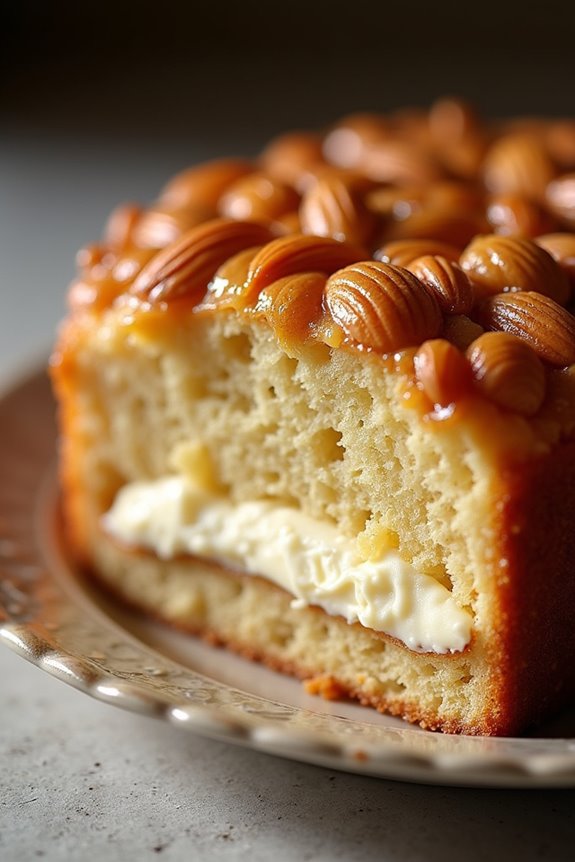
Bienenstich, or Bee Sting Cake, is a delightful German dessert that combines a soft yeast cake with a luscious cream filling, all topped with a crunchy caramelized almond layer. This cake isn’t only a treat for the taste buds but also a feast for the eyes with its golden brown crust and creamy interior.
Traditionally served as a dessert or a sweet snack with coffee, Bienenstich has its roots in the German bakeries of the 19th century and remains a beloved classic to this day.
Making Bienenstich requires a bit of time and patience, but the result is well worth the effort. The yeast dough is light and fluffy, providing the perfect base for the sweet cream and nutty topping. Whether you’re celebrating a special occasion or simply indulging in a sweet treat, this cake is sure to impress friends and family alike.
Let’s get started on how to create this scrumptious dessert!
Ingredients (Serves 4-6):
- 1 cup milk (warm)
- 2 teaspoons active dry yeast
- 1/4 cup granulated sugar
- 2 cups all-purpose flour
- 1/2 teaspoon salt
- 1/4 cup unsalted butter (melted)
- 1 large egg
- 1 cup heavy cream
- 1/4 cup powdered sugar
- 1 teaspoon vanilla extract
- 1 cup sliced almonds
- 1/2 cup honey
- 1/4 cup unsalted butter (for the topping)
Cooking Instructions:
1. Prepare the Yeast Dough: In a small bowl, combine the warm milk and active dry yeast. Allow it to sit for about 5 minutes until it becomes frothy.
In a larger mixing bowl, whisk together the granulated sugar, flour, and salt. Make a well in the center, and add the melted butter, egg, and the yeast mixture. Mix until a dough forms.
2. Knead the Dough: Transfer the dough onto a lightly floured surface and knead it for about 5-7 minutes until it’s smooth and elastic.
Place the dough in a greased bowl, cover it with a clean kitchen towel, and let it rise in a warm place for about 1 hour, or until it has doubled in size.
3. Prepare the Topping: In a saucepan over medium heat, melt 1/4 cup of butter. Add the honey and sliced almonds, stirring to coat the almonds.
Cook for about 3-5 minutes until the mixture is bubbly and slightly caramelized. Remove from heat and set aside.
4. Shape the Cake: Once the dough has risen, punch it down and transfer it to a greased 9-inch round cake pan.
Spread the dough evenly in the pan. Pour the almond topping over the dough, spreading it evenly. Let it rise again for about 30 minutes.
5. Bake the Cake: Preheat your oven to 350°F (175°C). Bake the Cake for about 25-30 minutes, or until golden brown.
Allow it to cool in the pan for a few minutes before transferring it to a wire rack to cool completely.
6. Prepare the Cream Filling: In a mixing bowl, whip the heavy cream until soft peaks form. Gradually add the powdered sugar and vanilla extract, continuing to whip until stiff peaks form.
7. Assemble the Cake: Once the cake has completely cooled, slice it horizontally in half. Spread the whipped cream filling evenly on the bottom half and place the top half back on.
8. Serve: Cut the cake into slices and Serve. Enjoy this delightful Bienenstich with a cup of coffee or tea!
Extra Tips:
For the best flavor, allow the Bienenstich to chill in the refrigerator for at least an hour before serving. This helps the cream filling set and allows the flavors to meld beautifully.
You can also experiment with different fillings, such as pastry cream or fruit preserves, for a unique twist on this classic dessert. Be careful not to overbake the cake; a perfectly baked Bienenstich is soft and moist, with a slight golden hue.
