

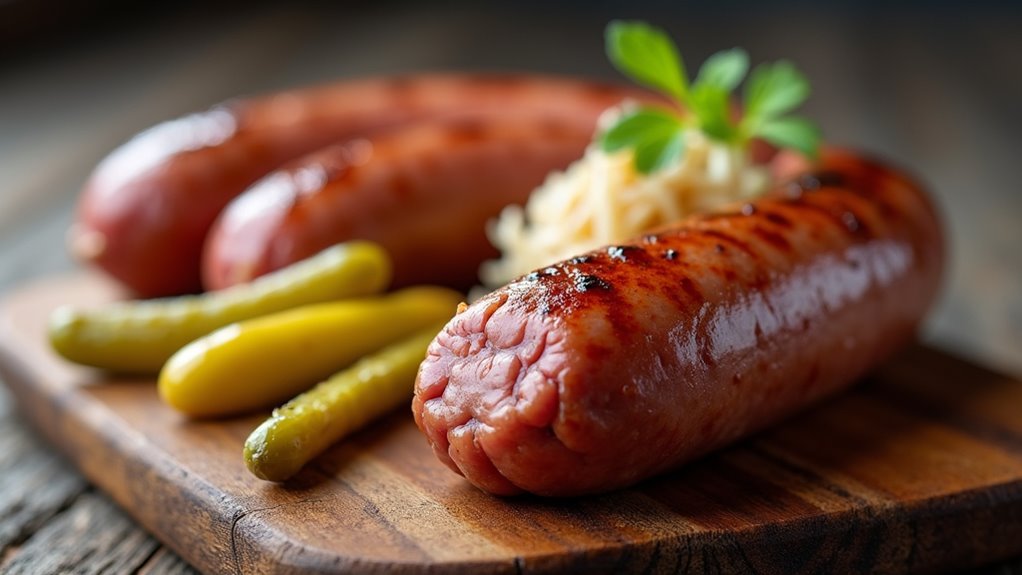
When it comes to German sausages, bratwurst often takes the spotlight, but there’s so much more to discover. Each variety offers its own unique flavors, from the juicy knackwurst to the creamy weisswurst. Picture the warm, smoky aroma of bockwurst sizzling on the grill or the comforting taste of currywurst with tangy ketchup. It’s time to explore these delightful culinary treasures that will tantalize your taste buds. Let’s uncover some exciting sausage recipes that go far beyond bratwurst.
Knackwurst: The Juicy Delight

Knackwurst, a traditional German sausage, is known for its unique blend of flavors and juicy texture. Often served during festive occasions and family gatherings, this sausage isn’t only delicious but also easy to prepare at home. Its name, which translates to “crack sausage,” refers to the satisfying snap it makes when bitten into, thanks to its high-fat content and natural casing.
The combination of spices and meats makes knackwurst a favorite among sausage lovers, and it pairs wonderfully with a variety of sides, such as sauerkraut, potatoes, or a fresh salad.
Preparing knackwurst can be a rewarding culinary experience. You can either buy pre-made knackwurst or make your own from scratch using fresh ingredients. For this recipe, we’ll focus on cooking pre-made knackwurst, ensuring you achieve that perfect juicy texture and flavor. With a few simple steps, you can have a delightful dish ready to impress your family and friends.
Ingredients (Serves 4-6):
- 6 knackwurst sausages
- 2 tablespoons vegetable oil
- 1 cup onions, sliced
- 2 cloves garlic, minced
- 1 cup beef or chicken broth
- 1 tablespoon mustard (yellow or Dijon)
- Fresh parsley, chopped (for garnish)
- Salt and pepper to taste
Cooking Instructions:
- Prepare the Ingredients: Before starting, gather all your ingredients. Slice the onions and mince the garlic, ensuring they’re ready to use. This will streamline the cooking process and help you maintain the right cooking times for each component.
- Heat the Oil: In a large skillet, heat the vegetable oil over medium heat. Allow it to warm up properly; this will help in browning the knackwurst and enhancing their flavor.
- Sauté the Onions and Garlic: Add the sliced onions to the skillet and sauté for about 3-4 minutes until they become translucent. Then, add the minced garlic and continue to sauté for another minute. Be careful not to burn the garlic, as it can turn bitter.
- Brown the Knackwurst: Add the knackwurst sausages to the skillet. Cook them for about 5-7 minutes, turning occasionally until they’re evenly browned on all sides. This step is essential for achieving that signature snap when biting into the sausage.
- Add the Broth and Mustard: Once the knackwurst is browned, pour in the beef or chicken broth and add the mustard. Stir everything together and bring the mixture to a gentle simmer. This will infuse the sausages with additional flavor while keeping them juicy.
- Simmer: Cover the skillet and let the knackwurst simmer for another 10-15 minutes. This allows the sausages to cook through completely and absorb the flavors from the broth and mustard.
- Season and Serve: After simmering, taste the broth and season with salt and pepper as needed. Remove from heat, and transfer the knackwurst to a serving platter. Spoon some of the onion and broth mixture over the sausages, and garnish with freshly chopped parsley.
Extra Tips:
When cooking knackwurst, be mindful not to overcook them to prevent them from becoming dry. If you want to add more flavor, consider incorporating spices like caraway seeds or paprika into the broth.
Additionally, serving knackwurst with a side of mustard for dipping can enhance the experience, allowing diners to enjoy the sausages with a bit of tangy kick.
Currywurst: A Spicy Street Food Classic

Currywurst is a beloved German street food that combines the savory flavor of bratwurst with a tangy, spicy curry ketchup. Originating from Berlin in the 1940s, this dish has become a staple in German cuisine and is enjoyed by locals and tourists alike.
It’s often served with a side of crispy fries or a bread roll, making it the perfect comfort food for any occasion. With its enticing aroma and bold flavors, Currywurst is sure to impress your family and friends.
Making Currywurst at home is easier than you might think! The preparation involves grilling or frying the sausages to perfection, then smothering them in a homemade curry ketchup sauce. This dish isn’t only delicious but also customizable, allowing you to adjust the spice levels to suit your taste.
Whether you’re hosting a casual gathering or simply craving a taste of Germany, this Currywurst recipe is a must-try.
Ingredients (serving size: 4-6 people)
- 4-6 bratwurst sausages
- 1 cup ketchup
- 2 tablespoons curry powder (adjust to taste)
- 1 tablespoon Worcestershire sauce
- 1 tablespoon apple cider vinegar
- 1 teaspoon sugar
- 1 teaspoon smoked paprika
- 1 tablespoon olive oil
- Salt and pepper to taste
- Fresh parsley, chopped (for garnish)
- Bread rolls or fries (for serving)
Cooking Instructions
- Prepare the Curry Ketchup: In a medium saucepan over medium heat, combine the ketchup, curry powder, Worcestershire sauce, apple cider vinegar, sugar, smoked paprika, salt, and pepper. Stir well to combine and let the sauce simmer for about 10-15 minutes, stirring occasionally. This allows the flavors to meld together and the sauce to thicken slightly.
- Cook the Bratwurst: While the sauce is simmering, heat the olive oil in a large skillet over medium-high heat. Add the bratwurst sausages and cook them for about 10-12 minutes, turning occasionally, until they’re browned and cooked through. If you prefer, you can also grill the sausages on a barbecue for a smoky flavor.
- Slice the Sausages: Once the bratwurst are fully cooked, remove them from the skillet and let them rest for a few minutes. Then, slice the sausages into bite-sized pieces. This will help them soak up the flavorful curry ketchup.
- Serve: Place the sliced bratwurst on a serving platter or individual plates. Generously drizzle the warm curry ketchup over the sausage pieces, ensuring they’re well-coated. Garnish with chopped fresh parsley for a pop of color.
- Accompany the Dish: Serve the Currywurst with bread rolls or crispy fries on the side. Encourage your guests to dip their fries into the remaining curry ketchup for an extra treat!
Extra Tips
When making Currywurst, feel free to adjust the spice levels according to your preference. If you like it spicier, consider adding a pinch of cayenne pepper or some chopped fresh chili to the ketchup mixture.
Additionally, for an authentic touch, serve your Currywurst with a sprinkle of extra curry powder on top before serving. Enjoy your homemade taste of Germany!
Weisswurst: The Creamy Bavarian Sausage

Weisswurst, or “white sausage,” is a traditional Bavarian delicacy that embodies the rich culinary history of Germany. Made primarily from minced veal and pork back fat, this sausage is delicately flavored with a blend of fresh parsley, lemon zest, and spices that create a creamy and tender texture.
Unlike other sausages, Weisswurst is traditionally prepared without the use of artificial preservatives, making it a delightful and wholesome option for any meat lover. Typically enjoyed with sweet mustard and freshly baked pretzels, this dish is a staple at Oktoberfest and other festive gatherings in Germany.
Cooking Weisswurst at home not only allows you to enjoy this authentic dish but also to experience the satisfaction of crafting your own sausages. The process is straightforward, and while it may take some time, the results are well worth the endeavor.
Whether you choose to grill, poach, or pan-fry, Weisswurst will provide a deliciously unique taste that will impress your family and friends. Serve it with sides like sauerkraut or potato salad for a full Bavarian feast.
Ingredients (Serves 4-6):
- 1 pound veal, finely minced
- ½ pound pork back fat, finely minced
- ½ cup crushed ice
- 1 small onion, finely chopped
- 1 tablespoon fresh parsley, chopped
- 1 tablespoon lemon zest
- 1 teaspoon salt
- ½ teaspoon white pepper
- ¼ teaspoon mace
- ¼ teaspoon cardamom
- Sausage casings (natural hog casings, soaked in water)
- Sweet mustard, for serving
Cooking Instructions:
1. Prepare the Sausage Casings: Rinse the soaked hog casings thoroughly under cold running water. This helps to remove any salt or impurities. Keep them in a bowl of water until you’re ready to use them to prevent them from drying out.
2. Mix the Sausage Filling: In a large bowl, combine the minced veal and pork back fat. Add the chopped onion, parsley, lemon zest, salt, white pepper, mace, and cardamom.
Slowly incorporate the crushed ice into the mixture to keep it cool and moist. Use your hands to mix the ingredients thoroughly until the mixture is sticky and well-combined.
3. Stuff the Casings: Rinse the casings again and place one end on a sausage stuffer. Carefully slide the casing onto the stuffer, leaving several inches hanging off the end.
Begin stuffing the casing with the sausage mixture, taking care not to overfill it. Leave a little space at the end to tie it off. Once filled, twist the sausage at regular intervals to form links, tying off the ends securely.
4. Cook the Weisswurst: To cook the sausages, bring a large pot of water to a simmer (not boiling) and gently place the sausages in the water. Cook for about 20-25 minutes, or until the sausages are firm and cooked through.
Avoid boiling, as it can cause the casings to burst.
5. Serve the Weisswurst: Once cooked, remove the sausages from the pot and let them rest for a few minutes. They can be served immediately or pan-fried for a crispy texture.
Serve with sweet mustard for dipping and alongside traditional sides such as pretzels or sauerkraut.
Extra Tips:
When making Weisswurst, be sure to keep everything cold during the preparation process to guarantee the fat remains solid and the mixture stays cohesive.
You can also experiment with different herbs and spices to personalize the flavor according to your taste. If you’re new to sausage-making, don’t hesitate to watch instructional videos or consult additional resources for techniques on stuffing and cooking sausages properly.
Enjoy the process, and don’t forget to celebrate your creation with friends and family!
Bockwurst: A Flavorful Grilled Treat

Bockwurst is a traditional German sausage that’s typically made from a mixture of finely minced veal and pork, seasoned with fresh herbs and spices. Known for its mild flavor and creamy texture, this sausage is often enjoyed during summer barbecues and family gatherings.
Grilling bockwurst is a simple yet delicious way to bring out its natural flavors, and pairing it with sauerkraut or mustard elevates the experience. Whether you’re hosting a backyard cookout or a cozy dinner, bockwurst is sure to impress your guests with its succulent taste.
To achieve the best results when grilling bockwurst, it’s vital to choose high-quality sausages and to avoid overcooking them, as this can lead to dryness. The key is to cook them over moderate heat, allowing them to brown nicely while maintaining their juiciness.
This recipe provides a straightforward method to grill bockwurst to perfection, guaranteeing a flavorful treat for 4-6 people.
Ingredients (Serves 4-6)
- 6 bockwurst sausages
- 1 tablespoon olive oil
- 1 teaspoon black pepper
- 1 teaspoon smoked paprika
- 1 teaspoon garlic powder
- 1 teaspoon onion powder
- Fresh parsley for garnish
- Mustard and sauerkraut (for serving)
Cooking Instructions
- Preheat the Grill: Start by preheating your grill to medium heat. This will help guarantee that the bockwurst cooks evenly and develops a nice char without burning.
- Prepare the Sausages: While the grill is heating up, take the bockwurst sausages out of the packaging. Pat them dry with a paper towel to remove any excess moisture, which helps in achieving a good sear.
- Season the Sausages: In a small bowl, combine the olive oil, black pepper, smoked paprika, garlic powder, and onion powder. Brush this mixture over the bockwurst to add flavor and help the sausages crisp up on the grill.
- Grill the Bockwurst: Place the seasoned bockwurst directly on the grill grates. Grill them for about 8-10 minutes, turning them occasionally to ensure they brown evenly on all sides. Make sure they reach an internal temperature of 160°F (71°C) to guarantee they’re fully cooked.
- Rest the Sausages: Once cooked, remove the bockwurst from the grill and let them rest for a few minutes. This allows the juices to redistribute within the sausage, enhancing their flavor and juiciness.
- Serve: After resting, serve the bockwurst on a platter, garnished with fresh parsley. Pair with mustard and sauerkraut on the side for a traditional German experience.
Extra Tips
For an added layer of flavor, you can soak the bockwurst in a mixture of beer and spices for a few hours before grilling. This not only infuses the sausages with a unique taste but also helps in keeping them moist while cooking.
Additionally, consider serving the bockwurst with soft pretzels or potato salad for a complete German meal. Always keep an eye on the sausages while grilling to prevent them from bursting or drying out.
Landjäger: The Perfect On-the-Go Snack

Landjäger is a traditional German sausage that isn’t only delicious but also incredibly convenient, making it an ideal snack for hiking, picnicking, or just enjoying at home. Originating from the Alpine regions of Germany, this semi-dried sausage is typically made from beef and pork, seasoned with a blend of spices, and often enjoyed with cheese or bread. Its sturdy texture and long shelf life make it a favorite for outdoor enthusiasts and anyone looking for a satisfying snack that can be easily transported.
Making Landjäger at home can be a rewarding experience, allowing you to customize the flavors and ingredients to your preference. Although the process can take some time due to curing and drying, the end result is well worth the wait. With the right ingredients and techniques, you can create a batch of these hearty sausages that will impress your family and friends.
Ingredients (Serves 4-6)
- 2 pounds of ground beef
- 1 pound of ground pork
- 1/2 cup of crushed ice
- 1 tablespoon of kosher salt
- 1 tablespoon of black pepper
- 1 tablespoon of paprika
- 1 teaspoon of garlic powder
- 1 teaspoon of onion powder
- 1 teaspoon of sugar
- 1/2 teaspoon of ground coriander
- 1/2 teaspoon of ground nutmeg
- 1/4 teaspoon of cayenne pepper (optional for heat)
- Natural hog casings (about 3 feet)
Cooking Instructions
- Prepare the casings: Start by soaking the natural hog casings in water for at least 30 minutes, ensuring they’re pliable for stuffing. Rinse them thoroughly under cold running water to remove any excess salt.
- Mix the meat: In a large mixing bowl, combine the ground beef and pork. Add the crushed ice, kosher salt, black pepper, paprika, garlic powder, onion powder, sugar, ground coriander, ground nutmeg, and cayenne pepper. Mix the ingredients thoroughly until well combined, using your hands or a meat mixer.
- Stuff the casings: Rinse the soaked casings again and fit one end of the casing onto a sausage stuffer. Carefully stuff the casing with the meat mixture, being sure to avoid air pockets. Fill the casing to about three-quarters full, as the sausage will expand during the drying process. Tie off the open end of the casing securely.
- Shape and prick the sausages: Once stuffed, twist the sausages into links of your desired size, typically about 6 inches long. Use a pin or sharp knife to prick any air bubbles that may have formed in the sausage to prevent bursting during drying.
- Dry the sausages: Hang the sausages in a cool, dry place with good air circulation, ideally at a temperature between 50-60°F (10-15°C). Allow them to dry for about 7-10 days, or until they’ve lost about 30% of their weight and feel firm to the touch.
- Store and serve: Once dried, store the Landjäger in an airtight container in the refrigerator or vacuum seal them for longer storage. They can be enjoyed on their own or served with cheese and bread for a delightful snack.
Extra Tips
When making Landjäger, it’s important to maintain a clean environment to avoid contamination. Always sanitize your equipment and workspace before starting.
If you’re new to sausage-making, consider investing in a quality sausage stuffer to make the process smoother. Additionally, feel free to experiment with different spices or herbs to create your unique flavor profile.
Remember that patience is key, as the drying process is vital for the texture and taste of the sausage. Enjoy your homemade Landjäger as a delicious and portable snack!
Nürnberger: the Miniature Sausages With Big Flavor

Nürnberger sausages are a beloved German specialty that originate from the city of Nuremberg. These miniature sausages, traditionally made with pork, are known for their unique blend of spices that give them a bold and savory flavor, making them a favorite for both locals and visitors alike.
Typically served grilled or pan-fried, Nürnberger sausages are often enjoyed with mustard and sauerkraut, making for a hearty and satisfying meal.
In this recipe, we’ll prepare authentic Nürnberger sausages that capture their traditional flavors while being simple enough for home cooks to recreate. You’ll be delighted by how easy it’s to make these delicious sausages from scratch, and your guests will be impressed by the rich, savory taste.
Whether you’re hosting a barbecue or enjoying a cozy dinner at home, Nürnberger sausages are sure to steal the show.
Ingredients (Serves 4-6 people)
- 1 pound ground pork
- 1/4 pound ground beef
- 1/4 cup finely chopped onion
- 1/4 cup fresh parsley, chopped
- 1 teaspoon salt
- 1/2 teaspoon black pepper
- 1/2 teaspoon ground nutmeg
- 1/2 teaspoon ground ginger
- 1/2 teaspoon marjoram
- 1/4 teaspoon white pepper
- 1/4 cup ice water
- Natural hog casings (optional, for stuffing)
- Mustard and sauerkraut (for serving)
Cooking Instructions
- Prepare the Sausage Mixture: In a large mixing bowl, combine the ground pork and ground beef. Add the finely chopped onion, fresh parsley, salt, black pepper, nutmeg, ginger, marjoram, and white pepper. Mix thoroughly until all ingredients are well incorporated.
- Add Ice Water: Gradually mix in the ice water to the sausage mixture. This will help to keep the mixture moist and enhance the texture of the sausages. Mix until the mixture is sticky and well combined.
- Stuff the Sausages (Optional): If you’re using hog casings, soak them in water for about 30 minutes. Rinse the casings and fit them onto a sausage stuffer. Stuff the sausage mixture into the casings, being careful not to overfill them. Twist sausages into 6-inch links and tie off the ends. If you prefer not to use casings, you can skip this step and shape the mixture into small patties.
- Cook the Sausages: Preheat a grill or skillet over medium heat. If using a skillet, add a small amount of oil to prevent sticking. Cook the sausages for about 10-12 minutes, turning occasionally, until they’re browned on the outside and cooked through. If using a grill, make sure the sausages are evenly cooked by rotating them every few minutes.
- Serve: Once cooked, remove the sausages from the heat and let them rest for a few minutes. Serve hot with mustard and sauerkraut on the side for a traditional touch.
Extra Tips
When preparing Nürnberger sausages, be sure to adjust the seasoning to your taste; feel free to experiment with additional spices like garlic or paprika for a unique twist.
If you opt for casings, ensure they’re tightly packed but not overstuffed to prevent bursting during cooking. For an added depth of flavor, try grilling the sausages over a wood fire or charcoal for a smoky finish that enhances their natural taste.
Enjoy your homemade Nürnberger sausages with a invigorating German beer for an authentic experience!
Leberwurst: A Rich and Creamy Spread

Leberwurst, or liver sausage, is a quintessential German delicacy that has been cherished for generations. It’s known for its rich, creamy texture and robust flavor, making it an excellent choice for spreads or as part of a charcuterie board. Traditionally made from pork liver, this spread can be enjoyed on fresh bread, crackers, or even as a flavorful addition to various dishes.
Preparing Leberwurst at home can be a rewarding experience, allowing you to control the ingredients and customize the flavor profile to your liking. Making Leberwurst isn’t only about the ingredients; it’s also about the technique. The key to a smooth and creamy texture lies in the careful blending and cooking of the liver and spices.
The combination of aromatic herbs and spices will elevate the dish, leaving your taste buds delighted. Whether you’re hosting a gathering or simply indulging in a personal treat, this rich spread is sure to impress your family and friends.
Ingredients (Serves 4-6):
- 1 pound pork liver, cleaned and trimmed
- 1/2 pound pork fatback, cubed
- 1 medium onion, diced
- 2 cloves garlic, minced
- 1 teaspoon salt
- 1/2 teaspoon black pepper
- 1/2 teaspoon ground allspice
- 1/4 teaspoon nutmeg
- 1/4 cup heavy cream
- 1 tablespoon brandy (optional)
- Fresh parsley, for garnish
Cooking Instructions:
- Prepare the Liver and Fatback: Begin by cleaning the pork liver, removing any membranes or veins. Cut the liver into smaller pieces for easier cooking. Likewise, cube the pork fatback into manageable chunks. This preparation will guarantee even cooking and blending later on.
- Sauté the Aromatics: In a large skillet, heat a tablespoon of oil over medium heat. Add the diced onion and minced garlic, and sauté until the onion becomes translucent and fragrant, about 5-7 minutes. This step builds a flavorful base for your Leberwurst.
- Cook the Liver: Add the cleaned liver pieces to the skillet with the onions and garlic. Cook for about 5-7 minutes, stirring occasionally, until the liver is browned on the outside but still slightly pink inside. This will help retain the liver’s moisture and flavor.
- Blend the Mixture: Transfer the cooked liver, onions, and garlic to a food processor. Add the cubed fatback, salt, black pepper, allspice, nutmeg, and brandy (if using). Pulse until the mixture is smooth and well-combined. If needed, scrape down the sides of the bowl to guarantee everything is evenly blended.
- Incorporate the Cream: With the food processor running, slowly drizzle in the heavy cream until the mixture reaches a creamy consistency. Taste and adjust seasoning if necessary. This step adds richness and helps achieve the desired texture.
- Chill and Serve: Transfer the Leberwurst into a serving bowl or airtight container. Cover and refrigerate for at least 2 hours to allow the flavors to meld and the spread to firm up. Serve chilled, garnished with fresh parsley, alongside crusty bread or crackers.
Extra Tips:
When making Leberwurst, feel free to experiment with different herbs and spices based on your preference. Some people enjoy adding a hint of cayenne pepper for heat or fresh herbs like thyme for added freshness.
For an even creamier texture, you can substitute sour cream for some of the heavy cream. Remember, the key to a successful Leberwurst is in the blending – don’t rush this step, as a well-blended mixture will create the silky smooth consistency that makes this spread so delightful!
Rotwurst: the Colorful Specialty From Thuringia

Rotwurst, a traditional German sausage, hails from the picturesque region of Thuringia, known for its rich culinary heritage. This vibrant sausage is characterized by its deep red color, which comes from the combination of high-quality pork and the addition of spices such as paprika and marjoram.
It isn’t only a feast for the eyes but also a delight for the palate, offering a robust flavor profile that’s both savory and slightly smoky. Traditionally, Rotwurst is enjoyed grilled, but it can also be prepared in various ways, allowing for a versatile addition to any meal.
Preparing Rotwurst at home is quite straightforward and can be a fun culinary adventure. The process involves seasoning the meat, stuffing it into casings, and then cooking it to perfection. This dish is perfect for gatherings, as it serves 4-6 people, making it an ideal choice for barbecues, family dinners, or festive occasions.
Let’s plunge into the details and create this colorful specialty from Thuringia!
Ingredients (serves 4-6):
- 1 kg (2.2 lbs) ground pork
- 200 g (7 oz) pork fat, diced
- 2 teaspoons salt
- 1 teaspoon black pepper
- 1 tablespoon sweet paprika
- 1 teaspoon smoked paprika
- 1 teaspoon marjoram
- 2 cloves garlic, minced
- 150 ml (5 fl oz) cold water
- Sausage casings (natural or synthetic)
- Oil for grilling or frying
Cooking Instructions:
- Prepare the Casings: Start by soaking the sausage casings in cold water for at least 30 minutes. This will make them more pliable and easier to stuff. After soaking, rinse them thoroughly under cold running water to remove any excess salt.
- Mix the Meat and Spices: In a large mixing bowl, combine the ground pork, diced pork fat, salt, black pepper, sweet paprika, smoked paprika, marjoram, and minced garlic. Mix thoroughly using your hands or a wooden spoon until all ingredients are well incorporated.
- Add Water: Gradually pour in the cold water while mixing the meat mixture. This step is essential as it helps to bind the meat and fat together, creating a juicy sausage. Confirm the mixture is well-blended and has a slightly sticky texture.
- Stuff the Casings: Carefully slide one end of the soaked sausage casing onto a sausage stuffer nozzle. Tie a knot at the other end of the casing. Fill the casing with the meat mixture, being careful not to overstuff it to prevent bursting during cooking. Once filled, twist the sausage into links of your desired size and tie off the ends.
- Cook the Sausages: You can grill or fry the Rotwurst. If grilling, preheat the grill to medium-high heat and cook the sausages for about 10-15 minutes, turning occasionally until they’re cooked through and browned. For frying, heat a little oil in a skillet over medium heat and cook the sausages for about 15 minutes, turning them regularly.
- Serve and Enjoy: Once cooked, remove the sausages from the grill or skillet and let them rest for a few minutes. Serve them warm with a side of sauerkraut, mustard, and hearty bread for a true taste of Thuringia.
Extra Tips:
When making Rotwurst, confirm that all your equipment, including the grinder and stuffer, is well sanitized to prevent contamination.
For an extra flavor boost, consider adding some finely chopped onions or herbs to the meat mixture. If you prefer a bit of heat, you can also incorporate crushed red pepper flakes.
Finally, experimenting with different types of meat, such as beef or veal, can create unique variations of this classic dish. Enjoy your culinary journey into the heart of German sausage-making!
Blutwurst: The Hearty Blood Sausage

Blutwurst, also known as blood sausage, is a traditional German dish that boasts rich flavors and an intriguing history. This hearty sausage is typically made from pig’s blood, fat, and various spices, resulting in a savory dish that can be enjoyed in multiple ways. Often served alongside sauerkraut or mashed potatoes, Blutwurst is a true representation of German culinary heritage, perfect for those who appreciate bold flavors and rustic ingredients.
Making Blutwurst at home may seem intimidating, but with the right ingredients and a bit of patience, you can create this classic dish that will impress your family and friends. This recipe serves 4-6 people and can be a delightful addition to any meal, especially during festive occasions or gatherings.
Ingredients:
- 1 lb pig’s blood
- 1 lb pork fat, finely chopped
- 1 lb pork shoulder, finely ground
- 1 cup onion, finely chopped
- 1 cup cooked rice or barley
- 2 teaspoons salt
- 1 teaspoon black pepper
- 1 teaspoon allspice
- 1 teaspoon marjoram
- 1/2 teaspoon thyme
- 1/2 teaspoon nutmeg
- Sausage casings (hog casings or synthetic)
Cooking Instructions:
- Prepare the Casings: Begin by rinsing the sausage casings under cold running water. Soak them in lukewarm water for about 30 minutes to make them pliable. This step is vital as it allows the casings to stretch and hold the sausage mixture without bursting.
- Cook the Onions: In a skillet over medium heat, sauté the chopped onions in a small amount of oil until they become translucent and slightly golden. This enhances their sweetness and flavor, which will enrich the overall taste of the Blutwurst.
- Mix the Ingredients: In a large mixing bowl, combine the pig’s blood, pork fat, ground pork shoulder, sautéed onions, cooked rice or barley, salt, black pepper, allspice, marjoram, thyme, and nutmeg. Mix thoroughly until all ingredients are well incorporated. Proper mixing is essential to guarantee an even distribution of flavors throughout the sausage.
- Stuff the Casings: Carefully load the sausage mixture into a sausage stuffer, ensuring there are no air pockets. Stuff the casings gently, taking care not to overfill them. Twist sausages at 6-8 inch intervals and tie off the ends securely. This step is important to maintain the shape and integrity of the sausages during cooking.
- Cook the Blutwurst: Bring a large pot of water to a gentle simmer (not boiling). Carefully add the stuffed sausages and simmer for about 30-40 minutes, turning occasionally to guarantee even cooking. This slow cooking process allows the flavors to meld together and fully cook the blood sausage.
- Cool and Store: Once cooked, remove the sausages from the pot and let them cool on a rack. If not serving immediately, they can be refrigerated for up to a week or frozen for later use. Proper cooling and storage will help maintain the sausages’ texture and flavor.
Extra Tips: When making Blutwurst, it’s important to use fresh and high-quality ingredients, particularly the pig’s blood, to achieve the best flavor. If you’re new to making sausages, consider practicing with smaller batches to get the hang of the stuffing technique.
Additionally, experimenting with different spices or herbs can personalize the flavor profile to your liking. Enjoy the process, and don’t be afraid to share your creations with friends and family!
Debreziner: The Smoky and Spicy Option

Debreziner sausage, originating from Hungary, is famed for its rich, smoky flavor and spicy kick. This delicious sausage is perfect for grilling, frying, or baking, making it a versatile choice for any meal. The combination of paprika, garlic, and other spices gives it a distinct taste that pairs wonderfully with a variety of sides, from sauerkraut to fresh bread.
Whether you’re hosting a barbecue or simply enjoying a cozy dinner at home, Debreziner is bound to impress.
In this recipe, we’ll guide you through preparing a delightful Debreziner dish that serves 4-6 people. You can choose to grill or pan-fry the sausages, and we’ll include some serving suggestions that elevate the experience. Get ready to tantalize your taste buds with this smoky and spicy delight!
Ingredients (Serves 4-6):
- 6 Debreziner sausages
- 2 tablespoons olive oil
- 1 large onion, sliced
- 2 cloves garlic, minced
- 1 bell pepper, sliced (red or yellow for sweetness)
- 1 teaspoon smoked paprika
- 1 teaspoon black pepper
- Salt to taste
- Fresh parsley, chopped (for garnish)
- Bread rolls (optional, for serving)
- Mustard (optional, for serving)
Cooking Instructions:
- Prepare the Ingredients: Begin by gathering all the ingredients listed above. Slice the onion and bell pepper, and mince the garlic to have everything ready for cooking. This will guarantee a smooth cooking process.
- Heat the Oil: In a large skillet or frying pan, heat the olive oil over medium heat. Allow the oil to get hot, which usually takes about 1-2 minutes. This step is important as it will help in sautéing the vegetables evenly.
- Sauté the Vegetables: Add the sliced onions and bell peppers to the hot oil. Sauté them for about 5-7 minutes until they become soft and caramelized. Stir occasionally to prevent burning. The sweetness of the onions and peppers will complement the spicy Debreziner.
- Add Garlic and Spices: Once the vegetables are cooked, add the minced garlic, smoked paprika, and black pepper. Stir well and cook for another 1-2 minutes, allowing the garlic to become fragrant. Be careful not to let the garlic burn, as it can turn bitter.
- Cook the Debreziner Sausages: Push the sautéed vegetables to one side of the pan and add the Debreziner sausages. Cook them for about 8-10 minutes, turning occasionally, until they’re browned on all sides and heated through. This guarantees that the smoky flavor infuses into the vegetables as well.
- Combine and Season: Once the sausages are cooked, mix them with the sautéed vegetables. Taste and adjust seasoning with salt as needed. Allow everything to cook together for an additional 2-3 minutes to meld the flavors.
- Serve: Transfer the sausage and vegetable mixture onto a serving platter. Garnish with freshly chopped parsley. If desired, serve with bread rolls and mustard on the side for a complete meal.
Extra Tips:
For an extra layer of flavor, consider adding a splash of beer or white wine to the skillet while the sausages are cooking. This can help deglaze the pan and infuse the dish with additional richness.
Additionally, feel free to customize the vegetables based on your preference—zucchini or mushrooms can be excellent additions. Enjoy your Debreziner with a revitalizing side salad or some homemade potato salad to balance the spiciness!
Mettwurst: A Robust and Savory Choice
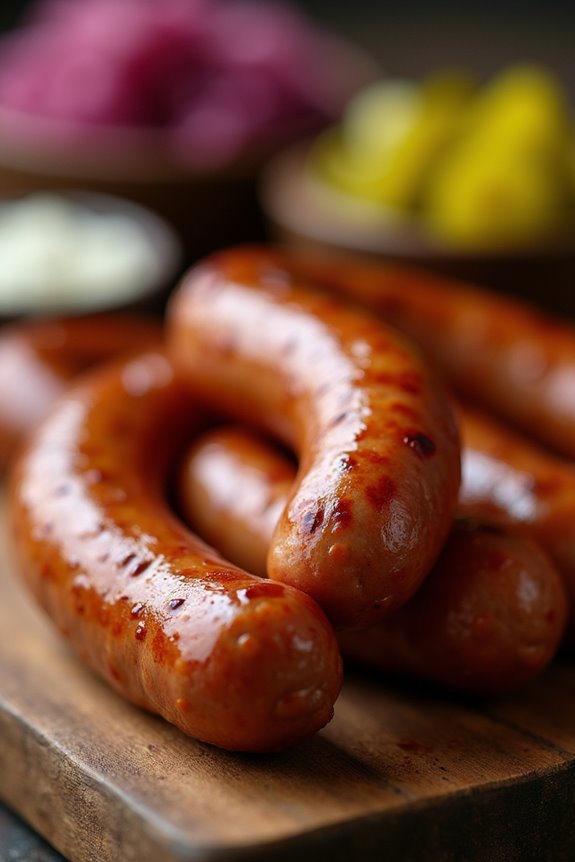
Mettwurst is a traditional German sausage that boasts a rich, savory flavor profile, making it a beloved choice for many meat lovers. Originating from the northern regions of Germany, Mettwurst is typically made from pork and sometimes beef, seasoned with a variety of spices and herbs. The sausage is often enjoyed fresh or smoked, providing a delightful taste that can elevate any meal.
Whether served on a crusty roll, with mustard, or as part of a hearty spread, Mettwurst is sure to please.
In this recipe, we’ll guide you through the process of making Mettwurst from scratch. While this dish may require some time for marinating and curing, the end result is a flavorful sausage that captures the essence of authentic German cuisine. This recipe serves 4-6 people and is perfect for gatherings or simply enjoying at home with family and friends.
Ingredients (Serves 4-6)
- 2 pounds ground pork
- 1 pound ground beef
- 1/2 cup crushed ice
- 1/4 cup pork fat
- 2 tablespoons kosher salt
- 1 tablespoon black pepper
- 1 tablespoon garlic powder
- 1 tablespoon paprika
- 1 teaspoon ground coriander
- 1 teaspoon ground nutmeg
- 1 teaspoon sugar
- 1/2 teaspoon ground white pepper
- 1/4 cup red wine
- Sausage casings (natural or synthetic)
Cooking Instructions
- Prepare the Sausage Casings: Start by soaking the sausage casings in cold water for at least 30 minutes to soften them. Rinse the casings thoroughly under running water and set them aside. If using natural casings, verify they’re clean and free of any salt.
- Mix the Meat and Ingredients: In a large mixing bowl, combine the ground pork, ground beef, and pork fat. Add the crushed ice, kosher salt, black pepper, garlic powder, paprika, ground coriander, ground nutmeg, sugar, and ground white pepper. Use your hands or a sturdy spoon to mix everything thoroughly until the mixture is well combined.
- Add the Red Wine: Gradually pour in the red wine and continue mixing until the liquid is fully incorporated into the meat mixture. This adds moisture and enhances the flavor profile of the Mettwurst.
- Stuff the Sausage Casings: Using a sausage stuffer, carefully fill the casings with the meat mixture, taking care not to overstuff. Twist the sausages at regular intervals to create individual links, and tie off the ends securely with kitchen twine. Prick the sausages with a needle to remove any air pockets.
- Cure the Sausage: Arrange the stuffed sausages on a rack in a cool, dry place. Allow them to cure for at least 24 hours to develop flavor. If you have a curing chamber, this would be the ideal environment for this step.
- Cook the Mettwurst: You can grill, pan-fry, or bake the Mettwurst sausages. If grilling or pan-frying, cook them over medium heat for about 10-15 minutes, turning occasionally until heated through and brown. If baking, preheat your oven to 350°F (175°C) and bake for approximately 25-30 minutes.
- Serve and Enjoy: Once cooked, let the Mettwurst rest for a few minutes before slicing. Serve hot on a roll with mustard or alongside a selection of pickles and sauerkraut for an authentic German experience.
Extra Tips
When making Mettwurst, it’s important to use high-quality meat for the best flavor and texture. If you have access to a meat grinder, consider grinding your own meat for peak freshness.
Additionally, feel free to experiment with spices to tailor the flavor to your liking, or even try smoking the sausages for an extra layer of complexity. Remember to monitor the curing process closely, as temperature and humidity can affect the final product.
Enjoy your homemade Mettwurst at your next gathering or picnic!
