

Growing up, my fondest memories were in my grandma’s kitchen, where the air was always filled with the comforting scents of German dishes. Each recipe she shared felt like a warm hug, from savory Sauerbraten to sweet Bienenstich. These meals were more than just food; they nourished our souls and connected us to our heritage. If you’re looking to bring some of that warmth into your own home, let’s explore these cherished recipes together.
Sauerbraten: Traditional German Pot Roast
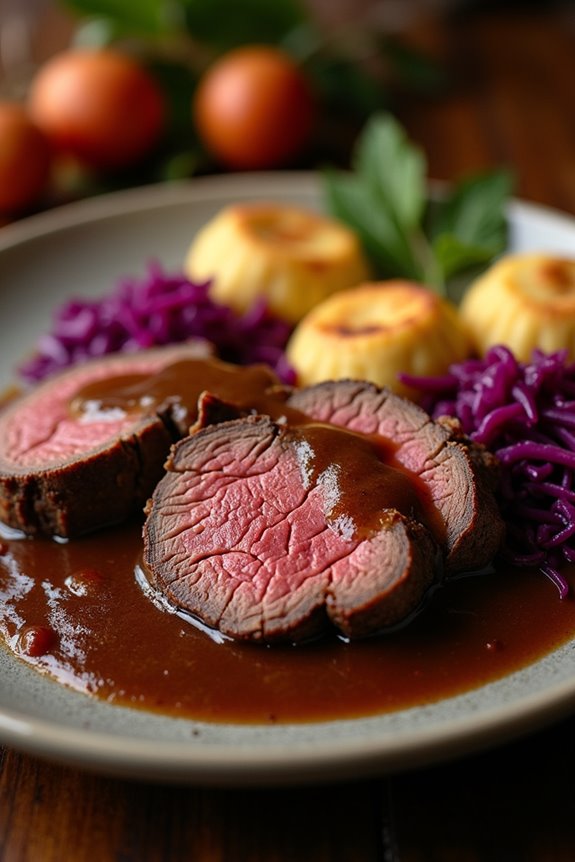
Sauerbraten, often considered Germany’s national dish, is a pot roast typically made from beef, marinated for several days in a mixture of vinegar, water, and a variety of spices. This unique method of preparation tenderizes the meat while infusing it with a rich, tangy flavor that makes every bite a delight.
The dish is traditionally served with red cabbage and potato dumplings, creating a hearty meal that’s perfect for family gatherings or special occasions.
The origin of Sauerbraten dates back to the Middle Ages when it was a way to preserve meat before the advent of refrigeration. Today, many families have their own variations of this classic recipe, often handed down through generations.
Whether you’re cooking a special Sunday dinner or looking to impress your guests, Sauerbraten is certain to warm hearts and satisfy appetites with its deliciously complex flavors.
Ingredients (Serves 4-6):
- 3-4 pounds of beef roast (preferably chuck or round)
- 2 cups of red wine vinegar
- 2 cups of water
- 1 medium onion, sliced
- 2 cloves of garlic, crushed
- 2 teaspoons of brown sugar
- 1 teaspoon of salt
- 1 teaspoon of black pepper
- 1 teaspoon of mustard seeds
- 1 teaspoon of allspice berries
- 2-3 bay leaves
- 2 tablespoons of vegetable oil
- 1 cup of beef broth
- 2 tablespoons of cornstarch (optional, for thickening)
Cooking Instructions:
1. Prepare the Marinade:
In a large bowl, combine the red wine vinegar, water, sliced onion, crushed garlic, brown sugar, salt, black pepper, mustard seeds, allspice berries, and bay leaves. Stir well to mix all the ingredients. This marinade will help tenderize the meat while providing deep flavor.
2. Marinate the Beef:
Place the beef roast in a large, sealable plastic bag or a non-reactive dish. Pour the marinade over the meat, making sure it’s fully submerged. Seal the bag or cover the dish and refrigerate for at least 3 days, turning the meat occasionally to guarantee even marination.
3. Sear the Meat:
After marinating, remove the roast from the marinade and pat it dry with paper towels. In a large Dutch oven or heavy pot, heat the vegetable oil over medium-high heat. Add the roast and sear it on all sides until browned (about 4-5 minutes per side). This step adds depth of flavor to the final dish.
4. Cook the Roast:
Once the meat is browned, remove it from the pot and set it aside. Strain the marinade to remove the solids and reserve the liquid. In the same pot, add the reserved marinade and beef broth, scraping the bottom of the pot to release any browned bits. Return the roast to the pot, cover, and simmer on low heat for about 2-3 hours, or until the meat is tender.
5. Thicken the Sauce (Optional):
If you prefer a thicker sauce, once the roast is cooked, remove it from the pot and set it aside to rest. Mix the cornstarch with a small amount of cold water to create a slurry, then whisk it into the remaining liquid in the pot. Bring it to a boil and let it cook for a few minutes until thickened.
6. Serve:
Slice the roast against the grain and serve it with the thickened sauce poured over the top. Pair it with traditional sides like red cabbage and potato dumplings for an authentic German experience.
Extra Tips:
When preparing Sauerbraten, be sure to start the marination process a few days in advance to allow the flavors to fully develop, which is key to achieving that signature tanginess.
Additionally, feel free to adjust the spices based on your personal preference; some people enjoy adding a touch of ginger or cloves for added warmth.
For a truly authentic experience, consider serving the dish with homemade potato dumplings and a side of sweet and sour red cabbage, which complements the rich flavors of the roast beautifully.
Bratwurst With Sauerkraut

Bratwurst with sauerkraut is a classic German dish that embodies the heart and soul of traditional Bavarian cuisine. The combination of savory bratwurst sausages and tangy, fermented sauerkraut creates a delightful harmony of flavors that’s both satisfying and comforting. This dish is often enjoyed during festive occasions and is a popular choice at German beer gardens, where it pairs beautifully with a revitalizing lager or a hearty wheat beer.
Cooking bratwurst with sauerkraut at home is simpler than you might think. With just a few quality ingredients and some straightforward steps, you can recreate this beloved dish for your family and friends. Whether it’s for a cozy weeknight dinner or a weekend gathering, this recipe will surely impress and satisfy all who partake.
Ingredients (serving size: 4-6 people)
- 6 bratwurst sausages
- 2 cups sauerkraut, drained
- 1 medium onion, thinly sliced
- 2 tablespoons olive oil
- 1 cup low-sodium chicken broth or beer
- 1 tablespoon mustard (optional)
- Salt and pepper to taste
- Fresh parsley, chopped (for garnish)
Cooking Instructions
- Prepare the Ingredients: Start by gathering all your ingredients. Drain the sauerkraut and set it aside. Thinly slice the onion to ensure even cooking and flavor distribution.
- Sear the Bratwurst: In a large skillet or Dutch oven, heat the olive oil over medium heat. Once hot, add the bratwurst sausages. Sear them on all sides until they develop a golden-brown crust, about 5-7 minutes. This step enhances the flavor and gives the sausage a delicious texture.
- Add the Onions: Once the bratwurst are browned, add the sliced onions to the skillet. Sauté the onions for about 3-4 minutes until they become translucent and slightly caramelized, absorbing the flavors from the sausages.
- Incorporate the Sauerkraut: Add the drained sauerkraut to the skillet with the bratwurst and onions. Stir to combine, allowing the sauerkraut to mix with the other ingredients.
- Add Liquid: Pour in the chicken broth or beer to the skillet, ensuring the bratwurst are partially submerged. This will help steam the sausages and infuse moisture into the sauerkraut.
- Simmer: Cover the skillet with a lid and reduce the heat to low. Let the dish simmer for 20-25 minutes, allowing the flavors to meld together. If using beer, the alcohol will evaporate, leaving behind a rich flavor.
- Season and Serve: After simmering, taste the sauerkraut and bratwurst mixture. Season with salt, pepper, and mustard if desired. Serve hot, garnished with fresh parsley.
Extra Tips
For an added depth of flavor, consider incorporating some sliced apples or caraway seeds into the sauerkraut while it simmers. The sweetness from the apples complements the tanginess of the sauerkraut, while the caraway seeds offer a traditional flavor that enhances the dish.
Additionally, if you prefer a smokier flavor, you can opt for smoked bratwurst. Serve your bratwurst with crusty bread or pretzels for a complete German experience!
Spätzle: Egg Noodles From Swabia
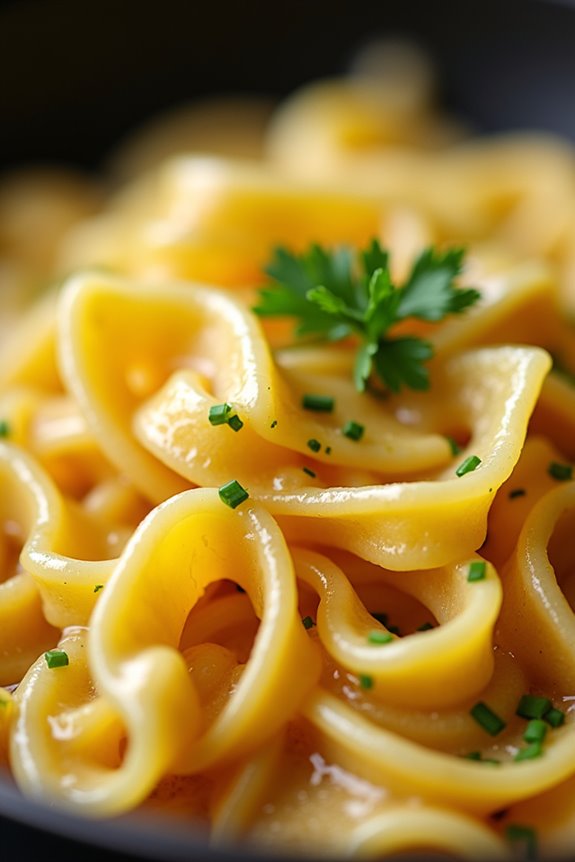
Spätzle, a beloved dish hailing from the Swabia region of Germany, is a type of egg noodle that’s both versatile and hearty. Traditionally served as a side dish, Spätzle can complement a variety of entrees, from rich meat dishes to vibrant vegetable stews. The name “Spätzle” translates to “little sparrows,” a nod to the small, irregular shape of these delightful noodles. They’re made from simple ingredients, yet their texture is uniquely satisfying—soft and slightly chewy, perfect for soaking up sauces.
Making Spätzle at home is an enjoyable and rewarding process. While there are specialized tools like a Spätzle maker or a colander that can help shape the noodles as they cook, a simple spatula and a pot of boiling water will suffice for an authentic experience. The dough is easy to whip up, and once cooked, the Spätzle can be sautéed with butter and herbs or served plain. This dish isn’t only a staple in German cuisine but also a comforting addition to any meal.
Ingredients (Serves 4-6)
- 2 cups all-purpose flour
- 4 large eggs
- 1/2 cup milk
- 1 teaspoon salt
- 1/4 teaspoon nutmeg (optional)
- 2 tablespoons butter (for sautéing)
- Fresh herbs (such as parsley or chives, for garnish)
Cooking Instructions
- Prepare the Dough: In a mixing bowl, combine the all-purpose flour and salt. Make a well in the center and crack in the eggs, then add the milk. Using a wooden spoon or a whisk, mix the ingredients until a smooth, thick batter forms. If desired, add nutmeg for extra flavor. The batter should be somewhat sticky but not runny.
- Boil the Water: Fill a large pot with water, add a pinch of salt, and bring it to a rolling boil. The salted water is essential as it helps season the noodles while they cook.
- Shape the Spätzle: If you have a Spätzle maker, use it to press the dough directly into the boiling water. Alternatively, you can use a colander or a large slotted spoon. Place a portion of the dough in the colander and use a spatula to push it through the holes into the boiling water. The noodles will drop into the water and cook.
- Cook the Noodles: Allow the Spätzle to cook for 2-3 minutes or until they float to the surface, which indicates they’re done. Use a slotted spoon to remove them from the pot and transfer them to a bowl. Repeat with the remaining dough.
- Sauté and Serve: In a large skillet, melt the butter over medium heat. Add the cooked Spätzle and sauté for 3-5 minutes, allowing them to brown slightly and absorb the butter. Remove from heat, garnish with fresh herbs, and serve warm.
Extra Tips
For the best results, make sure that your dough isn’t too thick; it should flow easily through your chosen shaping tool. If you find the dough too thick, add a bit more milk until the desired consistency is achieved.
Additionally, Spätzle can be made in advance and stored in the refrigerator, then sautéed just before serving for a quick and delicious side dish. Feel free to experiment with different herbs and spices to customize the flavor to your liking!
Rinderroulade: Beef Rolls Stuffed With Bacon and Onions

Rinderroulade is a classic German dish that exemplifies the heartiness and comfort of traditional German cuisine. These savory beef rolls are filled with a delightful mixture of bacon and onions, which not only infuses the meat with rich flavors but also provides a satisfying texture.
Cooking Rinderroulade involves rolling thinly sliced beef around the filling, searing it to develop a deep color, and then simmering it to tenderness in a flavorful broth. The result is a dish that’s both elegant and rustic, perfect for family gatherings or special occasions.
The dish is often served with traditional sides like red cabbage and potato dumplings, making it a complete and hearty meal. The preparation may seem intricate, but with a bit of patience and care, anyone can master this recipe and bring a taste of Germany into their kitchen.
Whether you’re celebrating a special occasion or simply indulging in a delicious homemade meal, Rinderroulade is sure to impress.
Ingredients (Serves 4-6):
- 1.5 pounds of beef flank or round, thinly sliced
- 4-6 slices of bacon
- 1 medium onion, finely chopped
- 2 tablespoons of mustard (preferably German yellow mustard)
- Salt and pepper to taste
- 1 tablespoon of vegetable oil
- 2 cups of beef broth
- 1 cup of red wine (optional)
- 2-3 bay leaves
- Fresh parsley for garnish (optional)
Cooking Instructions:
- Prepare the Filling: In a skillet over medium heat, cook the bacon until crispy. Remove it from the pan and set it aside to cool. In the same skillet, add the finely chopped onion and sauté until translucent. Once the bacon has cooled, chop it into small pieces and mix it with the sautéed onions. Set the filling aside.
- Prepare the Beef: Lay out the slices of beef on a clean surface. Lightly season each slice with salt and pepper. Spread a thin layer of mustard on each slice to enhance the flavor.
- Assemble the Rinderroulade: Place a spoonful of the bacon and onion mixture at one end of each beef slice. Roll the beef tightly around the filling, starting from the end where the filling is placed. Secure each roll with toothpicks or kitchen twine to hold them together during cooking.
- Sear the Rolls: Heat the vegetable oil in a large, heavy-bottomed pot over medium-high heat. Once hot, add the beef rolls, searing them on all sides until they’re browned. This step adds depth of flavor to the dish.
- Add Liquid: Once the beef rolls are browned, remove them from the pot and set them aside. Pour in the beef broth and red wine (if using), scraping the bottom of the pot to release any browned bits. Add the bay leaves for added flavor.
- Simmer: Return the beef rolls to the pot, making sure they’re mostly submerged in the liquid. Cover the pot and reduce the heat to low, allowing the rolls to simmer gently for about 1.5 to 2 hours, or until the meat is tender and easily falls apart.
- Serve: Once the Rinderroulade is cooked, remove the rolls from the pot and let them rest for a few minutes. Meanwhile, strain the cooking liquid into a saucepan and reduce it over medium heat to create a rich gravy. Serve the rolls with the gravy poured over them, garnished with fresh parsley if desired.
Extra Tips:
When making Rinderroulade, guarantee the beef slices are evenly pounded to a uniform thickness for even cooking.
Additionally, feel free to customize the filling by adding ingredients such as pickles or mushrooms for extra flavor. If you have leftover rolls, they can be stored in the refrigerator and taste even better the next day, as the flavors meld together beautifully.
Enjoy your culinary journey into authentic German cooking!
Kartoffelsalat: German Potato Salad
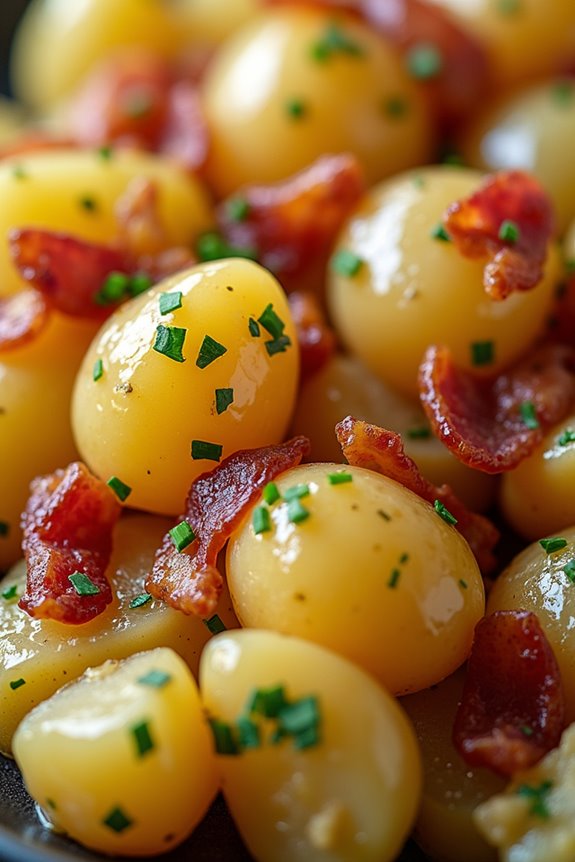
Kartoffelsalat, or German potato salad, is a beloved dish that varies greatly from region to region in Germany. Unlike its American counterpart, which is typically creamy and mayonnaise-based, traditional German potato salad is often served warm and dressed with a tangy vinaigrette made from mustard, vinegar, and bacon fat. This dish is a delightful accompaniment to a variety of main courses, especially during summer barbecues or festive gatherings.
The combination of tender potatoes, crunchy onions, and the savory flavor of bacon makes for a satisfying dish that highlights the simplicity and heartiness of German cuisine.
Preparing Kartoffelsalat isn’t only straightforward but also allows for personal touches. Some recipes include fresh herbs like chives or parsley, while others might add pickles for an extra crunch. This version captures the essence of the classic German potato salad, ensuring that each bite is filled with flavor and authenticity.
Enjoy this dish warm or at room temperature, and feel free to serve it alongside your favorite sausages or grilled meats for a truly German experience.
Ingredients (Serves 4-6):
- 2 pounds of waxy potatoes (such as Yukon Gold or Red Bliss)
- 4 slices of bacon
- 1 medium onion, finely chopped
- 1/4 cup apple cider vinegar
- 2 tablespoons Dijon mustard
- 1/4 cup vegetable oil
- 1 teaspoon sugar
- Salt and pepper to taste
- Fresh chives or parsley for garnish (optional)
Cooking Instructions:
- Cook the Potatoes: Begin by washing the potatoes thoroughly to remove any dirt. Place them in a large pot and cover with cold water, adding a generous pinch of salt. Bring the pot to a boil over medium-high heat. Once boiling, reduce the heat and simmer for about 15-20 minutes or until the potatoes are fork-tender. Be careful not to overcook them, as they should hold their shape.
- Prepare the Bacon: While the potatoes are cooking, chop the bacon into small pieces. In a skillet over medium heat, cook the bacon until it becomes crispy and golden brown, which should take about 5-7 minutes. Once cooked, remove the bacon from the pan and place it on a paper towel to drain excess fat, leaving the rendered bacon fat in the skillet.
- Sauté the Onions: In the same skillet with the bacon fat, add the finely chopped onion. Sauté the onions over medium heat until they’re softened and translucent, which should take about 3-5 minutes. Take care not to let them brown too much, as you want a sweet, mild flavor.
- Make the Dressing: In the skillet with the sautéed onions, add the apple cider vinegar, Dijon mustard, vegetable oil, and sugar. Stir well to combine all the ingredients and let it simmer for a couple of minutes to meld the flavors. Season with salt and pepper to taste.
- Combine Everything: Once the potatoes are cooked, drain them and let them cool slightly. While they’re still warm, cut the potatoes into bite-sized pieces. Place the warm potatoes in a large mixing bowl and pour the warm dressing with onions over them. Add the crispy bacon pieces and gently toss everything together, ensuring that the potatoes are well-coated with the dressing.
- Garnish and Serve: Allow the salad to sit for about 15 minutes at room temperature for the flavors to develop. Just before serving, garnish with chopped fresh chives or parsley if desired.
Extra Tips:
For an even more authentic flavor, consider using homemade bacon fat or adding a splash of broth to the dressing for extra depth.
Additionally, you can customize your Kartoffelsalat by incorporating diced pickles or a touch of horseradish for a bit of kick. This dish is best enjoyed fresh, but it can also be made a day in advance and served at room temperature, allowing the flavors to meld even further.
Schweinshaxe: Crispy Pork Knuckle

Schweinshaxe, the beloved German dish of crispy pork knuckle, is a true celebration of Bavarian cuisine. Traditionally enjoyed during Oktoberfest and special family gatherings, this hearty meal features a succulent pork knuckle that’s slow-roasted to achieve a tender interior and a delectably crunchy skin. The combination of spices infuses the meat with rich flavors, while the crispy skin adds a satisfying texture. Served with sauerkraut, potato dumplings, or a simple salad, Schweinshaxe is a feast that embodies the essence of German culinary traditions.
Preparing Schweinshaxe at home may seem intimidating, but with the right technique and patience, you can achieve restaurant-quality results. The key to the perfect pork knuckle is in the marinating and roasting process, which allows the flavors to develop fully and the skin to crisp beautifully. Gather your ingredients and get ready to impress your family and friends with this iconic dish that will transport you straight to a Bavarian beer hall.
Ingredients (Serves 4-6):
- 1 (3-4 lbs) pork knuckle (also known as ham hock or pork shank)
- 2 tablespoons salt
- 1 tablespoon black pepper
- 1 tablespoon garlic powder
- 1 tablespoon onion powder
- 1 teaspoon caraway seeds
- 1 teaspoon paprika
- 2 cups low-sodium chicken or beef broth
- 1 large onion, quartered
- 4 cloves of garlic, smashed
- 2-3 bay leaves
- Fresh parsley, for garnish (optional)
Cooking Instructions:
- Preparation of the Pork Knuckle: Start by scoring the skin of the pork knuckle in a crisscross pattern. This step is essential as it allows the fat to render and the skin to become crispy during roasting. Rub the pork knuckle all over with salt, black pepper, garlic powder, onion powder, caraway seeds, and paprika, making sure to get the seasoning into the scored areas.
- Marination: Place the seasoned pork knuckle in a large resealable plastic bag or a dish and refrigerate it for at least 4 hours, preferably overnight. This marination time helps the flavors penetrate the meat and enhances the overall taste of the dish.
- Preheat the Oven: When you’re ready to cook, preheat your oven to 350°F (175°C). This moderate temperature will guarantee that the pork knuckle cooks evenly and slowly.
- Prepare the Roasting Pan: In a large roasting pan, combine the chicken or beef broth with the quartered onion, smashed garlic cloves, and bay leaves. This will create a flavorful base for the pork knuckle to roast in, keeping it moist while also adding depth to the dish.
- Roast the Pork Knuckle: Place the marinated pork knuckle on a rack in the roasting pan, skin side up. Roast in the preheated oven for about 2 to 2.5 hours, basting the knuckle with the broth every 30 minutes. This helps keep the meat juicy and allows the skin to become crispy.
- Crisp the Skin: After the initial roasting time, increase the oven temperature to 425°F (220°C) and continue roasting for an additional 30-45 minutes or until the skin is golden brown and crispy. Keep an eye on it to prevent burning.
- Rest and Serve: Once finished, remove the pork knuckle from the oven and let it rest for 10-15 minutes before carving. Serve it with your choice of sides, such as sauerkraut and potato dumplings, and garnish with fresh parsley if desired.
Extra Tips:
To achieve the best results, make certain that the pork knuckle is thoroughly dry before applying the seasoning, as moisture will prevent the skin from crisping up.
For an extra layer of flavor, consider adding a splash of beer to the broth for a more authentic Bavarian taste. Additionally, if you have leftovers, Schweinshaxe can be deliciously repurposed in sandwiches or as a topping for salads, making it a versatile dish for any occasion.
Enjoy your culinary journey to Germany!
Käsespätzle: Cheesy Spätzle With Onions

Käsespätzle, a beloved dish from the Swabian region of Germany, is a comforting meal that features soft, egg noodles known as spätzle, layered with rich cheese and topped with caramelized onions. This hearty dish is often compared to mac and cheese but offers a unique texture and flavor profile that originates from traditional German cooking.
Perfect for family gatherings or a cozy night in, Käsespätzle is both satisfying and deceptively simple to prepare.
The star of this dish is, of course, the spätzle, which can be made from scratch or purchased pre-made for convenience. The noodles are combined with a blend of cheeses—typically Emmental and sometimes Gruyère—creating a melty and delicious filling. The caramelized onions add a sweet depth of flavor that perfectly complements the rich cheese. Serve it with a sprinkle of fresh chives or parsley for a bright finish, and enjoy a taste of authentic German comfort food.
Ingredients (Serves 4-6)
- 2 cups all-purpose flour
- 4 large eggs
- 1/2 cup milk
- 1 teaspoon salt
- 1/2 teaspoon ground nutmeg (optional)
- 2 cups grated Emmental cheese (or a mix of Emmental and Gruyère)
- 2 medium onions, thinly sliced
- 4 tablespoons butter
- Freshly chopped chives or parsley for garnish (optional)
Cooking Instructions
- Make the Spätzle Dough: In a large mixing bowl, combine the flour, eggs, milk, salt, and nutmeg (if using). Mix until you achieve a smooth, thick batter. The consistency should be somewhat elastic but still pourable. If it’s too thick, add a little more milk.
- Boil Water: Fill a large pot with water and bring it to a boil. Add a pinch of salt to the water; this will season the spätzle as they cook.
- Cook the Spätzle: Using a spätzle maker or a colander with large holes, press the dough into the boiling water. Cook the spätzle in batches, allowing them to float to the surface, which usually takes about 2-3 minutes. Once they float, let them cook for an additional 1-2 minutes, then remove with a slotted spoon and transfer to a large serving bowl.
- Caramelize the Onions: In a large skillet, melt the butter over medium heat. Add the sliced onions and cook, stirring occasionally, until they’re golden brown and caramelized, about 15-20 minutes. Be patient, as this step adds a rich flavor to the dish.
- Combine with Cheese: Once the onions are caramelized, reduce the heat to low. Add the cooked spätzle to the skillet, sprinkle over the grated cheese, and stir until the cheese is melted and everything is well combined.
- Serve: Transfer the Käsespätzle to a serving dish, top with the remaining caramelized onions, and garnish with fresh chives or parsley if desired. Serve hot and enjoy!
Extra Tips
When making Käsespätzle, feel free to experiment with the types of cheese used to cater to your taste. A combination of cheeses can provide a more complex flavor.
Additionally, if you prefer a bit of crunch, consider baking the assembled dish in a casserole dish for 10-15 minutes until the top is slightly golden before serving. This adds a delightful texture contrast to the soft noodles and gooey cheese.
Gulaschsuppe: Hearty Goulash Soup
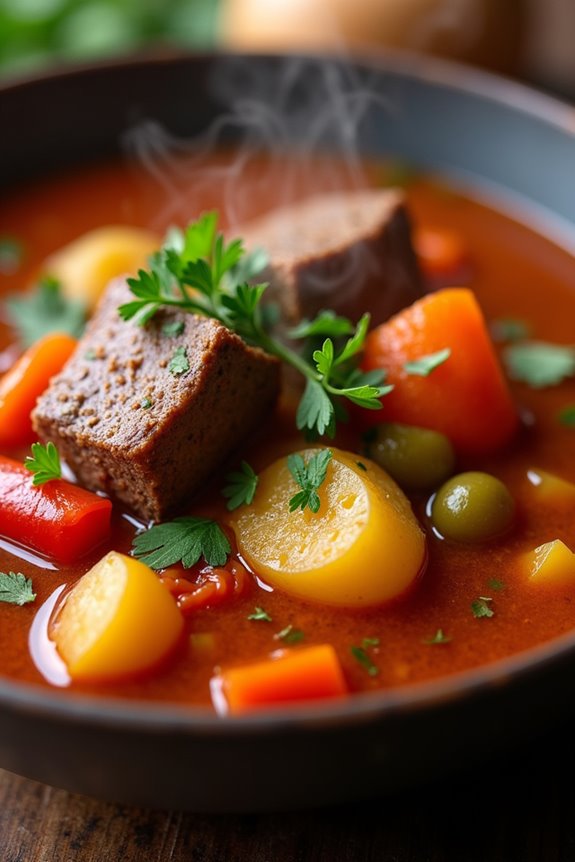
Gulaschsuppe, or Goulash Soup, is a beloved dish in German cuisine that combines the rich flavors of beef stew with the comforting warmth of a hearty soup. Originating from Hungary, this dish has been embraced by many German households, especially during the colder months.
Its robust flavor profile is achieved by slowly simmering tender chunks of beef with a medley of vegetables, spices, and broth, creating a satisfying meal that can warm you from the inside out. The depth of flavor is further enhanced by the use of paprika, which gives the soup its characteristic color and taste.
This dish is perfect for gatherings or family dinners, as it can easily be scaled to serve a crowd. Gulaschsuppe is often accompanied by crusty bread or rolls, making it a filling and enjoyable meal. The beauty of this recipe lies in its adaptability; you can tweak the ingredients based on what you have on hand or to suit your taste preferences.
Whether you prefer a spicier kick or a milder flavor, Gulaschsuppe is sure to become a favorite in your recipe repertoire.
Ingredients (Serves 4-6)
- 2 tablespoons vegetable oil
- 1.5 pounds beef chuck, cut into 1-inch cubes
- 2 medium onions, chopped
- 3 cloves garlic, minced
- 2 bell peppers, chopped (red and green)
- 3 medium potatoes, diced
- 2 carrots, sliced
- 2 tablespoons sweet paprika
- 1 teaspoon caraway seeds
- 1 teaspoon dried thyme
- 1 bay leaf
- 6 cups beef broth
- Salt and pepper to taste
- Fresh parsley, chopped (for garnish)
Cooking Instructions
- Heat the Oil: In a large pot or Dutch oven, heat the vegetable oil over medium-high heat. Allow the oil to become hot but not smoking; this will guarantee that the beef browns properly and develops flavor.
- Brown the Beef: Add the beef cubes to the pot in batches, making sure not to overcrowd. Sear on all sides until they’re nicely browned, about 5-7 minutes per batch. Remove the browned beef and set it aside. This step is essential as it adds a deeper flavor to the soup.
- Sauté the Onions and Garlic: In the same pot, add the chopped onions and sauté for about 3-4 minutes until they become translucent. Add the minced garlic and cook for an additional minute, stirring frequently to prevent burning.
- Add Vegetables and Spices: Stir in the chopped bell peppers, diced potatoes, and sliced carrots. Cook for about 5 minutes until the vegetables start to soften. Sprinkle in the sweet paprika, caraway seeds, dried thyme, and bay leaf, stirring well to coat the vegetables.
- Incorporate the Beef and Broth: Return the browned beef to the pot and pour in the beef broth. Bring the mixture to a boil, then reduce the heat to low. Cover the pot and let it simmer for 1.5 to 2 hours, or until the beef is tender and the flavors meld together. Stir occasionally to prevent sticking.
- Season and Serve: After simmering, taste the soup and adjust the seasoning with salt and pepper as needed. Remove the bay leaf before serving. Ladle the Gulaschsuppe into bowls and garnish with fresh parsley for a pop of color and flavor.
Extra Tips
For an even richer flavor, consider adding a splash of red wine when you sauté the onions and garlic. Additionally, if you prefer a thicker soup, you can mix a tablespoon of cornstarch with a bit of cold water and stir it into the soup during the final 15 minutes of cooking.
Feel free to customize the vegetables according to your preferences—zucchini or green beans can be excellent additions. Finally, this soup tastes even better the next day, so make a larger batch to enjoy as leftovers!
Apfelstrudel: Classic Apple Strudel

Apfelstrudel, or apple strudel, is a traditional Viennese pastry that has become a beloved dessert across Germany and beyond. This delicious dish consists of thin layers of dough wrapped around a spiced apple filling, often complemented by raisins and walnuts. The art of making Apfelstrudel lies in the preparation of the dough, which should be rolled out as thin as possible, allowing it to become crispy and flaky during baking.
The combination of tart and sweet apples creates a delightful flavor profile that pairs perfectly with a dusting of powdered sugar and a scoop of vanilla ice cream or whipped cream. Creating Apfelstrudel at home can be a rewarding experience, as you can customize the filling to your preference. Whether you prefer a classic recipe or want to experiment with additional spices like cinnamon or nutmeg, this dessert is perfect for any occasion.
It has a rich history and is often served during festive gatherings, making it a cherished part of German culinary traditions. Gather your ingredients and immerse yourself in the delightful process of making this iconic pastry.
Ingredients (Serves 4-6)
- 2 cups all-purpose flour
- 1/2 teaspoon salt
- 1/4 cup vegetable oil
- 1/2 cup warm water
- 4 medium-sized tart apples (such as Granny Smith), peeled, cored, and sliced thinly
- 1/2 cup granulated sugar
- 1 teaspoon ground cinnamon
- 1/4 cup raisins
- 1/4 cup chopped walnuts (optional)
- 2 tablespoons lemon juice
- 2 tablespoons breadcrumbs
- 1 tablespoon butter, melted
- Powdered sugar, for dusting
Cooking Instructions
1. Prepare the Dough: In a large mixing bowl, combine the all-purpose flour and salt. Create a well in the center and add the vegetable oil and warm water. Mix until the dough comes together. Knead the dough on a floured surface for about 5-7 minutes until it becomes smooth and elastic.
Cover the dough with a clean kitchen towel or plastic wrap and let it rest for at least 30 minutes. This helps relax the gluten and makes the dough easier to roll out.
2. Make the Filling: In a large bowl, combine the sliced apples, granulated sugar, ground cinnamon, raisins, chopped walnuts (if using), and lemon juice. Toss the mixture well to guarantee the apples are evenly coated with the sugar and spices.
Set the filling aside to allow the flavors to meld.
3. Roll Out the Dough: After the dough has rested, transfer it to a floured surface. Using a rolling pin, roll the dough out as thin as possible (about 1/8 inch thick) into a rectangular shape.
If the dough tears, you can patch it up with your fingers. Alternatively, you can use a clean kitchen towel to help stretch the dough gently from underneath.
4. Assemble the Strudel: Preheat your oven to 375°F (190°C). Brush the rolled-out dough with melted butter and sprinkle breadcrumbs evenly over the surface. This will help absorb excess moisture from the filling.
Spread the apple filling evenly over the dough, leaving a small border around the edges. Carefully lift the edge of the dough closest to you and begin rolling it away from you to form a log. Make sure to tuck in the sides as you go to encase the filling.
5. Bake the Strudel: Transfer the rolled strudel to a baking sheet lined with parchment paper, seam-side down. Brush the top with more melted butter. Bake in the preheated oven for about 35-40 minutes or until the strudel is golden brown and crispy.
Once done, remove from the oven and let it cool slightly.
6. Serve: Dust the Apfelstrudel with powdered sugar before slicing. Serve warm with a side of vanilla ice cream or whipped cream for a delightful finish.
Extra Tips
When making Apfelstrudel, it’s essential to ascertain that the apples aren’t too juicy, as this can make the pastry soggy. Choose firm varieties and consider slightly undercooking the filling to maintain texture.
For an added kick, you can incorporate a splash of rum with the raisins or a pinch of nutmeg along with the cinnamon. Additionally, if you find the dough challenging to work with, feel free to use store-bought phyllo dough as a convenient alternative, although the texture will differ from the traditional homemade version.
Enjoy your baking adventure and the delicious results!
Rotkohl: Sweet and Sour Red Cabbage
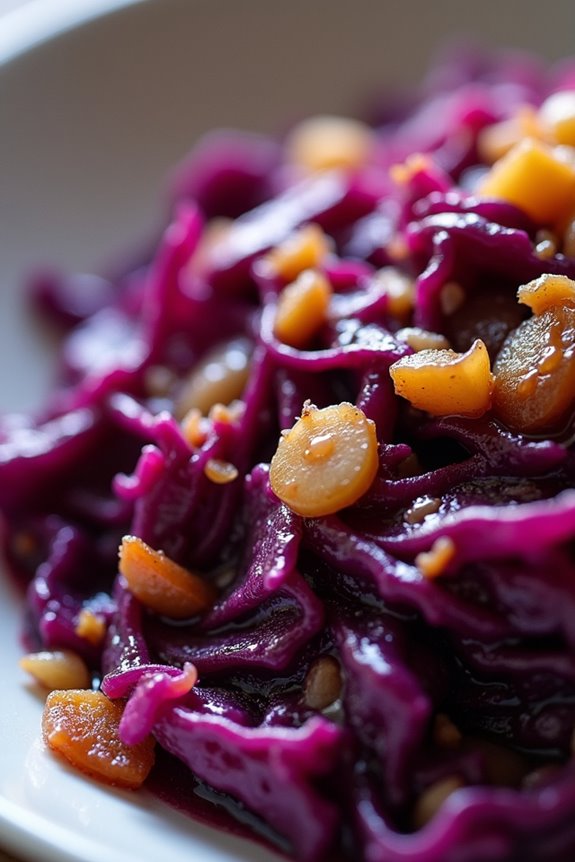
Rotkohl, or sweet and sour red cabbage, is a classic German side dish that pairs beautifully with a variety of hearty meals, particularly roasted meats. This vibrant dish isn’t only visually appealing but also offers a delightful balance of flavors that can elevate any meal.
The combination of sweet and tangy ingredients, along with the tender texture of the cabbage, makes it a favorite at festive gatherings and family dinners alike.
Cooking Rotkohl is a straightforward process that allows the natural sweetness of the cabbage to shine through. The dish typically features a blend of apples, vinegar, and spices, which together create a deliciously rich and complex flavor profile.
When prepared correctly, Rotkohl can be made ahead and reheated, making it a convenient option for busy cooks. Enjoy this wonderful side dish as part of a traditional German feast or alongside your favorite comfort foods.
Ingredients for Rotkohl (Serves 4-6):
- 1 medium red cabbage, shredded
- 2 tablespoons vegetable oil
- 1 large onion, finely chopped
- 2 apples, peeled and grated
- 1/4 cup apple cider vinegar
- 1/4 cup sugar
- 1 teaspoon ground cinnamon
- 1/2 teaspoon ground cloves
- Salt and pepper to taste
- 1 cup vegetable or chicken broth
- 2 tablespoons butter
Cooking Instructions:
- Prepare the Cabbage: Start by removing the outer leaves of the cabbage. Cut the cabbage into quarters and remove the core. Shred the cabbage finely using a sharp knife or a mandoline slicer. Set aside in a large bowl.
- Sauté the Onions: In a large pot or Dutch oven, heat the vegetable oil over medium heat. Add the finely chopped onions and sauté until they become translucent and slightly golden, about 5-7 minutes. This step enhances the sweetness of the onions and builds a flavorful base for the dish.
- Add Apples and Cabbage: Stir in the grated apples and the shredded red cabbage into the pot with the onions. Cook for about 5 minutes, stirring occasionally. The heat will help soften the cabbage and infuse it with the sweetness of the apples.
- Incorporate the Flavorings: Pour in the apple cider vinegar and sprinkle the sugar, cinnamon, and cloves over the cabbage mixture. Season with salt and pepper to taste. Stir well to guarantee the cabbage and apples are coated with the seasonings.
- Add Broth and Simmer: Pour in the vegetable or chicken broth and bring the mixture to a gentle boil. Once boiling, reduce the heat to low and cover the pot. Allow the Rotkohl to simmer for about 30-40 minutes, stirring occasionally. This slow cooking process allows the flavors to meld and the cabbage to become tender.
- Finish with Butter: After the cabbage is tender, stir in the butter and let it melt through the dish. Taste and adjust seasoning if necessary. The butter adds a rich finish to the dish, enhancing the overall flavor.
- Serve: Remove from heat and let the Rotkohl sit for a few minutes before serving. This dish can be served warm or at room temperature.
Extra Tips:
When preparing Rotkohl, consider using a variety of apples for a more complex flavor. Tart apples like Granny Smith can add a nice contrast to the sweetness of the sugar, while sweeter varieties can enhance the overall taste.
Additionally, you can prepare this dish a day in advance, as the flavors tend to deepen and improve overnight. Just reheat gently before serving to enjoy its full potential!
Bienenstich: Bee Sting Cake

Bienenstich, or Bee Sting Cake, is a traditional German dessert that has delighted taste buds for centuries. This delectable cake features a soft, yeast-based sponge filled with a luscious cream and topped with a caramelized almond crust. The name “Bienenstich” is often attributed to the legend that a baker in the German town of Schwandorf was stung by a bee while creating this cake, leading to its sweet, irresistible flavor that can make anyone forget their worries—even a bee sting.
Making Bienenstich at home is a rewarding experience that brings the authentic taste of Germany right to your kitchen. While the process may seem intricate, each step is straightforward and well worth the effort. The combination of the fluffy cake, creamy filling, and crunchy almond topping creates a symphony of textures and flavors that are perfect for any occasion, from family gatherings to festive celebrations.
Ingredients (Serves 4-6):
- 2 cups all-purpose flour
- 1/2 cup milk
- 1/4 cup unsalted butter, melted
- 1/4 cup granulated sugar
- 1 packet (2 1/4 tsp) active dry yeast
- 2 large eggs
- 1/2 teaspoon salt
- 1 cup heavy whipping cream
- 1/2 cup powdered sugar
- 1 teaspoon vanilla extract
- 1 cup sliced almonds
- 1/2 cup honey
- 1 tablespoon water
Instructions:
- Prepare the Dough: In a small saucepan, heat the milk until warm but not boiling. Remove from heat, add the yeast and a pinch of sugar, and let it sit for about 5-10 minutes until frothy. In a large mixing bowl, combine flour, melted butter, sugar, eggs, and salt. Pour in the yeast mixture and mix until a dough forms. Knead the dough on a floured surface for about 5-7 minutes until smooth.
- First Rise: Place the dough in a greased bowl, cover it with a clean cloth, and let it rise in a warm place for about 1 hour or until it has doubled in size.
- Prepare the Topping: While the dough rises, prepare the almond topping. In a medium saucepan, combine honey and water over low heat until melted. Stir in the sliced almonds and cook for 2-3 minutes until they’re coated. Remove from heat and let cool slightly.
- Shape and Second Rise: Once the dough has risen, punch it down and transfer it to a greased 9-inch round cake pan. Spread it evenly across the bottom and up the sides slightly. Let the dough rise again for about 30 minutes, covered with a cloth.
- Add Topping and Bake: Preheat the oven to 350°F (175°C). Once the dough has risen, spread the almond mixture evenly over the top of the dough. Bake in the preheated oven for 25-30 minutes or until golden brown. Remove from oven and let cool in the pan for about 10 minutes before transferring to a wire rack.
- Prepare the Filling: While the cake cools, whip the heavy cream with powdered sugar and vanilla extract until soft peaks form. Once the cake is completely cool, carefully slice it in half horizontally.
- Assemble the Cake: Spread the whipped cream filling evenly on the bottom half of the cake, then place the top half back on.
- Serve: Cut into wedges and serve. Enjoy your homemade Bienenstich!
Extra Tips:
When making Bienenstich, be mindful of the texture of your dough; it should be soft but not sticky. If you find it difficult to work with, you can adjust by adding a little extra flour.
Additionally, allow the cake to cool completely before slicing; this helps the filling to set and makes for cleaner cuts. For a twist, you can infuse the whipped cream with flavors such as lemon zest or almond extract to enhance the cake’s flavor profile.
Enjoy this delightful dessert with a cup of coffee or tea for a truly authentic experience!
Leberknödel: Liver Dumplings
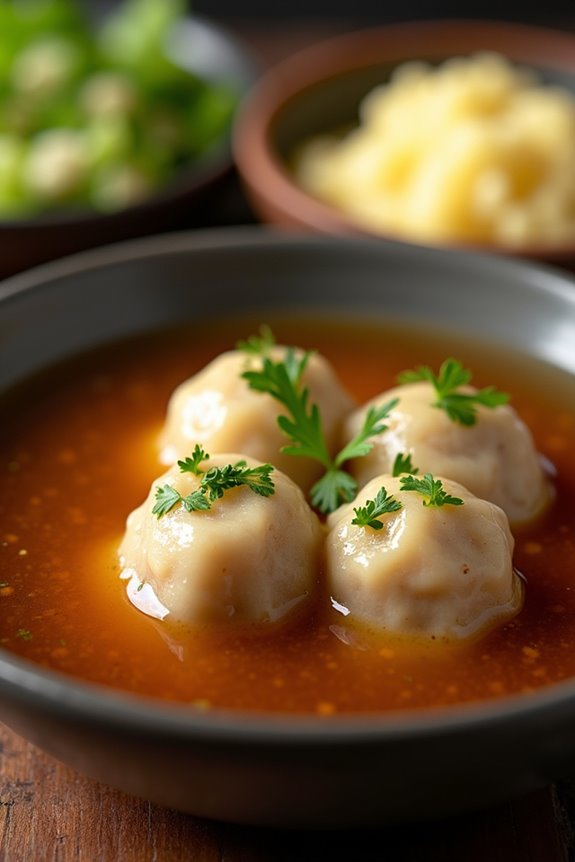
Leberknödel, or liver dumplings, is a traditional German dish that showcases the rich flavors of liver combined with a hearty dumpling. This dish is often enjoyed in various regions of Germany, particularly in Bavaria and the Palatinate, where it’s commonly served in a savory broth or alongside sauerkraut and potatoes. The combination of ingredients creates a satisfying meal that’s perfect for both special occasions and everyday dining.
Making Leberknödel from scratch might seem intimidating, but the process is straightforward and rewarding. The key to achieving the perfect dumpling lies in using high-quality liver, preferably from beef or pork, and balancing the flavors with herbs and seasonings. Once you master this recipe, you’ll be able to impress your family and friends with a taste of authentic German cuisine.
Ingredients (serving size: 4-6 people)
- 500g beef or pork liver, cleaned and chopped
- 1 medium onion, finely chopped
- 2 cloves of garlic, minced
- 2 tablespoons butter
- 1 teaspoon dried marjoram
- 1 teaspoon dried thyme
- Salt and pepper, to taste
- 150g stale bread, cut into small cubes
- 200ml milk
- 2 eggs
- 2 tablespoons fresh parsley, chopped
- 1 tablespoon flour (optional, for binding)
Cooking Instructions
- Prepare the Bread Soak: In a small bowl, combine the stale bread cubes with the milk. Allow the bread to soak for about 10-15 minutes until it becomes soft and mushy. This will help bind the dumplings together and provide a nice texture.
- Cook the Onions and Garlic: In a large skillet, melt the butter over medium heat. Add the chopped onion and minced garlic, sautéing until the onion becomes translucent and fragrant, about 5-7 minutes. This step adds depth of flavor to the dumplings.
- Combine Ingredients: In a large mixing bowl, combine the soaked bread, sautéed onion and garlic, chopped liver, dried marjoram, dried thyme, salt, pepper, and fresh parsley. Mix well until all ingredients are fully incorporated. If the mixture feels too loose, you can add flour to help bind it.
- Add Eggs: Crack the eggs into the mixture and stir until fully combined. The eggs act as a binding agent and will help the dumplings hold their shape while cooking.
- Shape the Dumplings: With wet hands, take a portion of the mixture and form it into round dumplings, about the size of a golf ball. You should be able to make around 8-10 dumplings, depending on the size.
- Cook the Dumplings: Bring a large pot of salted water to a gentle simmer. Carefully drop the dumplings into the water and allow them to cook for 15-20 minutes. They’re done when they float to the surface and feel firm to the touch.
- Serve: Using a slotted spoon, remove the dumplings from the water and let them drain briefly. Serve the Leberknödel in a flavorful broth or alongside your favorite sides, such as sauerkraut or mashed potatoes.
Extra Tips
When preparing Leberknödel, it’s essential to use fresh liver for the best flavor and texture. If you prefer a milder taste, you can soak the liver in milk for a few hours before chopping it.
Additionally, feel free to experiment with herbs and spices to suit your personal preference; some people enjoy adding nutmeg or allspice for an extra layer of warmth.
Finally, these dumplings can be made in advance and frozen for later use—just remember to cool them completely before freezing and reheat them gently in broth when you’re ready to enjoy them again.
Wurstsalat: Sausage Salad

Wurstsalat, a traditional German dish, is a delightful and invigorating salad that showcases the flavors of various sausages, typically enjoyed in the warmer months. Originating from the southern regions of Germany, this dish combines thinly sliced sausages with a tangy dressing, onions, and pickles, creating a perfect balance of savory and sour.
It’s often served as a light meal or appetizer, making it a popular choice for gatherings, picnics, or as a hearty snack.
The beauty of Wurstsalat lies in its versatility; you can use different types of sausages depending on your preference or availability. Whether you choose to use a mix of Landjäger, Lyoner, or even bologna, each variation brings its unique flavor to the table.
The salad is typically served chilled, allowing the flavors to meld beautifully. Pair it with freshly baked bread or pretzels for a truly authentic German dining experience.
Ingredients (Serves 4-6)
- 400g assorted German sausages (such as Lyoner, Landjäger, or bologna)
- 1 medium red onion, thinly sliced
- 4-5 medium pickles, sliced
- 150g cherry tomatoes, halved
- 2 tablespoons chopped fresh chives
- 4 tablespoons apple cider vinegar
- 3 tablespoons vegetable oil
- 1 teaspoon mustard (preferably German mustard)
- Salt and pepper to taste
Cooking Instructions
- Prepare the Sausages: Begin by slicing the assorted sausages into thin rounds or half-moons, ensuring that each piece is uniform in thickness for even flavor distribution. If using raw sausages, cook them according to the package instructions before slicing.
- Chop the Vegetables: Thinly slice the red onion and pickles, and halve the cherry tomatoes. This step is essential as it adds crunch and brightness to the salad, enhancing its overall texture and appeal.
- Mix the Dressing: In a large mixing bowl, combine the apple cider vinegar, vegetable oil, mustard, salt, and pepper. Whisk the ingredients together until the dressing is well blended, ensuring the flavors are balanced to your liking.
- Combine Ingredients: Add the sliced sausages, red onion, pickles, cherry tomatoes, and chopped chives to the bowl with the dressing. Gently toss all the ingredients until they’re evenly coated with the dressing.
- Chill the Salad: Cover the bowl with plastic wrap or a lid and refrigerate the Wurstsalat for at least 30 minutes. This allows the flavors to meld together, resulting in a more flavorful dish.
- Serve and Enjoy: Once chilled, give the salad a final toss and transfer it to a serving platter. Wurstsalat is best enjoyed with slices of crusty bread or pretzels.
Extra Tips
When preparing Wurstsalat, feel free to experiment with different types of sausages or add additional ingredients such as grated cheese, bell peppers, or radishes for extra texture and flavor.
Adjust the acidity of the dressing by adding more vinegar or mustard according to your taste. Additionally, this salad can be made a few hours in advance, making it an excellent option for meal prep or entertaining guests.
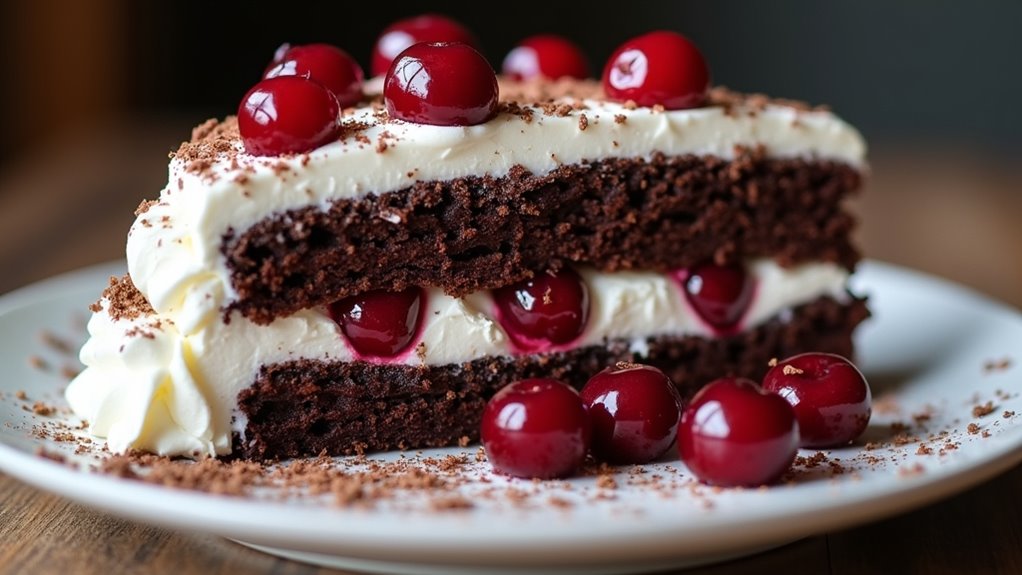
Schwarzwälder Kirschtorte: Black Forest Cake

Schwarzwälder Kirschtorte, or Black Forest Cake, is a classic German dessert that perfectly balances rich chocolate cake with the tartness of cherries and the creaminess of whipped cream. Originating from the Black Forest region of Germany, this indulgent cake has become a beloved treat worldwide.
The cake is distinguished by its layers of chocolate sponge, whipped cream, and a generous filling of sour cherries, often soaked in Kirschwasser (a clear cherry schnapps) for an authentic flavor.
Preparing Schwarzwälder Kirschtorte requires some time and patience, but the end result is a show-stopping dessert that’s bound to impress at any gathering. The combination of lightness from the whipped cream and the dense chocolate sponge creates a harmonious dessert that’s both decadent and invigorating.
Whether for a birthday, anniversary, or simply a special occasion, this cake will leave your guests asking for seconds!
Ingredients (serves 4-6 people):
- 200g dark chocolate (for baking)
- 150g all-purpose flour
- 150g granulated sugar
- 4 large eggs
- 1 tsp baking powder
- 1/4 tsp salt
- 100g unsalted butter, melted
- 300ml heavy whipping cream
- 2 tbsp powdered sugar
- 1 jar (about 350g) sour cherries (preferably in syrup)
- 50ml Kirschwasser (cherry schnapps)
- Chocolate shavings (for decoration)
- Fresh cherries (for decoration, optional)
Cooking Instructions:
- Preheat the Oven: Begin by preheating your oven to 180°C (350°F). This guarantees that your cake bakes evenly and rises properly.
- Prepare the Cake Batter: In a large mixing bowl, melt the dark chocolate. Once melted, let it cool slightly. In a separate bowl, whisk together the eggs and granulated sugar until pale and fluffy. Gradually add the melted chocolate into the egg mixture, followed by the melted butter and mix well.
- Combine Dry Ingredients: In another bowl, sift together the flour, baking powder, and salt. Gradually fold the dry ingredients into the chocolate mixture until smooth. Be careful not to overmix, as this can make the cake dense.
- Bake the Cake: Pour the batter into a greased and lined 9-inch round cake pan. Bake in the preheated oven for about 25-30 minutes or until a toothpick inserted in the center comes out clean. Allow the cake to cool in the pan for 10 minutes before transferring it to a wire rack to cool completely.
- Prepare the Filling: While the cake is cooling, drain the sour cherries and reserve the syrup. If desired, add the Kirschwasser to the syrup to enhance the cherry flavor.
- Whip the Cream: In a mixing bowl, whip the heavy cream with the powdered sugar until soft peaks form. This will be used for layering and decorating the cake.
- Assemble the Cake: Once the cake has cooled, slice it horizontally into two or three layers. Place the bottom layer on a serving plate and drizzle some of the cherry syrup over it. Spread a layer of whipped cream on top, followed by half of the sour cherries. Repeat the process for the next layer if you have three layers.
- Final Layer and Decoration: Place the final layer of cake on top. Cover the entire cake with the remaining whipped cream and smooth it out. Decorate the top with chocolate shavings and fresh cherries as desired.
- Chill and Serve: For best results, refrigerate the assembled cake for at least an hour before serving to allow the flavors to meld. Slice, serve, and enjoy the deliciousness of your Schwarzwälder Kirschtorte!
Extra Tips:
For an even more intense chocolate flavor, consider adding a tablespoon of espresso powder to the cake batter.
When assembling the cake, you can also play around with the amount of Kirschwasser used in the syrup, adjusting it to your taste preference.
Additionally, feel free to experiment with garnishes—adding a sprinkle of powdered sugar or a few mint leaves can elevate your presentation.
