


As the temperature drops, there’s nothing more comforting than a bowl of homemade soup. German soups, like Kartoffelsuppe and Linsensuppe, bring a taste of warmth and tradition to your table. Each recipe is a reminder of cozy kitchens and the joy of family gatherings. Let’s explore these soul-warming soups that are perfect for chilly days. Keep your apron ready for a journey into these hearty recipes.
Kartoffelsuppe (German Potato Soup)

Kartoffelsuppe, or German Potato Soup, is a comforting and hearty dish that warms the soul and delights the taste buds. This traditional German soup is made primarily from potatoes, which are creamy and rich when cooked, paired with aromatic vegetables like onions and leeks. The simplicity of the ingredients allows for a deep, satisfying flavor that can be enjoyed on its own or accompanied by a slice of crusty bread.
The beauty of Kartoffelsuppe lies in its versatility; you can customize it to your taste by adding bacon for a smoky flavor, fresh herbs for brightness, or even a dollop of sour cream for extra creaminess. This dish is perfect for chilly evenings, family gatherings, or as a deliciously filling meal any time of the year. With a few basic ingredients and simple cooking techniques, you can create a delightful bowl of Kartoffelsuppe that’s guaranteed to impress.
Ingredients (Serves 4-6)
- 4 large potatoes, peeled and diced
- 1 large onion, chopped
- 2 leeks, cleaned and sliced (white part only)
- 2 carrots, diced
- 4 cups vegetable or chicken broth
- 1 cup heavy cream (optional)
- 2 tablespoons butter
- Salt and pepper to taste
- Fresh parsley for garnish (optional)
Cooking Instructions
- Prepare the Ingredients: Begin by peeling and dicing the potatoes, chopping the onion, and slicing the leeks. Dice the carrots as well. Having all your ingredients prepped and ready will make the cooking process smoother and more efficient.
- Sauté the Aromatics: In a large pot, melt the butter over medium heat. Add the chopped onion and leeks. Sauté for about 5-7 minutes until the onions become translucent and fragrant, making certain not to brown them. This step helps build the base flavor for your soup.
- Add the Vegetables: Once the onions and leeks are softened, add the diced carrots and potatoes to the pot. Stir well to combine all the vegetables and allow them to cook for another 5 minutes. This will help to slightly soften the potatoes and carrots before adding the broth.
- Pour in the Broth: Add the vegetable or chicken broth to the pot, guaranteeing it covers the vegetables completely. Bring the mixture to a boil over high heat, then reduce the heat to low and let it simmer for about 20-25 minutes, or until the potatoes are fork-tender.
- Blend the Soup: Once the potatoes are cooked through, you can use an immersion blender to puree the soup until smooth. If you prefer a chunkier texture, blend only half of the soup and leave some potato pieces intact. If you don’t have an immersion blender, carefully transfer the soup to a regular blender in batches.
- Finish with Cream: If desired, stir in the heavy cream to add richness to the soup. Allow the soup to heat through for an additional 5 minutes. Season with salt and pepper to taste, adjusting the flavors as needed.
- Serve: Ladle the Kartoffelsuppe into bowls and garnish with freshly chopped parsley, if using. Serve hot with a slice of crusty bread or rolls for a complete meal.
Extra Tips
When making Kartoffelsuppe, feel free to experiment with additional ingredients such as diced bacon or smoked sausage for a heartier version.
For a vegetarian option, confirm you use vegetable broth and consider adding some greens like spinach or kale towards the end of cooking for extra nutrition.
Erbsensuppe (Pea Soup)

Erbsensuppe, or German pea soup, is a hearty and nourishing dish that’s perfect for cold winter days. This traditional recipe is made with split peas and is often flavored with smoked meats, vegetables, and herbs, making it a comforting meal that warms the soul.
With its rich flavor and creamy texture, Erbsensuppe isn’t only filling but also highly nutritious, offering a good source of protein and fiber.
This soup is typically simmered slowly, allowing the peas to break down and meld with the other ingredients into a delightful blend. Whether served as a main dish or a starter, Erbsensuppe is a staple in German cuisine that can be enjoyed by the whole family. It can also be easily adapted to suit personal tastes, whether you prefer it vegetarian or with additional meat for a deeper flavor.
Ingredients (Serves 4-6)
- 1 cup dried split peas
- 1 medium onion, chopped
- 2 carrots, diced
- 2 stalks of celery, diced
- 2 cloves of garlic, minced
- 1 smoked ham hock or 200g smoked sausage, sliced
- 4 cups vegetable or chicken broth
- 2 cups water
- 1 teaspoon dried thyme
- Salt and pepper to taste
- 2 tablespoons olive oil
- Fresh parsley, chopped (for garnish)
Cooking Instructions
- Prepare the Peas: Rinse the dried split peas under cold water to remove any debris. Drain them and set aside. This step guarantees the peas are clean and ready for cooking, which helps in achieving a smooth texture.
- Sauté the Vegetables: In a large pot, heat the olive oil over medium heat. Add the chopped onion, diced carrots, and celery, and sauté for about 5-7 minutes until the vegetables are softened and the onion is translucent. This step builds the flavor base for the soup.
- Add Garlic and Peas: Stir in the minced garlic and cook for an additional minute until fragrant. Then, add the rinsed split peas to the pot, stirring well to combine them with the sautéed vegetables. This will help the peas absorb the flavors from the vegetables.
- Add Broth and Meat: Pour in the vegetable or chicken broth and water, and add the smoked ham hock or sliced sausage. Bring the mixture to a boil. The broth is vital for creating a rich flavor, while the smoked meat adds depth to the soup.
- Simmer the Soup: Reduce the heat to low and cover the pot. Let the soup simmer for about 1 to 1.5 hours, or until the peas are tender and have broken down. Stir occasionally to prevent sticking. This slow cooking process is essential for developing the soup’s creamy texture.
- Season the Soup: Once the peas are tender, remove the ham hock (if used) and shred any meat, returning it to the pot. Season the soup with dried thyme, salt, and pepper to taste. Adjust seasoning as desired. This step enhances the overall flavor of the dish.
- Blend (Optional): If you prefer a smoother consistency, you can use an immersion blender to puree part of the soup directly in the pot. Alternatively, carefully transfer half of the soup to a blender, blend until smooth, and return it to the pot. This step is optional but can create a creamier texture.
- Serve: Ladle the Erbsensuppe into bowls, garnish with fresh parsley, and serve hot with crusty bread on the side. Enjoy this comforting meal that embodies the spirit of German home cooking.
Extra Tips
When cooking Erbsensuppe, it’s important to soak the split peas overnight if you want to reduce cooking time, but it isn’t necessary.
If you prefer a vegetarian version, simply omit the smoked meat and use vegetable broth for a lighter flavor. Additionally, feel free to add other vegetables such as potatoes or leeks for variation, and adjust the seasoning according to your taste preferences. Enjoy experimenting with this versatile and traditional dish!
Linsensuppe (Lentil Soup)

Linsensuppe, or German Lentil Soup, is a hearty and comforting dish that’s perfect for cold weather or any time you need a nourishing meal. This traditional soup is packed with protein and fiber from lentils, along with a medley of vegetables that add flavor and texture.
With its roots in German cuisine, Linsensuppe isn’t only delicious but also simple to make, making it an ideal choice for both novice and seasoned cooks alike.
The beauty of Linsensuppe lies in its versatility. You can customize the ingredients based on what you have on hand, and it can be served as a main course or a side dish. The rich, earthy flavors of the lentils combined with the spices create a delightful experience for your taste buds.
Whether you serve it with crusty bread or a fresh salad, this soup is sure to warm your heart and satisfy your hunger.
Ingredients (serving size: 4-6 people)
- 1 tablespoon olive oil
- 1 medium onion, diced
- 2 carrots, diced
- 2 celery stalks, diced
- 3 cloves garlic, minced
- 1 teaspoon ground cumin
- 1 teaspoon dried thyme
- 1 teaspoon smoked paprika
- 1 cup dried green or brown lentils, rinsed
- 6 cups vegetable or chicken broth
- 2 medium potatoes, peeled and diced
- 1 bay leaf
- Salt and pepper to taste
- Fresh parsley, chopped (for garnish)
- Optional: 1-2 tablespoons vinegar (to taste)
Cooking Instructions
- Sauté the Vegetables: In a large pot, heat the olive oil over medium heat. Add the diced onion, carrots, and celery. Sauté for about 5-7 minutes, or until the vegetables are softened and the onion is translucent. This step builds the flavor base for your soup.
- Add Garlic and Spices: Stir in the minced garlic, ground cumin, dried thyme, and smoked paprika. Cook for another 1-2 minutes, stirring frequently, until the garlic becomes fragrant. The spices will infuse the vegetables with flavor, giving the soup a warm and aromatic essence.
- Incorporate Lentils and Broth: Add the rinsed lentils, vegetable or chicken broth, diced potatoes, and bay leaf to the pot. Stir well to combine all ingredients. The lentils and potatoes will absorb the flavors of the broth as they cook.
- Simmer the Soup: Bring the mixture to a boil, then reduce the heat to low and cover the pot. Let the soup simmer for about 30-35 minutes, or until the lentils and potatoes are tender. Stir occasionally to prevent sticking and guarantee even cooking.
- Season and Serve: Once the lentils and potatoes are cooked, remove the bay leaf. Taste the soup and season with salt and pepper as needed. If desired, add vinegar for an extra tangy flavor. Serve hot, garnished with freshly chopped parsley.
Extra Tips
When making Linsensuppe, feel free to experiment with additional vegetables such as spinach, kale, or bell peppers to enhance the nutritional value and flavor.
For a creamier texture, you can blend a portion of the soup with an immersion blender before serving. This dish also stores well in the refrigerator and can be frozen for later use—just be sure to store it in an airtight container.
Enjoy your hearty bowl of Linsensuppe!
Kürbissuppe (Pumpkin Soup)

Kürbissuppe, or pumpkin soup, is a beloved dish in German cuisine, especially popular during the autumn months when pumpkins are in abundance. This comforting soup features the natural sweetness of pumpkin combined with aromatic spices, making it a delightful option for a cozy dinner or a festive gathering.
Rich, creamy, and vibrant in color, Kürbissuppe isn’t only delicious but also packed with nutrients, making it a wholesome choice for families and friends alike.
To prepare Kürbissuppe, you’ll need a few essential ingredients that come together to create a beautifully balanced flavor profile. From the base of fresh pumpkin to the warmth of spices and the richness of cream, each element plays a significant role in bringing this dish to life.
Whether served as a starter or a main course, this soup can easily impress your guests and warm their hearts.
Ingredients (Serves 4-6):
- 1 kg pumpkin (such as Hokkaido or butternut), peeled and diced
- 1 medium onion, chopped
- 2 cloves garlic, minced
- 2 tablespoons olive oil
- 1 teaspoon ground ginger
- 1 teaspoon ground cinnamon
- 1/2 teaspoon nutmeg
- 750 ml vegetable broth
- 200 ml coconut milk or heavy cream
- Salt and pepper to taste
- Fresh parsley or pumpkin seeds for garnish (optional)
Cooking Instructions:
- Prepare the Pumpkin: Start by peeling and dicing your pumpkin into small, uniform cubes. This guarantees even cooking and helps the pumpkin break down easily during the blending process. Set aside.
- Sauté the Aromatics: In a large pot, heat the olive oil over medium heat. Add the chopped onion and sauté for about 5 minutes until it becomes translucent. Stir in the minced garlic and cook for an additional minute, allowing the flavors to meld together.
- Add the Pumpkin and Spices: Once the onions are softened, add the diced pumpkin to the pot along with the ground ginger, cinnamon, and nutmeg. Stir well to coat the pumpkin in the spices, allowing them to toast slightly for about 2-3 minutes. This step enhances the depth of flavor in your soup.
- Pour in the Broth: Add the vegetable broth to the pot, confirming that the pumpkin is fully submerged. Bring the mixture to a boil, then reduce the heat to a simmer. Cover the pot and let it cook for about 20-25 minutes, or until the pumpkin is tender and easily pierced with a fork.
- Blend the Soup: Once the pumpkin is cooked, remove the pot from the heat. Using an immersion blender, puree the soup until it reaches a smooth and creamy consistency. If you don’t have an immersion blender, you can carefully transfer the soup to a regular blender in batches, but be cautious with hot liquids.
- Add Coconut Milk or Cream: Return the blended soup to the pot (if using a regular blender) and stir in the coconut milk or heavy cream. Heat the soup gently over low heat, stirring occasionally until warmed through. Season with salt and pepper to taste.
- Serve and Garnish: Ladle the pumpkin soup into bowls and garnish with fresh parsley or pumpkin seeds if desired. Serve hot with crusty bread or a light salad for a complete meal.
Extra Tips:
When making Kürbissuppe, feel free to experiment with additional spices such as cayenne pepper for a hint of heat or a splash of apple cider vinegar for tanginess.
For a richer flavor, consider roasting the pumpkin before adding it to the soup. This caramelizes the natural sugars in the pumpkin and adds depth. Additionally, you can adjust the thickness of the soup by adding more or less broth, depending on your preference.
Enjoy your culinary adventure with this delightful German soup!
Rinderbrühe (Beef Broth)

Rinderbrühe, or Beef Broth, is a classic German dish that serves as a comforting base for many soups and stews. This rich and flavorful broth is made by simmering beef bones, vegetables, and spices together for several hours, allowing the flavors to meld beautifully.
It’s not just about making a delicious soup; Rinderbrühe also provides a nutritious base that can enhance a variety of dishes, from risottos to sauces. This recipe is perfect for serving 4-6 people and can be enjoyed on its own or used as a foundational ingredient in other recipes.
Preparing Rinderbrühe is a straightforward process, though it does require some patience as the broth needs to simmer for an extended period. However, the end result is a deeply flavorful liquid that can be stored and used for many culinary creations.
Whether you’re making it for a cozy family dinner or to have on hand for future meals, this beef broth is sure to impress.
Ingredients (Serves 4-6):
- 2 kg beef bones (preferably a mix of marrow bones and oxtails)
- 2 medium onions, unpeeled and halved
- 2 carrots, peeled and cut into chunks
- 2 stalks celery, cut into chunks
- 1 leek, cleaned and cut into chunks
- 3 cloves garlic, unpeeled
- 1 bay leaf
- 5-6 black peppercorns
- 1 teaspoon salt (adjust to taste)
- Fresh parsley for garnish (optional)
- Water (enough to cover the ingredients, about 3-4 liters)
Cooking Instructions:
- Prepare the Ingredients: Start by gathering all your ingredients. Rinse the beef bones under cold water to remove any blood or impurities. This step will help in achieving a clearer broth.
- Roast the Bones: Preheat your oven to 200°C (400°F). Place the beef bones on a baking sheet and roast them for about 30-40 minutes, turning halfway through. Roasting the bones enhances the flavor of the broth and adds a rich color.
- Combine in a Pot: Transfer the roasted bones to a large stockpot. Add the halved onions, carrots, celery, leek, garlic, bay leaf, black peppercorns, and salt. These vegetables will infuse the broth with their flavors as it simmers.
- Add Water: Pour enough cold water into the pot to cover all the ingredients, usually about 3-4 liters. It’s important to start with cold water as it helps to extract maximum flavor from the bones.
- Bring to a Boil: Place the pot over high heat and bring the water to a boil. Once boiling, reduce the heat to low and skim off any foam or impurities that rise to the surface. This will result in a clearer broth.
- Simmer: Cover the pot partially and let the broth simmer gently for about 4-6 hours. The longer you simmer, the richer the flavor will be. Check occasionally and add more water if necessary to keep the bones submerged.
- Strain the Broth: After simmering, remove the pot from heat. Using a fine-mesh strainer, strain the broth into another large pot or bowl, discarding the solids. Taste the broth and adjust the seasoning if needed.
- Cool and Store: Allow the broth to cool to room temperature before refrigerating. The broth can be stored in the refrigerator for up to a week or frozen for several months.
Extra Tips:
For an added depth of flavor, consider adding fresh herbs like thyme or rosemary during the last hour of simmering.
If you prefer a clearer broth, allow it to cool and then skim off any fat that solidifies on the surface after refrigeration. Additionally, using a pressure cooker can greatly reduce the cooking time while still yielding a rich broth.
Always remember to taste and adjust the seasoning before serving or using the broth in other recipes!
Sauerkrautsuppe (Sauerkraut Soup)

Sauerkrautsuppe, or Sauerkraut Soup, is a hearty and flavorful dish that reflects the robust culinary traditions of Germany. This soup isn’t only comforting but also packed with the tangy goodness of sauerkraut, making it a perfect choice for colder months or when you’re craving something warm and satisfying.
The dish combines the fermented cabbage with a rich broth, often enhanced by smoked meats and spices, creating a delightful balance of flavors that are both savory and slightly sour. This dish is a staple in many German households and is often enjoyed with a slice of crusty bread or a dollop of sour cream.
It isn’t only easy to prepare but also an excellent way to utilize leftover meats. The soup is versatile, and you can adjust the ingredients based on what you have on hand, making it a perfect recipe to try regardless of your cooking experience.
Ingredients (Serves 4-6):
- 1 tablespoon vegetable oil
- 1 large onion, diced
- 2 cloves garlic, minced
- 4 cups chicken or vegetable broth
- 1 jar (about 32 oz) sauerkraut, drained and rinsed
- 2 medium potatoes, peeled and diced
- 1 carrot, diced
- 1 teaspoon caraway seeds
- 1 teaspoon paprika
- 1 bay leaf
- 2 cups diced smoked sausage or ham
- Salt and pepper to taste
- Fresh parsley, chopped (for garnish)
Cooking Instructions:
- Sauté the Aromatics: In a large pot or Dutch oven, heat the vegetable oil over medium heat. Add the diced onion and sauté for about 5 minutes until it’s translucent. Stir in the minced garlic and cook for an additional minute, ensuring it doesn’t burn.
- Add the Broth and Vegetables: Pour in the chicken or vegetable broth and bring it to a gentle boil. Add the diced potatoes, carrot, caraway seeds, paprika, and bay leaf. Reduce the heat and let it simmer for about 10 minutes, or until the potatoes are tender.
- Incorporate the Sauerkraut and Meat: Stir in the drained and rinsed sauerkraut along with the diced smoked sausage or ham. Simmer for another 15-20 minutes, allowing the flavors to meld together.
- Season the Soup: Remove the bay leaf and taste the soup. Season with salt and pepper according to your preference, making sure to balance the flavors.
- Garnish and Serve: Ladle the soup into bowls and garnish with freshly chopped parsley. Serve hot with crusty bread or a dollop of sour cream if desired.
Extra Tips:
When making Sauerkrautsuppe, it’s essential to taste and adjust the seasoning throughout the cooking process since the saltiness of the smoked meat or the tanginess of the sauerkraut can vary.
If you prefer a thicker soup, you can puree a portion of it and then mix it back in. Additionally, feel free to experiment with different types of smoked meats or add other vegetables like bell peppers or celery for added flavor and texture.
Enjoy this warming dish as a comforting meal on its own or as part of a larger spread!
Gemüsesuppe (Vegetable Soup)
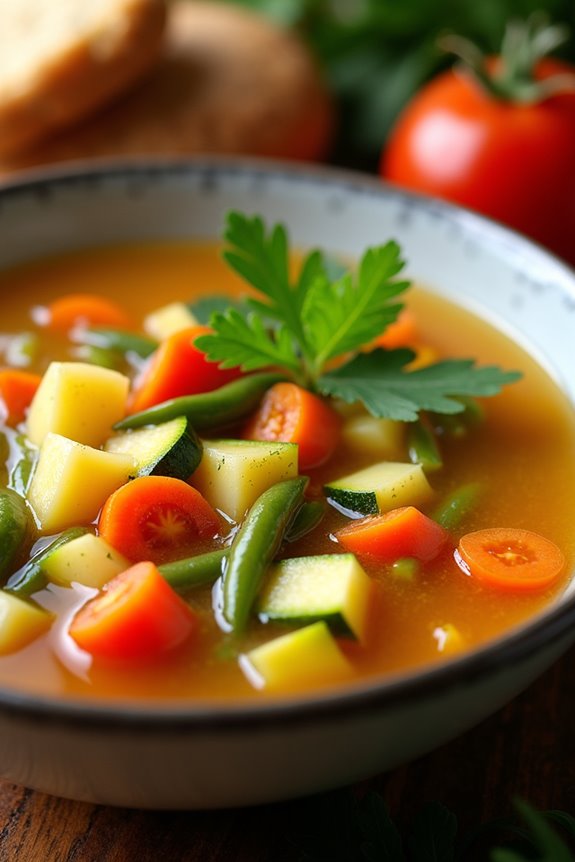
Gemüsesuppe, or German vegetable soup, is a hearty and wholesome dish that showcases a variety of fresh vegetables, making it a perfect choice for a healthy meal. This comforting soup isn’t only nutritious but also very versatile, allowing you to use any seasonal vegetables you have on hand.
It’s a beloved staple in German households, often served as a starter or a light main course, especially during the colder months when a warm bowl of soup is most welcome.
Making Gemüsesuppe is simple and straightforward, making it an excellent option for both novice and experienced cooks. The soup is typically simmered slowly to allow the flavors of the vegetables to meld beautifully, resulting in a rich and savory broth.
Serve it with a sprinkle of fresh herbs or a dollop of sour cream for added flavor. This soup can also be easily customized to suit your taste preferences, making it a delightful dish for any occasion.
Ingredients (Serves 4-6)
- 2 tablespoons olive oil
- 1 large onion, chopped
- 2 cloves garlic, minced
- 2 medium carrots, sliced
- 2 medium potatoes, diced
- 1 medium zucchini, diced
- 1 cup green beans, trimmed and cut into pieces
- 1 cup diced tomatoes (canned or fresh)
- 4 cups vegetable broth
- 1 teaspoon dried thyme
- 1 teaspoon dried oregano
- Salt and pepper to taste
- Fresh parsley, chopped (for garnish)
Cooking Instructions
- Prepare the Ingredients: Begin by washing and chopping all your vegetables as mentioned in the ingredients list. This makes the cooking process smoother and guarantees that everything cooks evenly.
- Sauté the Aromatics: In a large pot, heat the olive oil over medium heat. Add the chopped onion and minced garlic, sautéing for about 3-4 minutes until the onions are translucent and fragrant. This step builds the foundation of flavor for your soup.
- Add the Vegetables: Once the onions and garlic are softened, add the sliced carrots, diced potatoes, diced zucchini, and green beans to the pot. Stir well to combine and sauté for another 5 minutes. This helps to slightly soften the vegetables and enhances their flavors.
- Incorporate the Tomatoes and Broth: Stir in the diced tomatoes along with their juices, and then pour in the vegetable broth. Bring the mixture to a boil, then reduce the heat to low to maintain a gentle simmer.
- Season the Soup: Add the dried thyme and oregano, seasoning with salt and pepper to taste. Allow the soup to simmer uncovered for about 25-30 minutes, or until the vegetables are tender. Stir occasionally to prevent sticking.
- Final Touches: Once the vegetables are cooked, taste the soup and adjust the seasoning if necessary. If you prefer a thicker soup, you can use an immersion blender to puree part of it, creating a creamier texture.
- Serve: Ladle the soup into bowls and garnish with fresh chopped parsley. Serve hot, optionally with a slice of bread or a dollop of sour cream on top.
Extra Tips
For an extra depth of flavor, consider adding a splash of white wine along with the broth. You can also experiment with different vegetables based on what’s in season or what you have on hand—bell peppers, leeks, or even kale can be wonderful additions.
If you want to make the soup heartier, you can include cooked lentils or beans. Remember that the longer you let the soup simmer, the more intense the flavors will become, so feel free to adjust the cooking time to your preference!
Bohnensuppe (Bean Soup)

Bohnensuppe, or German Bean Soup, is a hearty and comforting dish that exemplifies the rich culinary traditions of Germany. This soup is perfect for cold winter nights, providing a warm and filling meal that showcases the versatility of beans. With its roots in German peasant cooking, Bohnensuppe is both economical and nourishing, making it a staple in many households.
The combination of beans, vegetables, and flavorful broth creates a well-rounded dish that can be enjoyed on its own or paired with crusty bread. The beauty of Bohnensuppe lies in its simplicity and the ability to customize it according to personal preferences or available ingredients. Often featuring ingredients like smoked meats, fresh herbs, and spices, this soup can be adapted to suit various taste profiles.
Whether shared with family or friends, Bohnensuppe is sure to bring warmth and satisfaction to the table.
Ingredients (Serves 4-6)
- 2 cups dried white beans (such as navy or cannellini beans)
- 6 cups vegetable or chicken broth
- 1 medium onion, chopped
- 2 cloves garlic, minced
- 2 medium carrots, diced
- 2 stalks celery, diced
- 1 small potato, peeled and diced
- 1 bay leaf
- 1 teaspoon dried thyme
- 1 teaspoon paprika
- Salt and pepper to taste
- 2 tablespoons olive oil
- Fresh parsley, chopped (for garnish)
- Optional: 1 cup diced smoked sausage or ham
Cooking Instructions
- Prepare the Beans: Begin by rinsing the dried beans under cold water to remove any debris. Place them in a large pot and cover with water. Allow the beans to soak for at least 6 hours or overnight to soften. If you’re short on time, you can use the quick soak method by bringing the beans to a boil, then removing them from heat and letting them sit for 1 hour.
- Sauté the Vegetables: In a large pot, heat the olive oil over medium heat. Add the chopped onion, garlic, carrots, and celery to the pot. Sauté for about 5-7 minutes until the vegetables are softened and the onion is translucent. This step builds the flavor base for the soup.
- Add Broth and Beans: Drain and rinse the soaked beans, then add them to the pot along with the vegetable or chicken broth. Stir in the diced potato, bay leaf, thyme, paprika, and any optional smoked sausage or ham. Bring the mixture to a boil.
- Simmer the Soup: Once boiling, reduce the heat to low and cover the pot. Let the soup simmer for about 1 to 1.5 hours, or until the beans are tender. Stir occasionally and check for doneness. If the soup becomes too thick, you can add more broth or water as needed.
- Season and Serve: After the beans are tender, remove the bay leaf and season the soup with salt and pepper to taste. Ladle the soup into bowls, and garnish with fresh chopped parsley before serving. Enjoy the soup hot, ideally with some crusty bread on the side.
Extra Tips
To enhance the flavor of Bohnensuppe, consider adding a splash of apple cider vinegar or a squeeze of lemon juice just before serving; this will brighten the dish and add a delightful tang.
For a creamier texture, you can puree a portion of the soup using an immersion blender and then mix it back in. Additionally, feel free to experiment with different vegetables or spices to make the soup your own.
Bohnensuppe also freezes well, so you can make a larger batch and enjoy it later!
Zwiebelsuppe (Onion Soup)

Zwiebelsuppe, or German onion soup, is a warm and comforting dish that highlights the sweet, caramelized flavor of onions paired with rich broth. Traditionally made with a simple base, this soup is often topped with crusty bread and melted cheese, making it a hearty choice for any meal.
Originating from the rustic kitchens of Germany, this dish has become beloved for its simplicity and depth of flavor, perfect for warming the soul on chilly evenings.
To prepare a classic Zwiebelsuppe, you’ll need to focus on the slow cooking of onions to achieve that beautiful caramelization, which is the key to its depth of flavor. This dish can be served as an appetizer or a main course, and it pairs wonderfully with a crisp salad or some fresh, crusty bread.
With just a few ingredients and steps, you can create this comforting soup that showcases the humble onion in a delightful way.
Ingredients (Serves 4-6):
- 6 large onions, thinly sliced
- 4 tablespoons unsalted butter
- 1 tablespoon olive oil
- 4 cups beef or vegetable broth
- 1 cup dry white wine (optional)
- 1 teaspoon sugar
- 1 teaspoon salt
- 1/2 teaspoon black pepper
- 1 tablespoon fresh thyme or 1 teaspoon dried thyme
- 1 baguette, sliced into 1-inch pieces
- 2 cups grated Gruyère cheese or Emmental cheese
Cooking Instructions:
- Prepare the Onions: Begin by peeling and thinly slicing the onions. This will allow them to cook down evenly and caramelize beautifully. The more evenly you slice them, the better the texture of your soup will be.
- Sauté the Onions: In a large pot or Dutch oven, melt the butter and olive oil over medium heat. Add the sliced onions to the pot, stirring to coat them well. Cook the onions for about 15-20 minutes, stirring occasionally, until they become translucent.
- Caramelize the Onions: Lower the heat to medium-low and continue to cook the onions for an additional 30-40 minutes, stirring frequently. You want the onions to turn a deep golden brown, which enhances their sweetness and adds depth to the soup. If they start to stick, add a splash of broth to loosen them up.
- Add Seasonings: Once the onions are caramelized, sprinkle in the sugar, salt, pepper, and thyme, stirring to combine. The sugar will help deepen the caramelization, enhancing the overall flavor of the soup.
- Deglaze the Pot: Pour in the white wine (if using) and scrape any browned bits off the bottom of the pot. This step adds even more flavor to your soup. Allow the wine to simmer for about 5 minutes until it reduces slightly.
- Add the Broth: Pour in the beef or vegetable broth and bring the mixture to a boil. Once boiling, reduce the heat and let it simmer uncovered for about 20-30 minutes to allow the flavors to meld together.
- Prepare the Bread: While the soup is simmering, preheat your oven to 350°F (175°C). Arrange the baguette slices on a baking sheet and toast them in the oven for about 10 minutes until they’re golden and crispy.
- Assemble the Soup: Ladle the hot soup into oven-proof bowls. Place a slice of toasted baguette on top of each bowl and generously sprinkle with grated cheese.
- Broil the Cheese: Place the bowls under the broiler for 2-4 minutes, or until the cheese is bubbly and golden brown. Watch closely to prevent burning.
- Serve: Carefully remove the bowls from the oven and let them cool slightly before serving. Enjoy your warm and delicious Zwiebelsuppe!
Extra Tips:
When preparing Zwiebelsuppe, patience is key—allowing the onions to caramelize slowly will yield the best flavor.
If you prefer a deeper taste, consider adding a splash of balsamic vinegar during the cooking process. For a vegetarian version, simply use vegetable broth and omit the wine if desired.
Feel free to experiment with different types of cheese for topping, like cheddar or mozzarella, to find your perfect combination!
Gulaschsuppe (Goulash Soup)
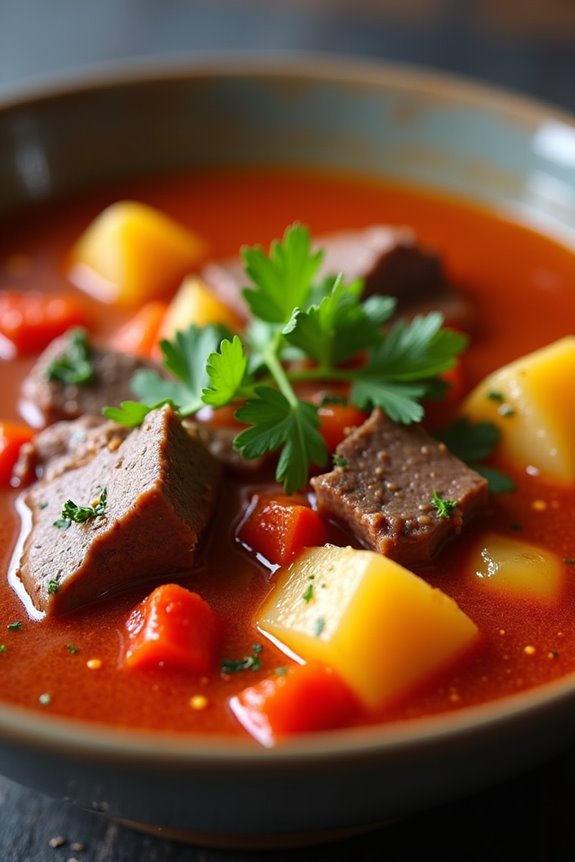
Gulaschsuppe, or Goulash Soup, is a beloved dish in German cuisine that combines the rich flavors of beef, vegetables, and spices in a hearty broth. This comforting soup is perfect for chilly days or gatherings, offering a warm bowl of satisfaction that fills both the stomach and the soul.
With its origins tracing back to Hungary, Gulaschsuppe has been embraced by many cultures, each adding their own twist while staying true to the dish’s heartiness and flavor.
The beauty of Gulaschsuppe lies not only in its robust flavors but also in the ease of preparation. With a blend of tender beef, paprika, onions, and a medley of vegetables, this soup is sure to become a staple in your kitchen.
Serve it with crusty bread or a dollop of sour cream for an extra touch of creaminess. Whether you’re cooking for a family dinner or a cozy gathering with friends, Gulaschsuppe delivers warmth and satisfaction in every bowl.
Ingredients (Serves 4-6)
- 1.5 lbs beef stew meat, cubed
- 2 tablespoons vegetable oil
- 2 large onions, chopped
- 3 cloves garlic, minced
- 2 tablespoons sweet paprika
- 1 teaspoon caraway seeds
- 1 red bell pepper, chopped
- 2 medium potatoes, diced
- 4 cups beef broth
- 1 can (14 oz) diced tomatoes
- 2 bay leaves
- Salt and pepper to taste
- Fresh parsley, chopped (for garnish)
Cooking Instructions
- Brown the Beef: In a large pot or Dutch oven, heat the vegetable oil over medium-high heat. Add the cubed beef stew meat in batches to avoid overcrowding. Brown the meat on all sides for about 5-7 minutes. This step helps to develop a deep flavor and creates a nice crust on the beef. Once browned, remove the meat and set it aside.
- Sauté the Onions and Garlic: In the same pot, add the chopped onions and sauté until they’re translucent and soft, about 5 minutes. Stir in the minced garlic and cook for an additional minute until fragrant. This will form the aromatic base of your soup.
- Add Spices and Vegetables: Sprinkle the sweet paprika and caraway seeds over the sautéed onions and garlic, stirring well to coat everything evenly. Then, add the chopped red bell pepper and diced potatoes. Cook for 3-4 minutes, allowing the vegetables to soften slightly and the spices to release their flavors.
- Combine Ingredients: Return the browned beef to the pot and add the beef broth, diced tomatoes (with their juice), and bay leaves. Stir everything together and bring the mixture to a boil.
- Simmer the Soup: Once boiling, reduce the heat to low, cover the pot, and let the soup simmer for about 1.5 to 2 hours. This slow cooking process will tenderize the beef and meld all the flavors together. Stir occasionally and check for doneness.
- Season and Serve: After simmering, taste the soup and season with salt and pepper as needed. Remove the bay leaves before serving. Ladle the Gulaschsuppe into bowls and garnish with freshly chopped parsley for a pop of color and freshness.
Extra Tips
For an added depth of flavor, consider using smoked paprika instead of sweet paprika, which can give the soup a delightful smoky undertone.
If you prefer a thicker consistency, you can blend a portion of the soup and then return it to the pot. Additionally, this soup freezes well, so feel free to make a larger batch and save some for later enjoyment.
Hühnersuppe (Chicken Soup)

Hühnersuppe, or German chicken soup, is a comforting and nourishing dish that brings warmth to any table. This traditional recipe is a family favorite, often enjoyed during cold winters or when someone is feeling under the weather. Packed with wholesome ingredients like tender chicken, fresh vegetables, and aromatic herbs, Hühnersuppe isn’t only delicious but also incredibly satisfying.
The beauty of this soup lies in its simplicity and the way it allows the flavors of the ingredients to shine through. Cooking Hühnersuppe can be a delightful and rewarding experience. The process begins with simmering the chicken to create a robust broth, followed by the addition of fresh vegetables that enhance both the flavor and nutrition of the dish.
This soup is perfect for serving on its own or accompanied by some crusty bread, making it a hearty meal that everyone will love.
Ingredients (Serves 4-6)
- 1 whole chicken (about 3-4 pounds)
- 12 cups water
- 2 large carrots, peeled and diced
- 2 stalks celery, diced
- 1 large onion, quartered
- 3 cloves garlic, minced
- 1 teaspoon dried thyme
- 1 teaspoon dried parsley
- 2 bay leaves
- Salt and pepper to taste
- 1 cup egg noodles (optional)
- Fresh parsley for garnishing (optional)
Cooking Instructions
- Prepare the Chicken: Start by rinsing the whole chicken under cold water. Remove any giblets from the cavity, if included. Place the chicken in a large pot and cover it with 12 cups of cold water. This will serve as the base for your flavorful broth.
- Simmer the Broth: Bring the pot to a boil over medium-high heat. As it begins to boil, reduce the heat to low and skim off any foam that rises to the surface. This helps to guarantee a clear broth. Add the quartered onion, bay leaves, thyme, and parsley to the pot. Let the chicken simmer for about 1 to 1.5 hours, or until the meat is tender and easily pulls away from the bone.
- Add Vegetables: Once the chicken is cooked, carefully remove it from the pot and set it aside to cool slightly. Add the diced carrots, celery, and minced garlic to the broth. Continue to simmer the soup for an additional 20-30 minutes, allowing the vegetables to soften and the flavors to meld.
- Shred the Chicken: While the vegetables are cooking, shred the chicken meat into bite-sized pieces, discarding the skin and bones. Once the vegetables are tender, return the shredded chicken to the pot. If you’re using egg noodles, add them at this stage and cook according to the package instructions until they’re al dente.
- Season and Serve: Taste the soup and season with salt and pepper as desired. Remove the bay leaves before serving. Ladle the soup into bowls and garnish with fresh parsley for a touch of color and flavor.
Extra Tips
To enhance the flavor of your Hühnersuppe, consider adding a splash of lemon juice or a few sprigs of fresh dill just before serving. For a richer broth, you can roast the chicken in the oven before adding it to the pot. This adds depth and a slight caramelization to the flavor.
Additionally, feel free to customize your soup by incorporating other vegetables like potatoes or green beans, depending on your preference. Enjoy your homemade Hühnersuppe!
Sülze Mit Brühe (Jellied Meat With Broth)

Sülze Mit Brühe is a traditional German dish that elegantly combines meat and gelatin to create a delightful jellied delicacy served with a flavorful broth. This dish isn’t only visually appealing but also rich in taste, making it a popular choice for festive occasions or as a hearty meal. The preparation of Sülze requires a bit of patience, as the meat must be cooked, cooled, and set in the broth, allowing the flavors to meld beautifully.
The dish is often served cold, making it a revitalizing option for warm days or as an appetizer at gatherings. It’s typically accompanied by pickles, mustard, or fresh bread, enhancing its distinct flavors. Whether you’re a seasoned chef or a curious beginner, Sülze Mit Brühe is a rewarding dish to master, showcasing the heartiness of German cuisine.
Ingredients (serving size: 4-6 people):
- 1 kg (2.2 lbs) pork shoulder or neck
- 250 g (0.55 lbs) beef or veal (optional)
- 2 large onions, chopped
- 4 cloves of garlic, minced
- 2 carrots, chopped
- 1 celery stalk, chopped
- 2 bay leaves
- 5-6 whole peppercorns
- 1 teaspoon salt (or to taste)
- 2 tablespoons white wine vinegar
- 1 packet of gelatin (about 12 grams or according to package instructions)
- 1 liter (4 cups) water (more if needed)
- Fresh herbs (parsley, dill) for garnish
- Mustard and pickles for serving
Cooking Instructions:
- Prepare the Meat: Start by placing the pork shoulder or neck and optional beef or veal in a large pot. Add the chopped onions, minced garlic, carrots, celery, bay leaves, and peppercorns. This mixture will infuse the meat with rich flavors as it cooks.
- Cook the Meat: Pour enough water into the pot to cover the meat completely. Bring the mixture to a boil over medium-high heat, then reduce the heat to low and let it simmer for about 2-3 hours, or until the meat is tender and easily pulls apart with a fork. Make sure to skim off any foam that rises to the surface.
- Strain the Broth: Once the meat is cooked, carefully remove it from the pot and set it aside to cool. Strain the cooking liquid through a fine sieve into another pot to remove the vegetables and spices. Reserve the broth for later use.
- Prepare the Gelatin: In a small bowl, dissolve the gelatin in a few tablespoons of the hot broth according to the package instructions. Once dissolved, stir in the vinegar and season with salt.
- Shred the Meat: Once the meat has cooled enough to handle, shred it into bite-sized pieces or chop it into small cubes. Combine the shredded meat in a large bowl and mix it with any remaining vegetables from the broth if desired.
- Combine Meat and Gelatin: Pour the gelatin mixture over the shredded meat, ensuring it’s well-coated. Mix everything together until fully combined.
- Mold the Mixture: Transfer the meat and gelatin mixture into a loaf pan or a mold. Press down firmly to compact the mixture, and then pour the reserved broth over the top until it just covers the meat mixture.
- Chill and Set: Cover the mold with plastic wrap and refrigerate for at least 4-6 hours, or until the gelatin has fully set. For best results, leave it overnight.
- Serve: Once set, carefully unmold the jellied meat onto a serving platter. Slice into portions and serve cold, garnished with fresh herbs, alongside mustard and pickles.
Extra Tips: For an elevated flavor, consider adding some spices such as allspice or cloves during the cooking process. You can also experiment with different types of meat, like chicken or rabbit, to create variations of this dish. Be sure to let the Sülze cool completely before refrigerating, as this helps the gelatin set properly. If you want a more vibrant presentation, consider adding diced vegetables like bell peppers to the meat mixture before chilling.
Wurst- Und Sauerkraut Suppe (Sausage and Sauerkraut Soup)

Wurst- Und Sauerkraut Suppe is a hearty and flavorful German soup that combines the robust taste of sausages with the tanginess of sauerkraut. This dish is perfect for cold weather, offering warmth and comfort in every spoonful. The combination of savory smoked sausages and the slightly sour notes from the sauerkraut makes this soup a beloved recipe that showcases the rustic flavors of German cuisine.
Not only is it delicious, but it’s also quite simple to prepare, making it an excellent choice for weeknight dinners or gatherings with family and friends.
In this recipe, you’ll learn how to create a delightful Wurst- Und Sauerkraut Suppe that serves 4 to 6 people. The ingredients are straightforward, and the cooking process is easy to follow. This soup is often enjoyed with a slice of crusty bread, perfect for dipping and soaking up the rich broth. Gather your ingredients and get ready to enjoy a taste of Germany in your own kitchen!
Ingredients:
- 1 pound smoked sausage (such as kielbasa or bratwurst), sliced
- 1 medium onion, chopped
- 2 cloves garlic, minced
- 4 cups chicken or vegetable broth
- 2 cups sauerkraut, drained and rinsed
- 2 medium potatoes, diced
- 1 teaspoon caraway seeds
- 1 bay leaf
- Salt and pepper to taste
- Fresh parsley, chopped (for garnish)
Cooking Instructions:
1. Sauté the Sausage and Aromatics: In a large pot, heat a tablespoon of oil over medium heat. Add the sliced smoked sausage and cook until browned, about 5-7 minutes. Remove the sausage from the pot and set it aside.
In the same pot, add the chopped onion and minced garlic. Sauté for about 3-4 minutes until the onions become translucent and fragrant.
2. Add the Broth and Vegetables: Pour in the chicken or vegetable broth, scraping the bottom of the pot to release any flavorful bits. Add the diced potatoes, drained sauerkraut, caraway seeds, and bay leaf. Return the browned sausage to the pot and stir to combine all the ingredients.
3. Simmer the Soup: Increase the heat to bring the soup to a gentle boil. Once boiling, reduce the heat to low and cover the pot. Let it simmer for about 30 minutes, or until the potatoes are tender and the flavors meld together. Stir occasionally to guarantee even cooking.
4. Season and Serve: After simmering, taste the soup and season with salt and pepper as needed. Remove the bay leaf before serving. Ladle the soup into bowls and garnish with freshly chopped parsley for a touch of color and flavor.
Extra Tips:
For a heartier soup, consider adding other vegetables such as carrots or celery for added flavor and nutrition. If you prefer a spicier kick, you can opt for a spicy sausage or add a pinch of red pepper flakes.
This soup can also be made ahead of time and tastes even better the next day as the flavors continue to develop. Store any leftovers in an airtight container in the fridge for up to three days, and reheat on the stove for a quick meal. Enjoy your warm and comforting Wurst- Und Sauerkraut Suppe!
Fischsuppe (Fish Soup)

Fischsuppe, or Fish Soup, is a traditional German dish that showcases the rich and varied flavors of the sea. This hearty soup isn’t only delicious but also a comforting choice, especially on chilly days. The combination of fresh fish, aromatic vegetables, and flavorful herbs makes it a favorite among seafood lovers.
Whether served as a starter or a main course, Fischsuppe is sure to impress with its delicate taste and vibrant presentation.
Preparing Fischsuppe is relatively straightforward and allows for some creativity with the ingredients. You can use a variety of fish, such as cod, salmon, or haddock, depending on your preference. The key is to use fresh, high-quality ingredients to achieve the best flavor.
Served with crusty bread or a sprinkle of fresh herbs, this soup is a delightful way to enjoy the flavors of the ocean.
Ingredients (Serves 4-6)
- 1 lb (450g) white fish fillets (cod, haddock, or similar)
- 1 lb (450g) shrimp, peeled and deveined
- 2 tablespoons olive oil
- 1 large onion, chopped
- 2 cloves garlic, minced
- 2 carrots, diced
- 1 celery stalk, diced
- 2-3 medium potatoes, peeled and cubed
- 4 cups fish stock or vegetable broth
- 1 cup dry white wine
- 1 bay leaf
- 1 teaspoon dried thyme
- Salt and pepper to taste
- Fresh parsley, chopped (for garnish)
- Lemon wedges (for serving)
Cooking Instructions
1. Prepare the Ingredients: Start by gathering all your ingredients. Rinse the fish fillets under cold water and pat them dry with a paper towel. Cut the fish into bite-sized pieces. Peel and devein the shrimp, and set them aside.
Dice the vegetables as specified, ensuring they’re uniform in size for even cooking.
2. Sauté the Vegetables: In a large pot or Dutch oven, heat the olive oil over medium heat. Add the chopped onion and sauté for about 3-4 minutes until translucent.
Then, add the minced garlic, diced carrots, and celery. Cook for an additional 5 minutes, allowing the vegetables to soften and develop their flavors.
3. Add the Potatoes and Liquids: Once the vegetables are tender, add the cubed potatoes to the pot. Pour in the fish stock (or vegetable broth) and the dry white wine.
Stir well to combine all the ingredients, and bring the mixture to a gentle boil.
4. Season and Simmer****: Add the bay leaf, dried thyme, salt, and pepper to the pot. Reduce the heat to low and let the soup simmer for about 15-20 minutes, or until the potatoes are tender.
Stir occasionally to prevent sticking.
5. Cook the Fish and Shrimp: Once the potatoes are cooked, gently add the fish pieces and shrimp to the soup. Cook for an additional 5-7 minutes until the fish is opaque and the shrimp are pink and cooked through.
6. Serve the Soup: Remove the bay leaf from the pot. Ladle the soup into bowls and garnish with freshly chopped parsley.
Serve with lemon wedges on the side for an extra burst of flavor.
Extra Tips
For an even richer flavor, consider adding a splash of heavy cream or a dollop of sour cream just before serving. This will create a creamier texture that complements the fish beautifully.
Additionally, feel free to experiment with different types of seafood or add seasonal vegetables to enhance the soup’s flavor profile. Remember, the freshness of the ingredients is key, so try to use the best quality fish you can find!
